



Silver Plated Glass Carafe
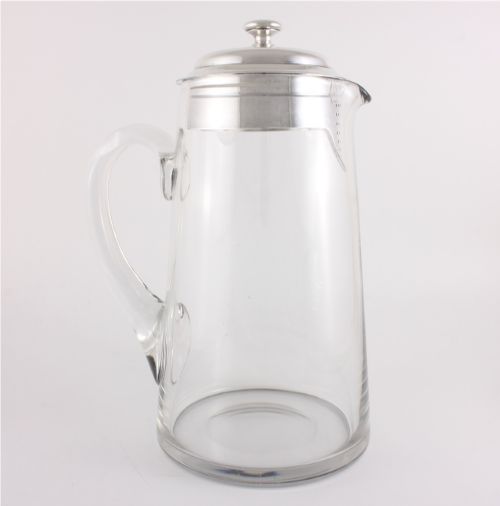
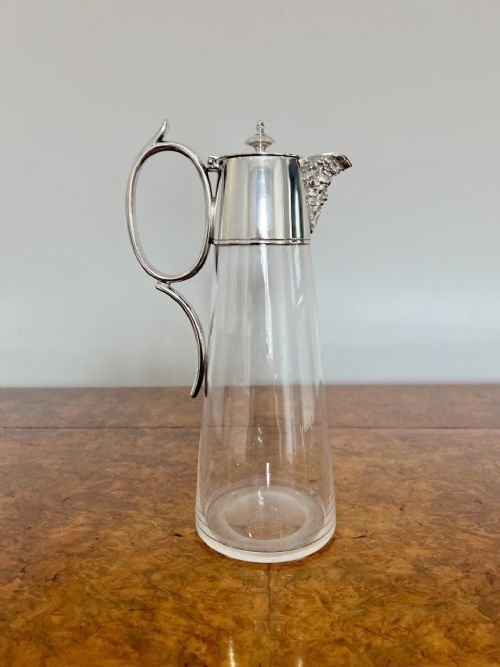
A silver plated glass carafe brings together heavy cut or coloured glass and gleaming metal mounts for serving wine at the table.
Silver Plated Glass Carafe
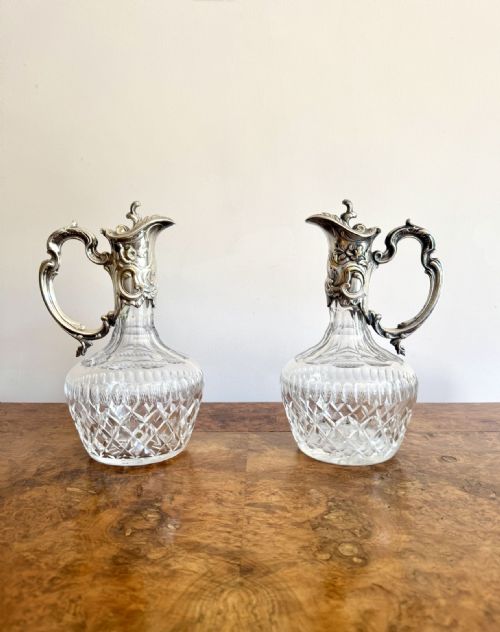
When searching for a silver plated glass carafe, buyers encounter vessels designed primarily for wine, claret and spirits, taking forms such as claret jugs, decanters, pitchers and ewers. These pieces originate predominantly from the Victorian and Edwardian periods, stretching back through the nineteenth century into the nineteen-hundreds.
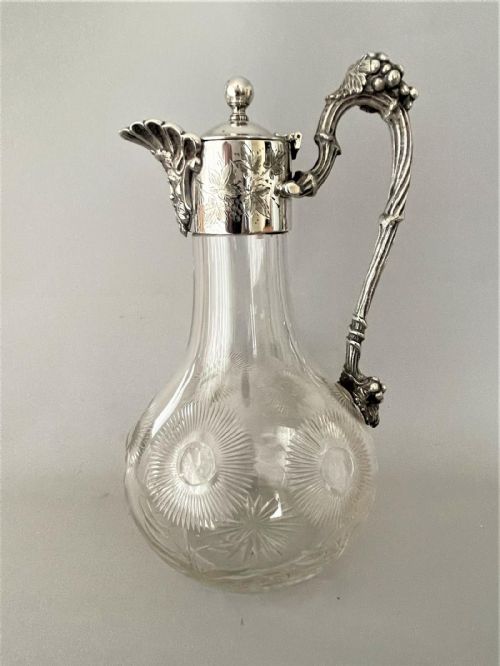
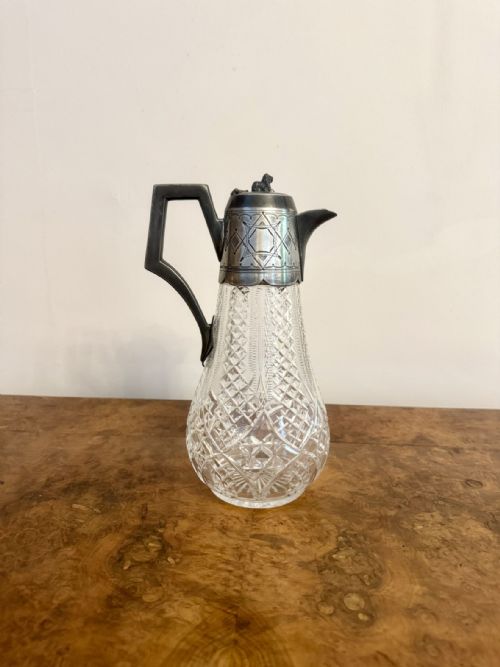
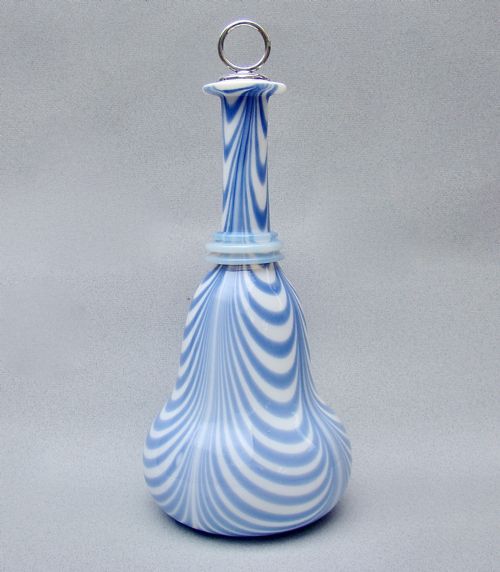
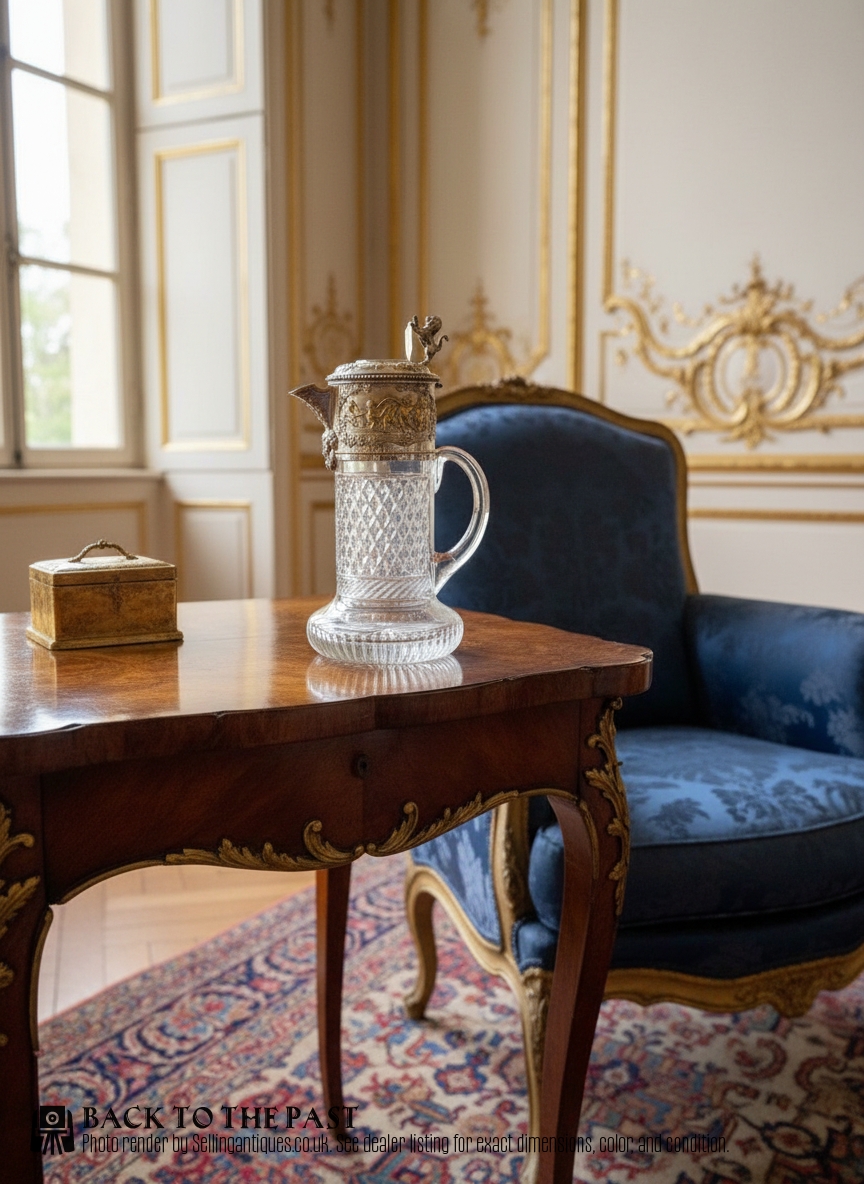
The most common examples on this page pair clear cut glass or crystal bodies with silver plated mounts, hinged lids and handles. Alongside standard claret jugs, variations include cranberry glass wine decanters, etched vessels, and novelty shapes like Scottish thistles or champagne bottles.
Stylistically, pieces range from ornate Victorian and Edwardian designs to flowing Art Nouveau curves, geometric Arts and Crafts metalwork, and Old Sheffield plate iterations from the mid-nineteenth century. Form follows function, serving as both practical tableware and decorative objects for the dining room.
How they were made
The manufacturing process combined glassblowing and cutting with silver plating techniques, utilising materials such as crystal, cranberry glass, nailsea glass, and Old Sheffield plate alongside standard silver plate. Glass bodies were frequently hand-blown, then wheel-cut or etched with floral and geometric patterns to catch the light.
What varies in quality
Quality rests upon the crispness of the glass cutting and the weight of the crystal body, where deeper, cleaner facets produce superior refraction. The thickness and purity of the glass dictate the overall heft and balance of the vessel in the hand.
The standard of the metalwork distinguishes finer examples, visible in the snug fit of the silver plated mounts against the glass and the precise articulation of hinged lids. Maker attribution and unusual design elements, such as etched botanical motifs or figural spouts, elevate certain pieces above standard production.
Christofle·Mappin and Webb·Elkington·Hukin and Heath·Dr Christopher Dresser
The Silver Plated Glass Carafe Glossary
- Claret jug
- A specialised pouring vessel with a handle and hinged lid, traditionally used for serving red wine. These pieces combine glass bodies with decorative silver plated mounts.
- Old Sheffield plate
- An early form of silver plating created by fusing a sheet of silver to a copper base before rolling them together. This technique predates modern electroplating.
- Cranberry glass
- A rich red-pink glass coloured by the addition of gold chloride during the melting process. It appears frequently in Victorian and Edwardian wine decanters.
- Mount
- The metal collar, handle, spout and hinged lid fitted to the neck of a glass decanter. These components provide structural support and a pouring lip.
- Etched glass
- Glass decorated by applying acid to eat away exposed areas, leaving intricate patterns on the surface. This technique often produces delicate floral or scroll motifs.
Silver Plated Glass Carafe: Frequently Asked Questions
What is a silver plated glass carafe used for?
These vessels were created to hold and serve wine, claret, lemonade and spirits at the dining table. The hinged lid allowed for easy pouring while keeping the contents covered.
Beyond dining use, their decorative glass bodies and silver mounts made them striking decorative objects for sideboards and cabinets during the Victorian and Edwardian eras.
How do I clean a vintage claret jug?
Wash the glass body gently in warm soapy water using a bottle brush, avoiding harsh abrasives that might scratch the surface. Dry the interior thoroughly to prevent water spots.
Polish the silver plated mounts with a soft cloth and a dedicated silver cleaner, taking care not to let harsh chemical polishes come into contact with the glass.
How can I tell a Victorian piece from an Edwardian one?
Victorian pieces often feature heavier, deeper glass cutting, ornate floral etching, and robust silver plated mounts that reflect a taste for elaborate decoration. Maker marks and registration numbers stamped on the metal can also narrow down the production date.
Edwardian examples tend toward lighter forms, sometimes incorporating cleaner lines influenced by Art Nouveau or Arts and Crafts aesthetics while retaining traditional glass bodies.