
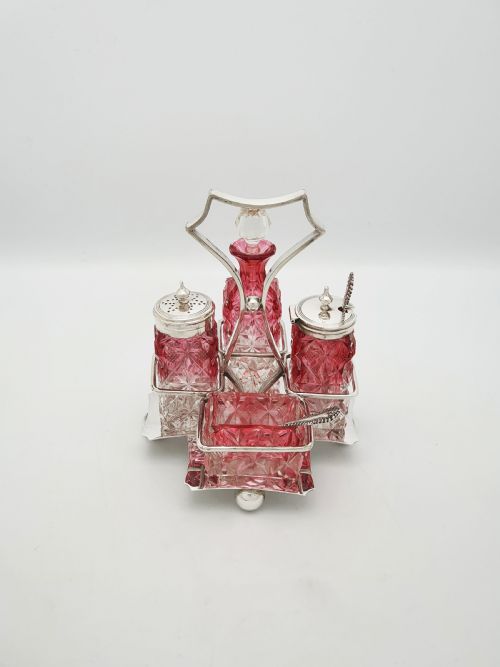


Silver Plated Glass Caddy
A silver plated glass caddy brings practical elegance to the table, combining polished metalwork with clear or coloured vessels.
Silver Plated Glass Caddy
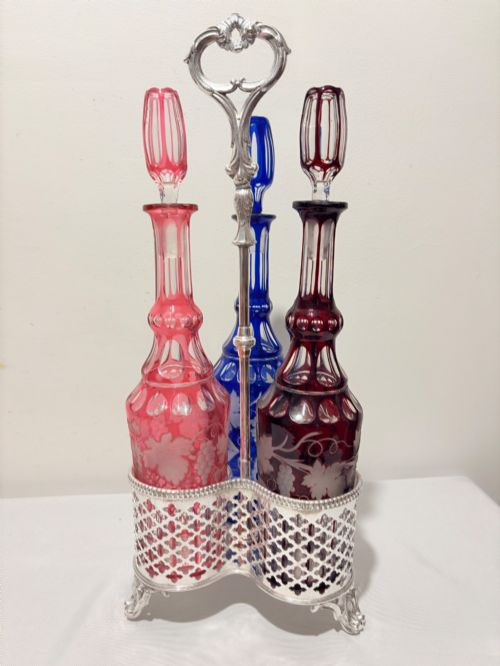
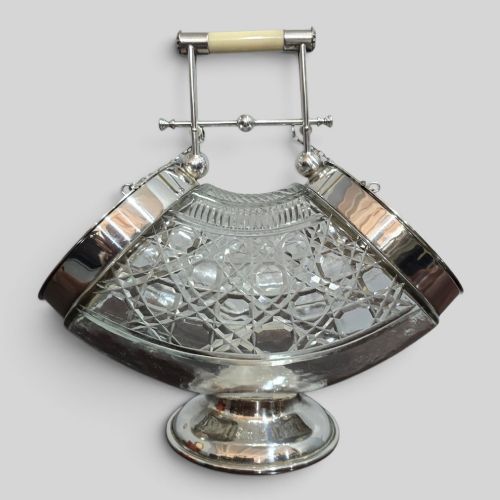
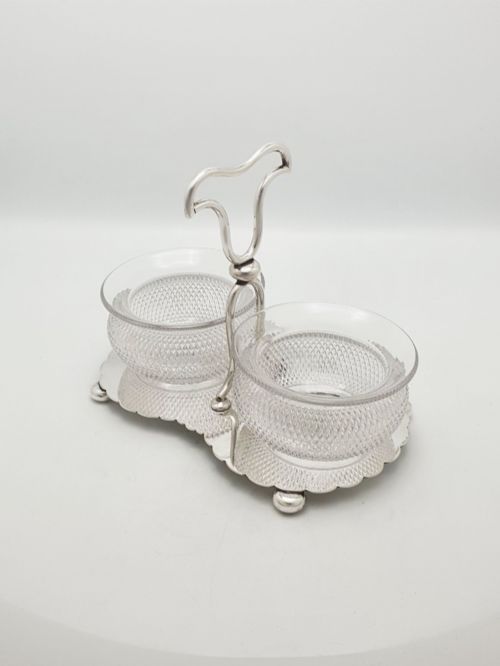
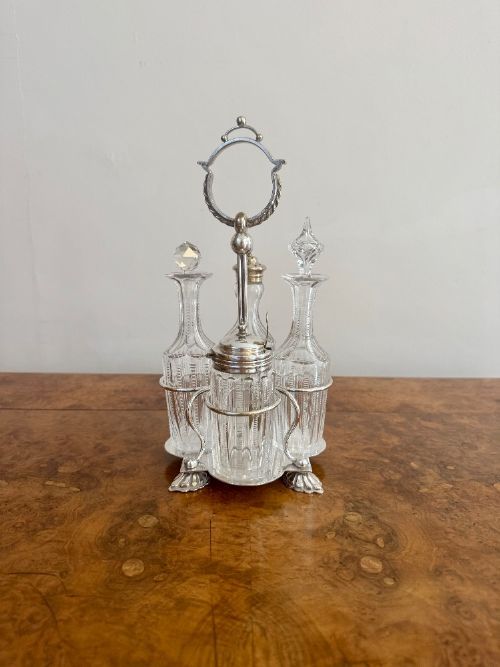
A silver plated glass caddy encompasses utilitarian table service items including cruet sets, biscuit barrels, condiment stands, and decanter frames. These pieces unite metal frames with glass inserts to serve condiments, biscuits, or spirits during dining and social occasions. The selection draws primarily from Victorian, Edwardian, and early twentieth-century workshops.
Cruet sets and condiment stands appear frequently among the listings, often featuring multiple glass bottles fitted into pierced or ornate metal frames. Biscuit barrels and tantalus sets provide alternative forms that combine heavy glass bodies or liners with secure silver plated mountings. Originating mostly from British and Scandinavian makers, these objects reflect domestic hospitality customs of the nineteenth and twentieth centuries.
Materials and construction
Makers utilised silver plate over base metals to achieve the lustre of solid silver at a lower production cost, mounting the metalwork around blown, pressed, or cut glass. Common glass variations include hobnail cut crystal, cranberry flashed glass, frosted crystal, and vaseline glass, providing textural contrast against the polished frames. Oak timber occasionally appears in structural frames for tantalus sets and compartmentalised stands.
Craftsmen shaped the metal through piercing, casting, and soldering to create decorative frames, handles, and bottle supports. Glass components were either blown into moulds, wheel-cut for geometric patterns, or flashed with coloured mineral layers before assembly into the fitted metal housings.
Listings feature items from the 1860s through the 1920s, spanning Victorian, Edwardian, and Art Deco styles.
Distinctions in standard
Quality separates through the crispness of glass cutting and the weight of the metal framework. Finer examples display deep, hand-polished facets on the glass and substantial silver plating that resists thinning over prominent edges.
Design complexity also marks the upper range, where frames incorporate intricate pierced patterns, matched sets of bottles, or integrated mechanisms like automated lids and locking tantalus bars. Simpler utilitarian stands utilise basic pressed glass and plain metal bands.
Mappin Brothers·Elkington·Wade Wingfield Wilkins
The Silver Plated Glass Caddy Glossary
- Cruet set
- A fitted stand holding glass bottles for oil, vinegar, mustard, and other condiments. These sets sit centrally on dining tables during meals.
- Tantalus
- A locking wooden or metal frame securing decanters to prevent unauthorized access to the contents. A hinged bar locks the bottle stoppers in place until a key is turned.
- Cranberry glass
- Transparent glass coloured with gold chloride to produce a rich pinkish-red hue. It appears frequently in Victorian and Edwardian tableware.
- Hobnail cut
- A raised, multi-faceted geometric pattern cut into the surface of glassware. This technique catches the light and adds tactile grip to pieces like biscuit barrels.
- Silver plate
- A thin layer of silver fused or electroplated onto a base metal core. It provides the appearance and polish of solid silver.
Silver Plated Glass Caddy: Frequently Asked Questions
What is a tantalus?
A tantalus is a locking frame designed to hold decanters securely while displaying the contents within glass and metal architecture. The locking mechanism prevents removal of the bottles without a key.
These pieces typically sat in studies, dining rooms, or drawing rooms during the Victorian and Edwardian periods. They allowed hosts to supervise the distribution of spirits.
How do I date an Edwardian cruet set?
Edwardian cruet sets date from the reign of King Edward VII, spanning the early years of the twentieth century. Stylistic markers include lighter frames and refined glass cutting compared to heavier Victorian predecessors.
Maker marks, registration numbers, and retailer stamps stamped onto the silver plate offer more precise dating clues. Examining the weight and fastening techniques also helps differentiate these from later reproductions.
What was a biscuit barrel used for?
A biscuit barrel served as a lidded container for storing and presenting dry biscuits during tea or evening gatherings. The glass body kept the contents visible while the silver plated lid and handle provided portability.
These containers sat on sideboards or tea tables in middle and upper-class homes. Some examples featured mechanical lids that popped open via a spring mechanism.
How do I clean silver plate?
Silver plate requires gentle cleaning with a soft cloth and a specialised silver polish formulated to avoid abrasive wear. Harsh scrubbing strips the thin silver layer from the base metal underneath.
Glass components can be removed and washed separately in warm soapy water. Keeping the metal dry after cleaning prevents tarnishing and corrosion.