




Silver Plated Drinkware
Silver plated drinkware brings together substantial tankards, mugs, jugs, and cocktail sets spanning the eighteenth century to the mid-twentieth century.
Silver Plated Drinkware
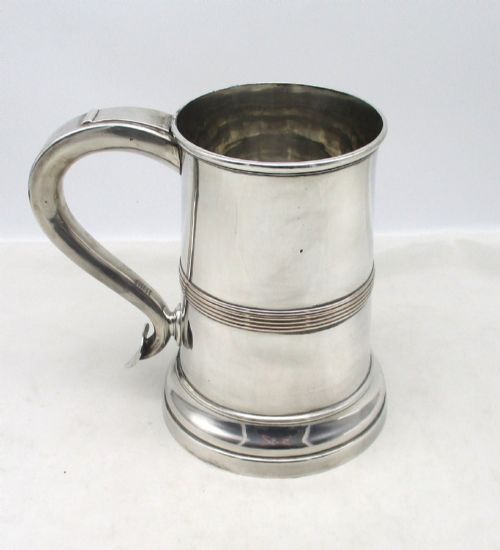
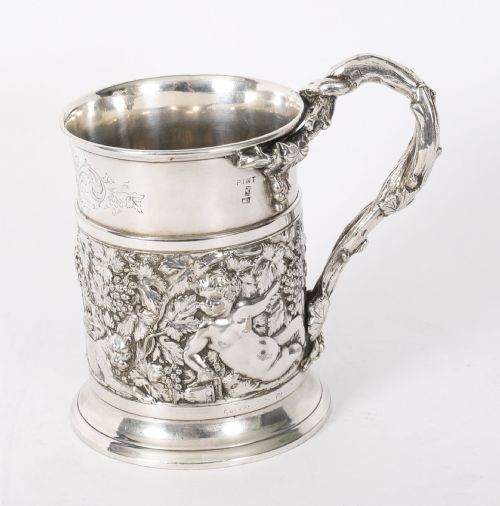
Silver plated drinkware encompasses an array of vessels designed for serving and consuming beverages, from eighteenth-century Old Sheffield Plate tankards to Art Deco cocktail shakers. The most common survivors on this page are substantial drinking vessels such as tankards and pint mugs, alongside later twentieth-century cocktail sets.
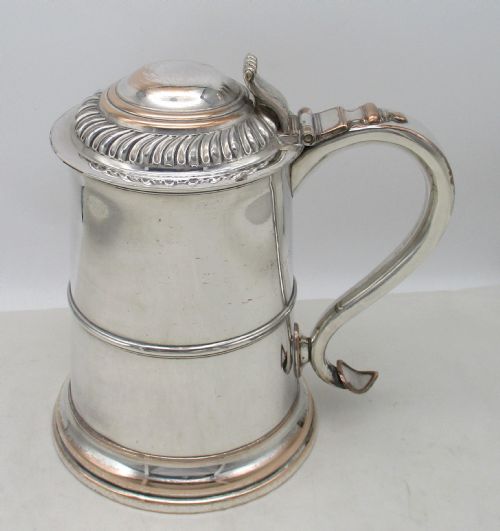
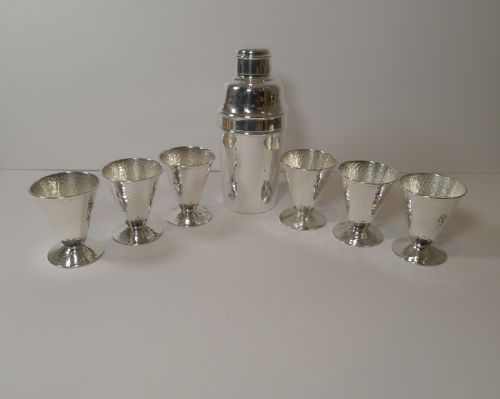
The selection ranges across distinct periods, showing Georgian, Victorian, and 1930s styles. Forms vary from simple pint tankards to lidded beer vessels, water jugs, and cased French cocktail sets with matching beakers.
Makers and origins span English workshops and French houses, utilising traditional manufacturing techniques peculiar to each era. Buyers encounter pieces intended for daily service as well as decorative entertaining.
Materials and construction methods
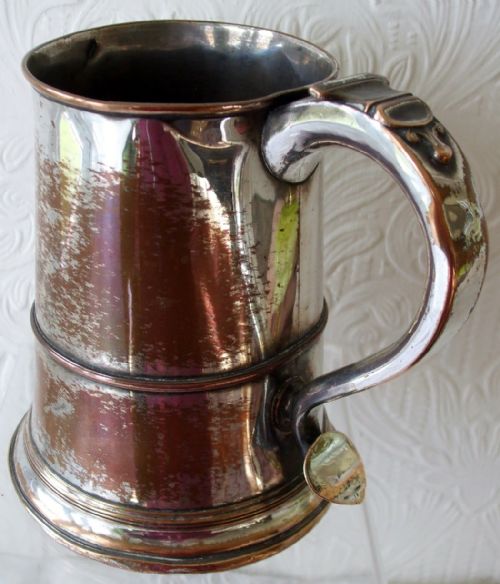
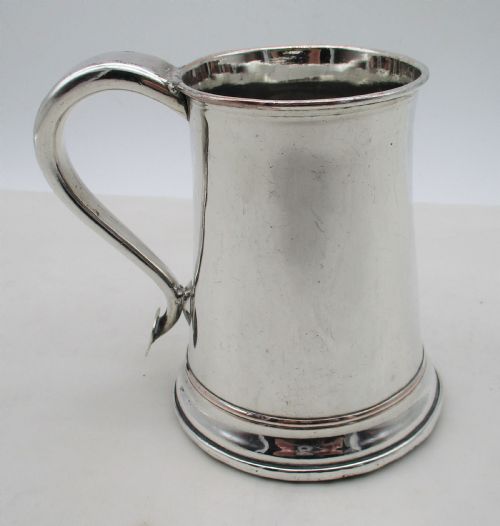
Early pieces rely on Old Sheffield Plate, a process fusing a thin sheet of silver to a thicker copper core, often revealing copper edges where the metal wears. Electroplated nickel silver emerges in later nineteenth-century pieces, providing a stable white metal base for the silver coating.
Decoration is achieved through hammering, embossing, and engraving by hand. Handles are frequently cast and applied separately, whilst lidded vessels incorporate hinged thumbpieces and lids fitted to the main body.
Several cocktail sets include complete matching beaker arrays ready for a 1930s jazz age gathering.
Distinctions in quality
Quality rests in the weight of the metal and the crispness of the applied decoration, such as hand-engraving or embossed motifs. Substantial gauge metal ensures the vessel retains its structural integrity without undue denting.
The preservation of the original plating layer dictates the visual success of the piece, particularly where copper shows beneath fused silver plates. Maker marks and clean proportions distinguish standard utility items from finer workshop productions.
G R Collis·Richard Morton·Maison Barra·William Hutton·St. Medard
The Silver Plated Drinkware Glossary
- Old Sheffield Plate
- A composite material made by fusing a sheet of silver to a copper ingot, common before the invention of electroplating. It often shows a thin line of copper at the edges.
- Electroplated Nickel Silver
- A base alloy of copper, nickel, and zinc coated with a layer of pure silver via an electrical process. This technique superseded older fusing methods during the nineteenth century.
- Tankard
- A tall drinking vessel with a single handle, frequently featuring a hinged lid in earlier examples. They appear in pint and quart sizes across Georgian and Victorian periods.
- Cocktail Shaker
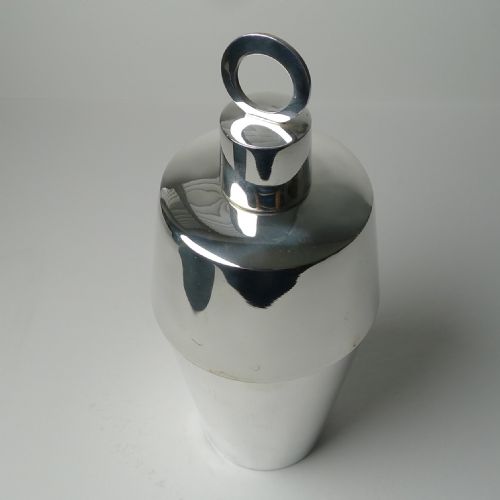
- A vessel used to mix drinks by shaking, typically associated with twentieth-century Art Deco design. Sets often include matching beakers or cased presentations.
Silver Plated Drinkware: Frequently Asked Questions
How do I clean silver plated drinkware?
Wash vessels gently in warm soapy water using a soft cloth, avoiding abrasive pads that remove the thin silver layer.
Dry thoroughly with a soft towel to prevent water spots and store in a dry environment.
Can I drink from old silver plate?
Most pieces are safe for occasional use, provided the interior plating remains intact and clean.
Check that the underlying copper or base metal is not exposed on drinking rims before serving beverages.
What is Old Sheffield Plate?
Old Sheffield Plate is an early form of plating created by melting a sheet of silver onto a copper base.
Pieces made this way display characteristic copper seams along cut edges and rims.
How do I date a silver plated tankard?
Dating relies on maker marks, stylistic clues such as Georgian proportions or Art Deco geometry, and manufacturing techniques.
Fused plate typically indicates an eighteenth or early nineteenth-century origin, whilst electroplating points to the Victorian era and later.