



Antique Drink Mixer
An antique drink mixer is a metal or glass vessel designed for blending spirits, most commonly encountered as a cocktail shaker from the Art Deco period.
Antique Drink Mixer
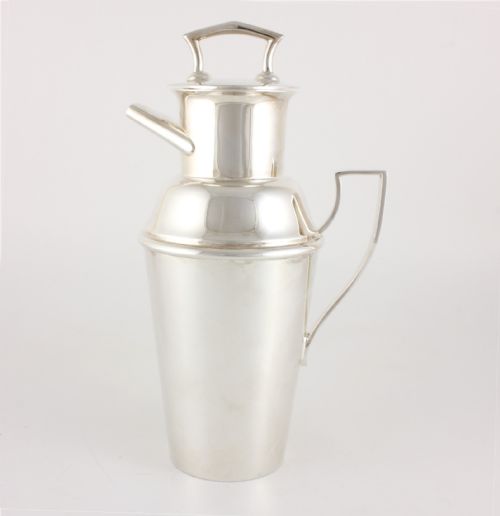
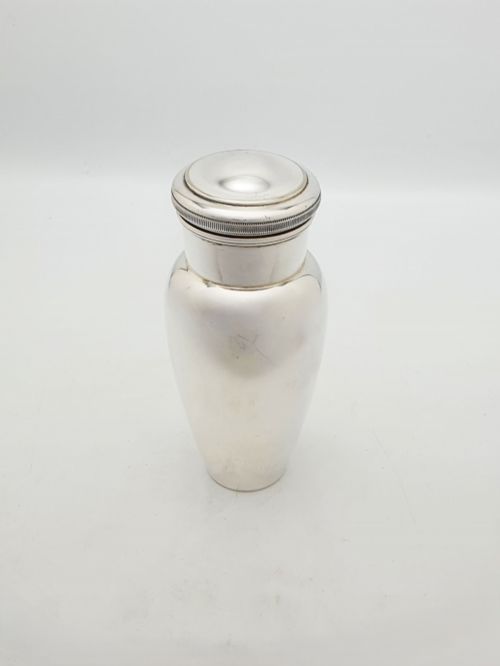
An antique drink mixer primarily takes the form of a cocktail shaker dating from the 1920s, 1930s, and 1940s, aligning with the rise of cocktail culture. Buyers searching for an antique drink mixer encounter vessels designed to combine ingredients efficiently, often featuring built-in strainers, ice breakers, or rotating recipe mechanisms.
The majority of pieces found on this page display strong Art Deco design influences, originating from English, French, Italian, and American makers. Forms range from sleek cylindrical cylinders and milk churn shapes to novelty designs and bullet profiles.
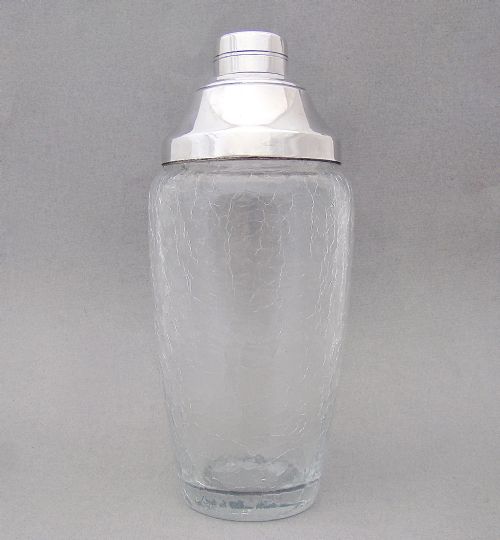
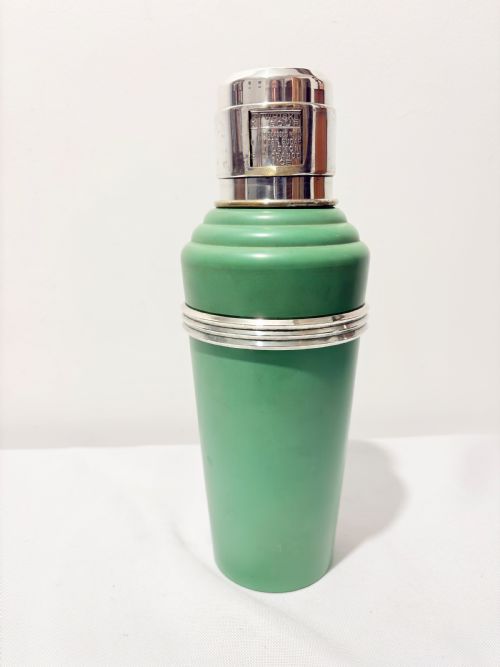
Materials span silver plate, electroplated nickel silver, sterling silver, brass, and glass, frequently paired with cork or Bakelite components. Some examples incorporate integral lemon squeezers or enamel decoration upon glass bodies.
Materials and construction
Metals such as silver plate, sterling silver, and brass provide the durable structure for the body and lid of an antique drink mixer. Electroplated nickel silver and EPNS serve as the base layers for the extensive silver-plated output recorded in the period.
Glass bodies, sometimes crackled or enamelled with cockerel motifs, combine with metal mounts and cork stoppers to create contrasting textures. Engine turning is applied to metal surfaces to produce geometric patterns characteristic of the manufacturing techniques of the era.
Listings span the periods 1900, 1920, 1930, 1940, 1950, and 1960, dominated by Art Deco silver-plated cocktail shakers.
Assessing quality and origin
Quality in an antique drink mixer rests on the weight of the metal, the precision of the fit between components, and the reputation of the maker. Pieces bearing known maker marks or emerging from established silversmiths demonstrate superior execution in weight distribution and finish.
Complexity of function distinguishes standard vessels from advanced designs, such as those integrating rotating recipe cylinders, lemon squeezers, or ice breakers. The integration of mechanical elements relies on precise engineering that maintains smooth operation.
Asprey & Co·Keith Murray·Hukin & Heath·J. B. Chatterley & Sons·James Dixon & Sons·William Suckling·C S Green & Co·Adie Brothers·Gaskell & Chambers·William Hutton·Mappin & Webb
The Antique Drink Mixer Glossary
- Art Deco
- A design style dominant in the 1920s and 1930s characterised by streamlined geometric forms, clean lines, and stylized motifs.
- EPNS
- Electroplated Nickel Silver, a common base metal method where a thin layer of silver coats a nickel silver alloy.
- Engine turned
- A decorative technique involving precise mechanical engraving to create intricate geometric patterns upon metal surfaces.
- Bakelite
- An early form of synthetic plastic utilised for handles, knobs, and decorative accents on mid-century barware.
- Milk churn
- A novelty shape modelled on agricultural containers, adopted by designers during the Art Deco period for cocktail shakers.
Antique Drink Mixer: Frequently Asked Questions
What is an antique drink mixer?
An antique drink mixer is a barware vessel, typically a cocktail shaker, produced during the early to mid-twentieth century. These items were designed for mixing, chilling, and straining cocktails.
Most examples date from the 1920s to the 1940s and reflect the prevalent design movements of the era, notably Art Deco. They range from plain metal cylinders to complex vessels with built-in recipes and citrus squeezers.
How do I identify Art Deco shakers?
Art Deco shakers exhibit distinct geometric lines, stepped forms, and engine-turned patterns. They frequently employ silver plate, glass, and Bakelite.
Many pieces from this stylistic period feature symmetrical decoration and streamlined silhouettes inspired by modern industrial design and architecture.
What materials were used?
Makers utilised a variety of materials including silver plate, sterling silver, brass, and electroplated nickel silver. Glass was also frequently paired with metal.
Internal and functional elements often incorporated cork stoppers and early plastics such as Bakelite for insulation and grip.