





Silver Plate Tea Service
A silver plate tea service brings the warmth of Edwardian, Victorian and Art Deco hospitality directly to the table.
Silver Plate Tea Service
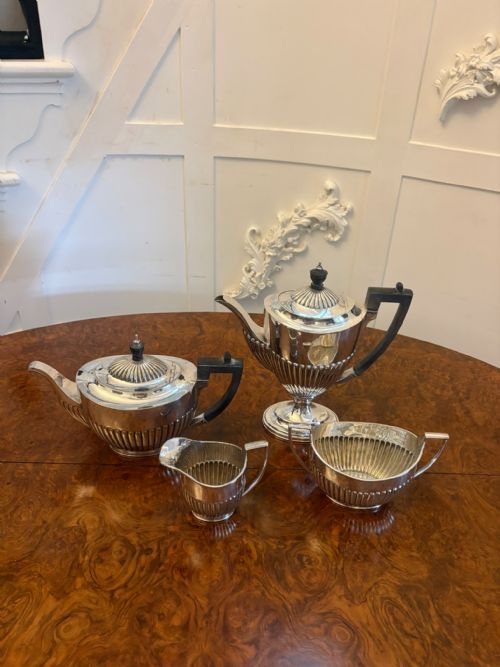
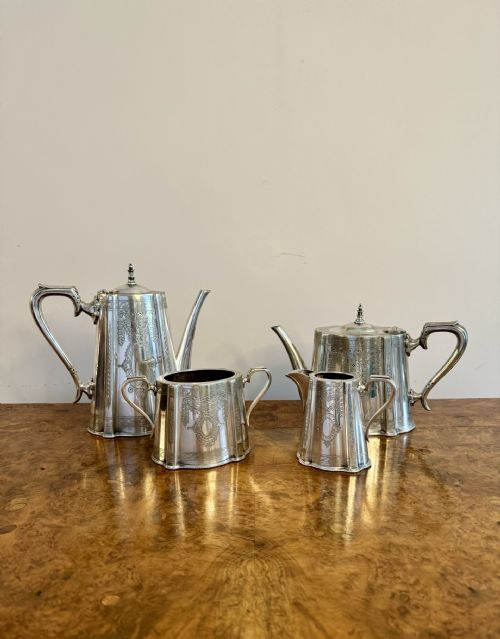
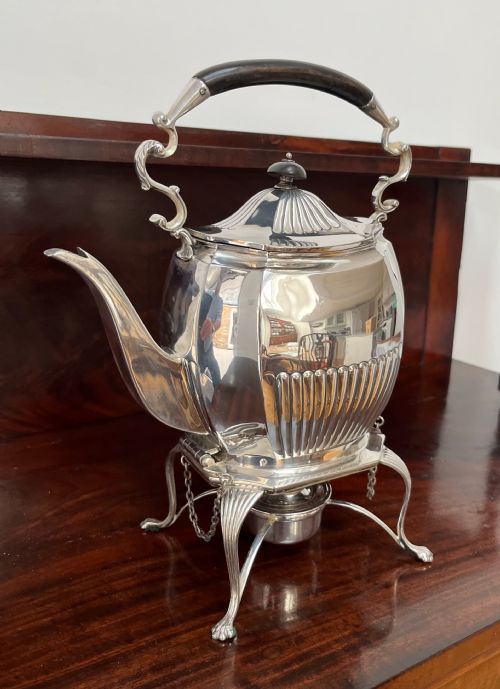
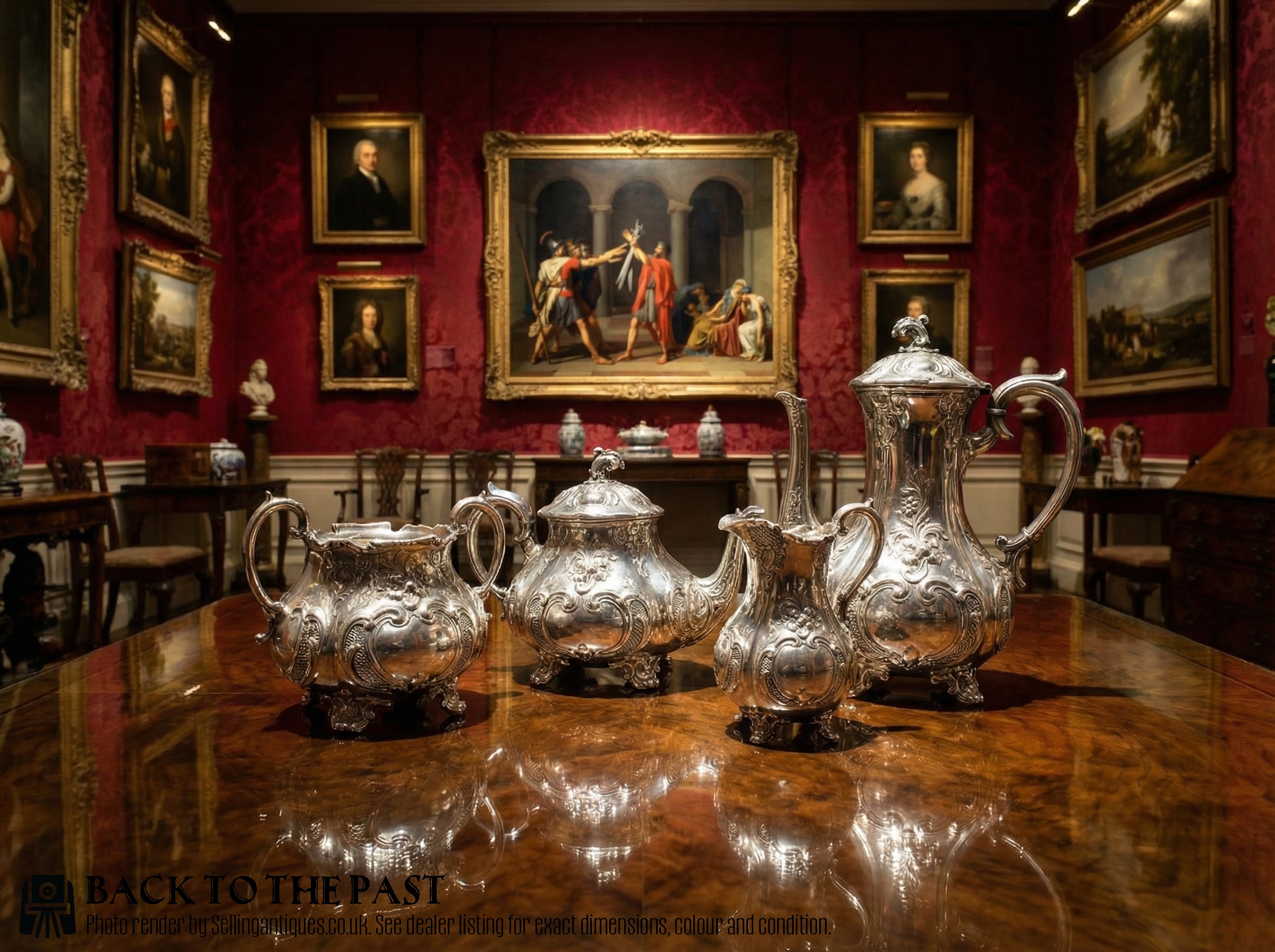
A silver plate tea service comprises matched or coordinated groupings of teaware items designed for serving tea and coffee. The typical assembly ranges from simple three-piece sets of teapots, cream jugs and sugar bowls up to substantial four-piece or five-piece sets that include dedicated coffee pots and large serving trays. Spirit kettles on stands with burners also appear frequently alongside these core service groupings.
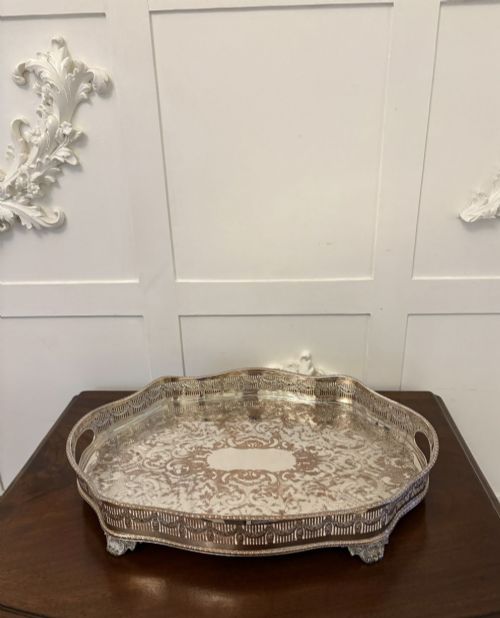
Edwardian examples dominate the selection, bringing ornate details like grapevine motifs, engraved surfaces and gallery trays into the domestic sphere. Pieces from the Victorian and Art Deco periods also emerge regularly, spanning from robust mid-nineteenth-century designs to clean twentieth-century geometric lines. Buyers find these groupings shaped by distinct historical revivals, including Georgian and Edwardian Rococo styles.
Materials and technique
Manufacturers built these sets using metal cores, primarily electroplated nickel silver and Old Sheffield Plate, coated in a layer of silver. This technique allowed makers to achieve the visual weight and lustre of solid silver while utilising more accessible base metals.
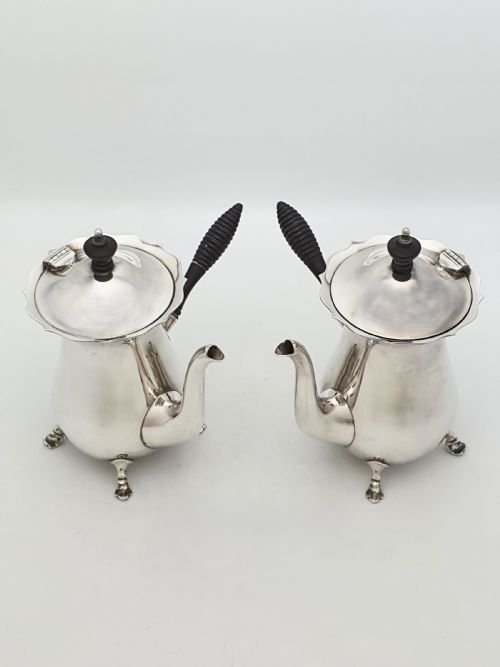
Makers integrated tactile contrasting materials into the handles and insulators of teapots and kettles. Ebony, ebonised wood, plain wood and bone components prevented heat transfer during pouring while adding natural texture to the polished metal vessels.
Variations in quality
Quality rests upon the crispness of decorative detailing, from engraved patterns to cast grapevine ornaments and gallery borders. Superior sets display sharp relief and deliberate proportion across every component in the service.
The integrity of the underlying plating and the durability of insulating handle materials distinguish finer workshop output. Maker attribution further elevates certain services, particularly those bearing marks from established firms.
Walker and Hall·Mappin and Webb·Elkington·Fenton Brothers·Atkin Brothers·Frank Cobb and Co·G.R. Collis·Stower and Wragg·Frederik Ellis Tim and Co·Garrards of London
The Silver Plate Tea Service Glossary
- Electroplated nickel silver
- A base metal alloy of copper, nickel and zinc coated with a layer of silver via an electrolytic process. This method became the dominant manufacturing technique for nineteenth and twentieth-century tableware.
- Old Sheffield Plate
- An early composite material made by fusing a thin sheet of silver to a thicker copper ingot before rolling them together into sheets. This method predates electroplating and often appears on pieces from the nineteenth century.
- Spirit kettle
- A water heating vessel mounted on a metal stand above a small spirit burner. These kettles allowed hosts to maintain boiling water at the tea table throughout a service.
- Gallery tray
- A serving tray featuring an openwork metal gallery or pierced railing around its perimeter. This decorative rim kept teacups and pots secure during transit.
Silver Plate Tea Service: Frequently Asked Questions
What pieces belong in a standard tea service?
A standard service typically contains a teapot, a milk jug or creamer, and a sugar bowl. Larger configurations often add a coffee pot, a hot water jug, and a matching serving tray.
Additional accessories like spirit kettles on stands also accompany certain sets to maintain hot water during extended gatherings.
How do I care for silver plate teaware?
Silver plate requires gentle cleaning with specialised silver polishes and soft cloths to preserve the thin metal coating over the base alloy. Avoid harsh abrasive cleaners that can wear away the plating.
Hand washing with mild soap and drying immediately keeps moisture from settling into joints or insulating handle components made of wood or bone.
How do I distinguish Edwardian sets from Victorian ones?
Victorian sets tend to feature heavy, ornate decoration with robust proportions and deep embossing. These pieces often reflect grand revival styles or elaborate figural motifs.
Edwardian sets frequently display lighter engraving, delicate Rococo revival flourishes, or clean gallery edges while retaining substantial service configurations.
Can I use these sets for everyday dining?
These services function well for serving hot beverages provided users handle the vintage metal and insulating handles with care. Regular use keeps the pieces integrated into daily domestic life rather than confined to display.
Careful hand washing after use preserves the finish and prevents damage to wooden, bone, or ebonised insulators.