
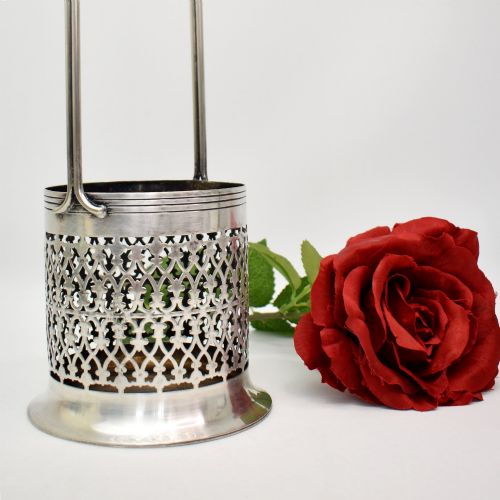


Silver Plate Decanter Holder
A silver plate decanter holder brings order to the dining table, securing bottles and crystal in gleaming frames designed to protect fine surfaces.

Silver Plate Decanter Holder
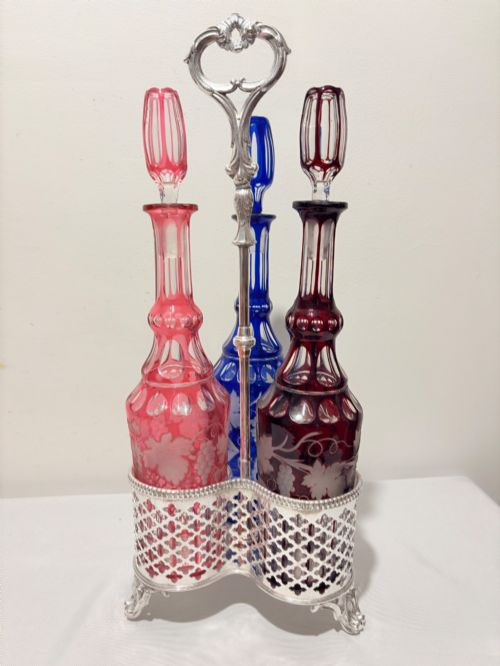
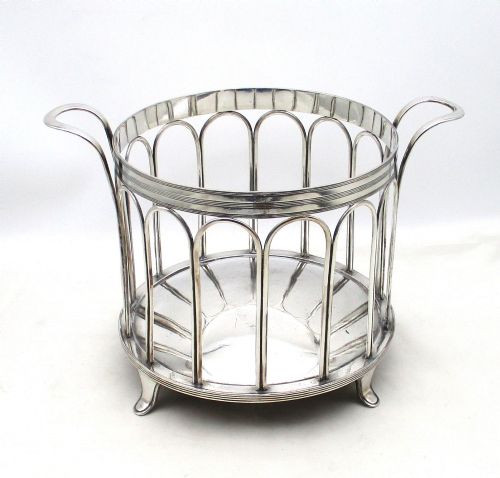
A silver plate decanter holder encompasses wine coasters, multi-bottle stands, frames, and tantalus sets spanning the Georgian, Victorian, and Edwardian eras. The selection frequently includes single bottle coasters, pairs, and frames holding three to six bottles or decanters.
Victorian and Edwardian iterations dominate the available pieces, alongside earlier Old Sheffield Plate examples from the nineteenth century. Buyers encounter forms ranging from simple circular bottle rings to elaborate wheeled carts and locking tantalus frames.
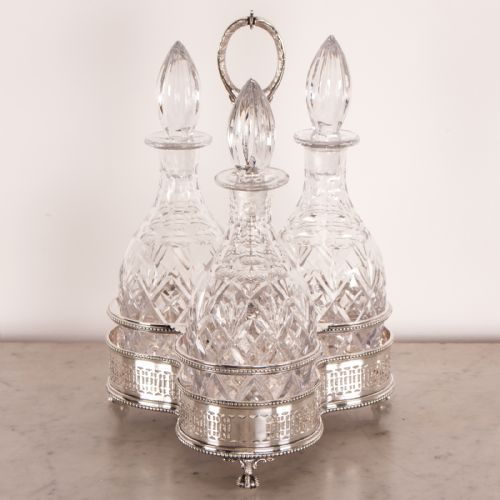
Many variants incorporate fitted cut glass or crystal decanters nestled within silver plated metal frames, occasionally paired with wooden bases such as mahogany or copper elements.
Materials and construction methods
The primary construction relies on silver plate and Old Sheffield Plate, applied over copper or base metals to achieve a durable metallic finish. Manufacturers combined these plated metals with turned wood bases, including mahogany, to form stable table coasters.
Vessels held within these frames utilise cut glass and cut crystal, often formed into matching decanters or bottles. Metalwork techniques include intricate piercing, applied borders, and structural framing to support multiple heavy bottles safely.
Factors determining the grade of pieces
Quality rests heavily on the crispness of the chased or pierced ornamentation and the thickness of the silver plating over the underlying copper or base metal. Pieces produced by notable makers exhibit superior weight, balanced proportions, and more substantial framing.
The integration of original matching cut glass or crystal decanters elevates the desirability of a stand, particularly when the glass shows no chips and fits the metal aperture precisely. The choice of secondary materials, such as dense turned mahogany bases rather than plain metal, indicates higher manufacturing standards.
Walker & Hall·Brook & Son, Edinburgh·Elkington·Matthew Boulton·Wade Wingfield Wilkins·Mappin Brothers
The Silver Plate Decanter Holder Glossary
- Old Sheffield Plate
- A composite material made by fusing a thin sheet of silver to a thicker copper ingot before rolling them into sheets together. This technique predates modern electroplating and leaves a characteristic copper seam visible on edges.
- Tantalus
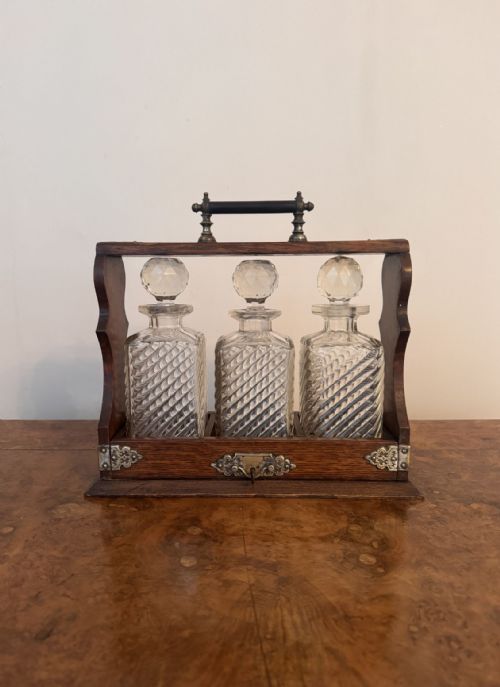
- A locking drink cabinet frame that secures decanters by a top bar, preventing access to the contents without a key while displaying the bottles. These appear frequently in Victorian and Edwardian household goods.
- Wine Coaster
- A small, portable disk or stand designed to hold a wine bottle on the dining table, often featuring a turned wooden base to slide smoothly across polished wood. They prevent rings and spills on the table surface.
- Cruet Set
- A fitted frame holding multiple bottles or jars for condiments, oils, or vinegars, constructed in silver plate alongside cut glass or crystal components.
Silver Plate Decanter Holder: Frequently Asked Questions
What is a tantalus?
A tantalus is a locking drink frame that holds decanters securely beneath a metal bar, preventing guests from pouring drinks without a key.
Originating in the Victorian period, these frames keep the cut glass bottles visible while restricting access.
How do I date a silver plated holder?
Dating relies on stylistic markers, manufacturing techniques such as Old Sheffield Plate versus electroplate, and maker marks. Victorian and Edwardian pieces often display heavier cast ornamentation and specific registry marks.
Comparing the form with nineteenth-century design styles helps narrow the production window.
Were these holders meant for wine bottles?
Many circular coasters and stands accommodated standard wine bottles or magnums to protect dining tables from moisture rings. Other multi-bottle frames held decanters, liqueurs, or cruet bottles for service.
The inclusion of wheels on certain frames allowed diners to pass bottles easily down the table.
What is Old Sheffield Plate?
Old Sheffield Plate is an early fusing technique where silver is bonded to a copper base before shaping. This method creates items that predate nineteenth-century electroplating.
Collectors look for the telltale copper lines where the overlapping silver sheet folds over the edges.