



Silver Place Card Marker
These silver place card marker pieces bring silver detail to table settings through small figures and holders from the Victorian, Edwardian and later eras.
Silver Place Card Marker
A silver place card marker serves to designate seats at formal dining tables using cast or sheet silver figures combined with clips or slots. When searching for a silver place card marker, buyers encounter both single items and matched sets designed to hold name cards or menus.
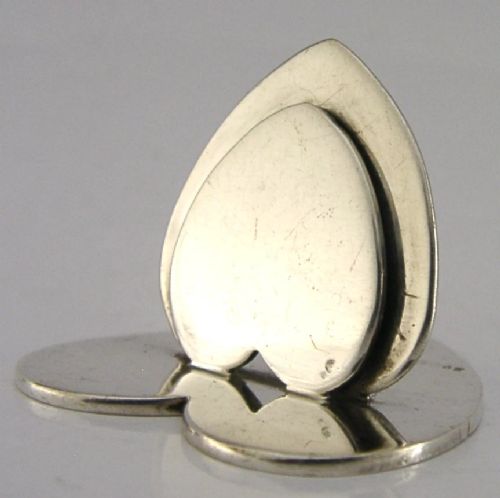
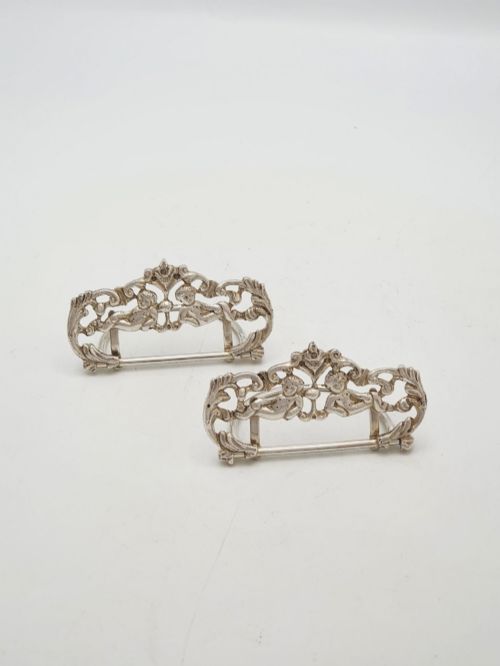
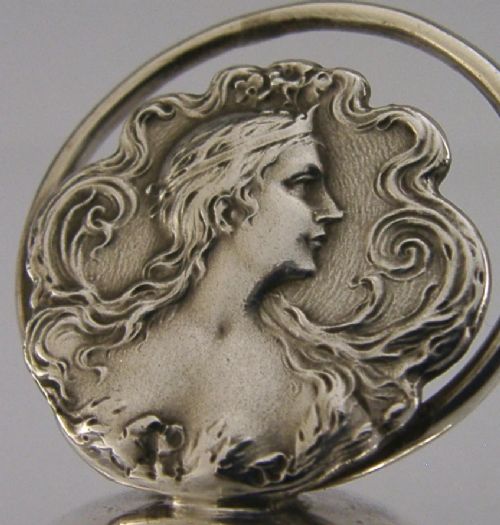
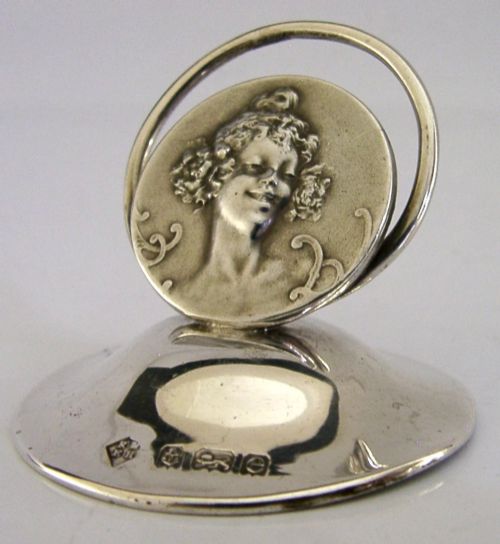
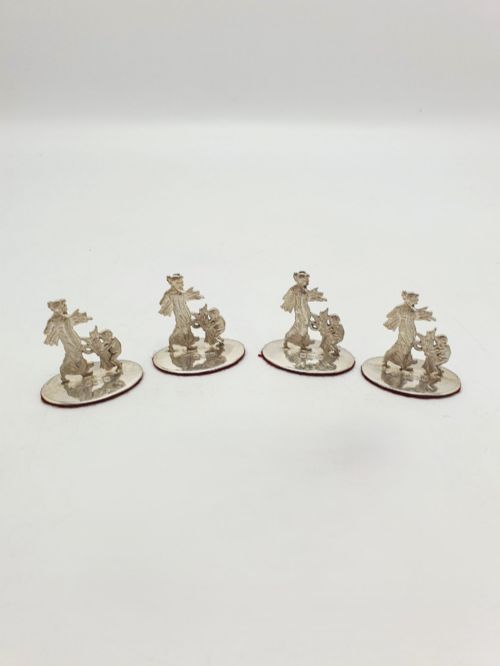
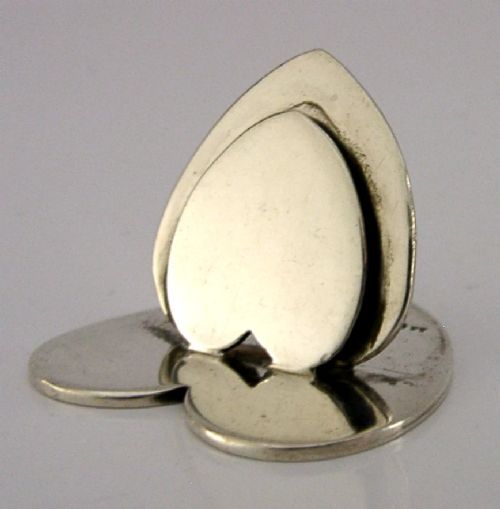
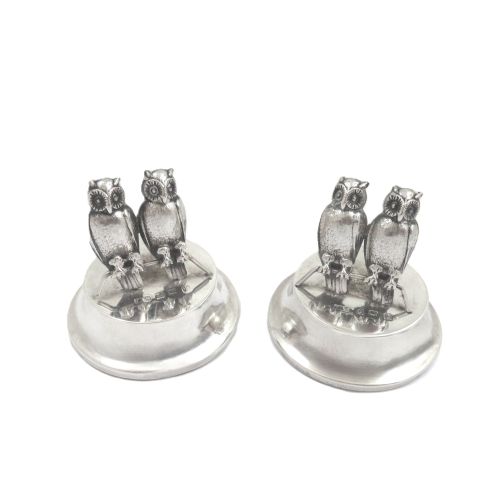
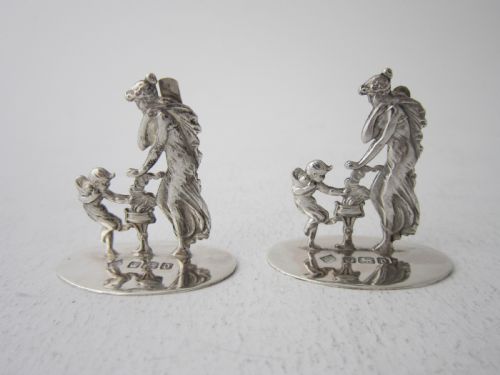
The pieces appearing on this page span the Victorian and Edwardian periods through to the nineteen thirties, encompassing styles from Art Nouveau and Arts and Crafts to Scottish Revival and equestrian themes. Common forms include figural representations such as owls, foxes, cherubs, and maidens, alongside love hearts, sentry boxes, and grouse.
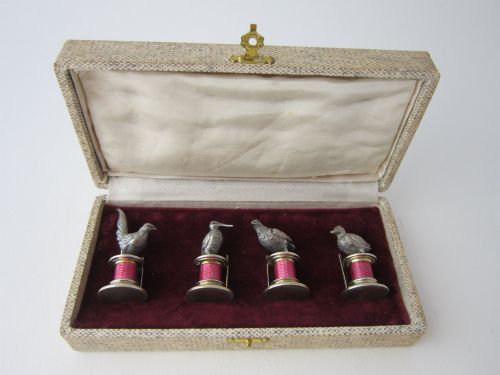
Makers utilised sterling silver and silver plate, occasionally incorporating enamel, guilloche enamel, velvet, silk, or gemstones to add colour and texture to the tabletop arrangement.
Distinguishing quality in table silver
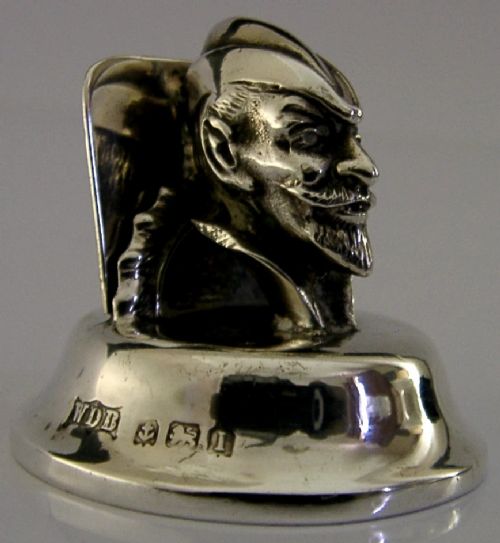
Completeness within matched sets and pairs influences the interest of a collection, alongside the presence of clear hallmarks verifying the silver standard and year of production. The complexity of the design, such as multi-part constructions or the inclusion of enamel and gemstones, also separates standard items from more ambitious workshops.
Dining guests at the turn of the century might find their seats marked by a sterling silver Robin Hood.
Sampson Mordan·Liberty
The Silver Place Card Marker Glossary
- Sterling silver
- An alloy consisting of ninety-two point five percent silver by mass, with the remainder being other metals, typically copper, used widely in British tablewares.
- Hallmark
- An official stamp applied by an assay office indicating the purity of the metal, the maker, and the year of manufacture.
- Guilloche enamel
- Decorative enamel applied over a background that has been machined with an intricate repetitive geometric pattern, creating translucent waves of colour.
- Menu holder
- A small silver stand designed to hold a printed menu card upright on a dining table, frequently combined with place card functions.
- Figural
- Artworks or objects modelled in the exact likeness of human or animal figures rather than abstract or geometric shapes.
Silver Place Card Marker: Frequently Asked Questions
How were these table pieces used?
Hosts placed them around the dining table to indicate seating arrangements for guests during formal meals. They held either individual guest names or small menus detailing the courses.
Their miniature scale allowed them to sit among glassware and porcelain without cluttering the table surface.
How do I date an antique silver marker?
Dating relies heavily on the hallmarks stamped into the silver, which identify the assay office and the exact year of production. Stylistic clues such as Art Nouveau curves or Edwardian figural subjects also point to specific decades.
Matching the design characteristics with known production periods helps narrow down the era of manufacture.
Are these items found in sets?
Yes, many survive as pairs or larger matched sets, such as groups of four or six. Complete sets of twelve also exist from the early twentieth century.
Single pieces appear frequently, reflecting attrition over decades of use in dining rooms.