


Antique Place Card Clip
An antique place card clip sits on the dining table to hold names and menus, bringing silver character and social history to formal meals.
Antique Place Card Clip
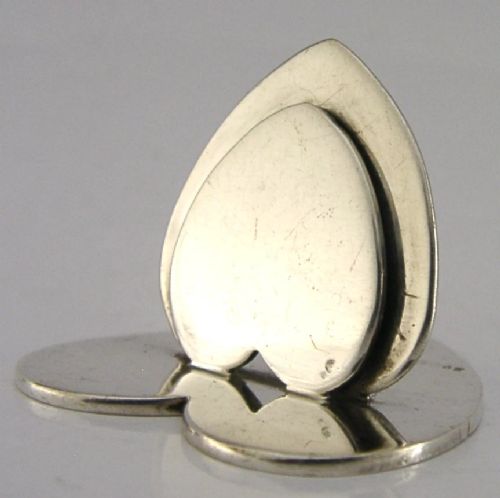
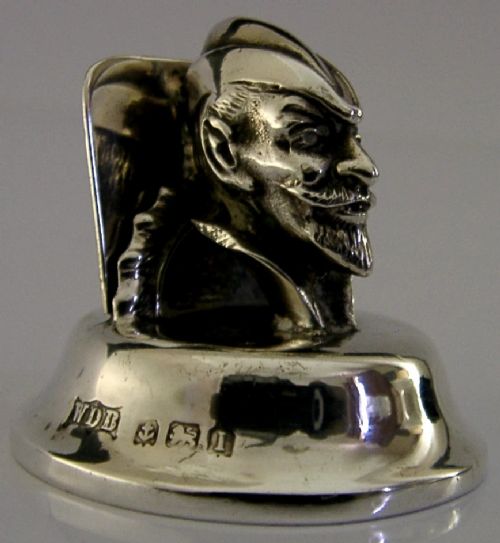
An antique place card clip functions as a small table accessory designed to present names or menu cards during dinner parties. These items serve a dual purpose of practical organisation and decorative table art.
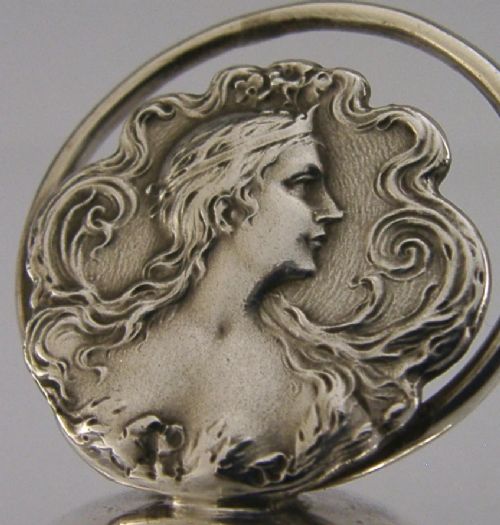
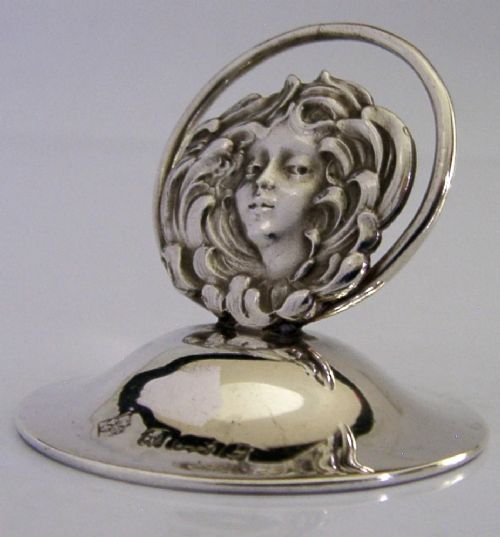
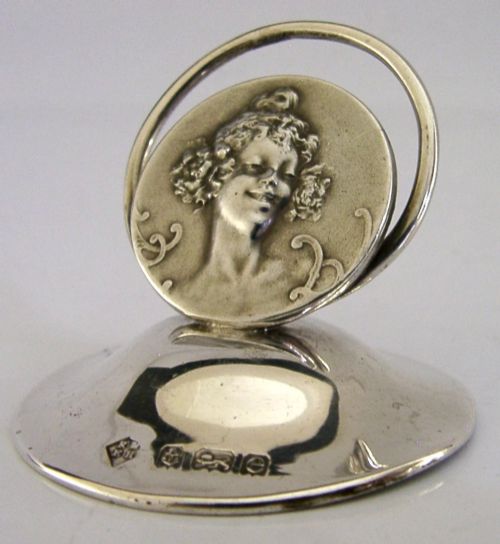
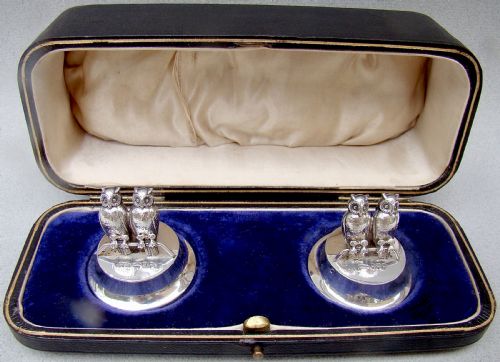
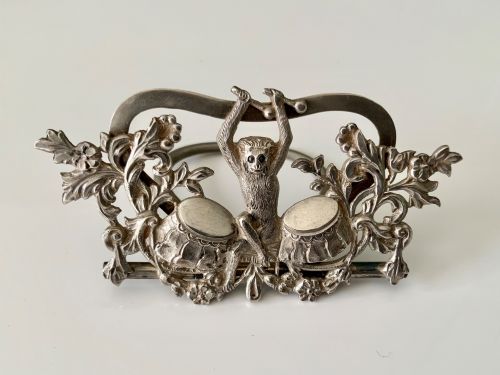
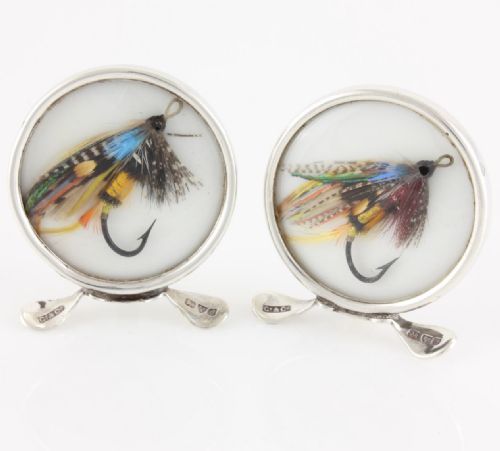
The pieces on this page appear mostly in sterling silver, taking forms such as menu holders and place card holders from periods spanning the Victorian era through to the mid twentieth century. Edwardian examples dominate the selection, often featuring playful figural subjects.
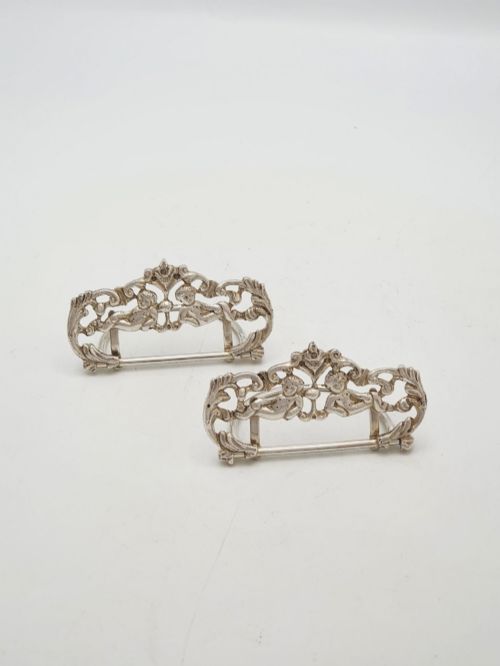
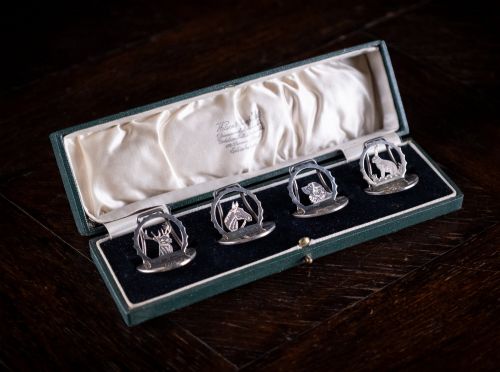
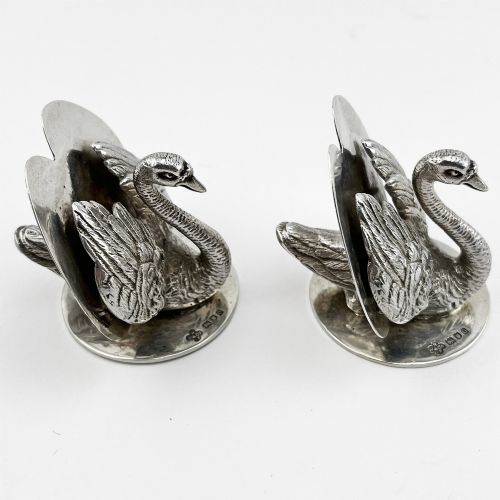
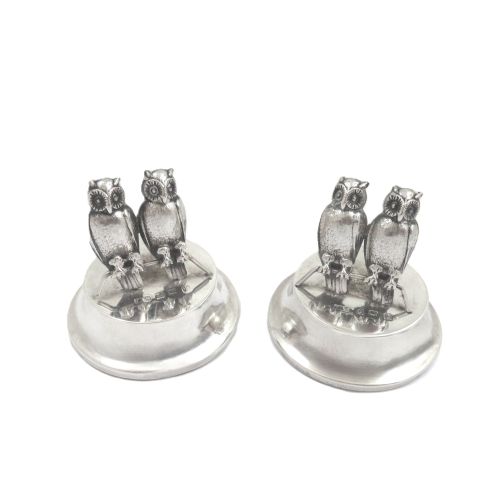
Makers produced these items in matched pairs or larger sets for formal dining arrangements. Collectors encounter diverse styles including Art Nouveau, Art Deco, and British Military themes.
How they were made
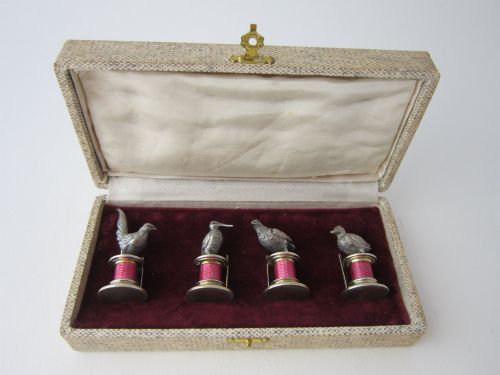
Selected pieces combine the silver base with coloured enamel to highlight flags or specific motifs, while others pair with fitted velvet, silk, leather, or glass cases for storage. These supplementary materials provide context for the presentation and preservation of the tableware.
Listings feature sterling silver pieces spanning the Victorian, Edwardian, and Art Deco periods, alongside mid-century silver plated examples.
What varies in quality
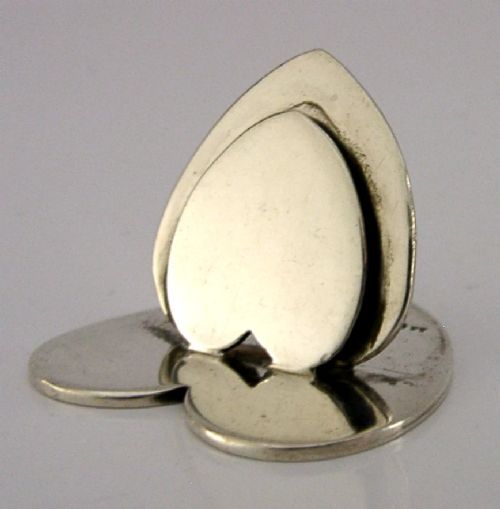
The standard of an antique place card clip depends largely on the clarity of the cast figural subject and the crispness of the maker marks. Recognisable forms like animals, birds, or literary characters display superior artistic depth compared to plain geometric clips.
Completeness alters the appeal of these objects, with matched pairs and original fitted presentation boxes commanding greater interest than isolated examples. The survival of fragile secondary elements such as enamel work also influences the desirability of the piece.
Sampson Mordan·Levi and Salaman·A. Wilcox·Grey and Co·Asprey
The Antique Place Card Clip Glossary
- Sterling silver
- A standard alloy consisting of ninety-two point five percent silver and seven point five percent other metals, typically copper. This material provides the durable foundation for the majority of these clips.
- Menu holder
- A tabletop accessory designed to display the evening meal selections to guests. These often share mechanisms and designs with place card clips.
- Assay office
- An organisation that tests the purity of precious metals and stamps items with hallmarks. Towns such as Birmingham and Chester maintained active offices for marking silver.
- Enamel
- A glassy substance fused to the surface of metal through firing for decoration. This technique adds colour to flags and special motifs on select clips.
Antique Place Card Clip: Frequently Asked Questions
What is an antique place card clip?
An antique place card clip is a small silver tabletop accessory designed to hold guest names or menu cards during formal meals.
Craftsmen shaped these items into various figural and decorative forms, predominantly during the Edwardian and Victorian eras.
How were menu holders used?
Hosts placed these items along dining tables so guests could easily read the menu or locate their assigned seats.
Sets of matching clips ensured a uniform appearance across large formal dinner settings.
How do I date an antique clip?
Hallmarks stamped onto the silver provide the exact year of testing and the town where the assay office operated.
Stylistic cues such as Art Nouveau curves or Edwardian figural subjects also help identify the period of manufacture.
What subjects appear on these pieces?
Silversmiths modelled these clips on animals, birds, military themes, and literary characters like Alice in Wonderland.
Abstract and geometric menu holders also emerged during later mid-century decades.