
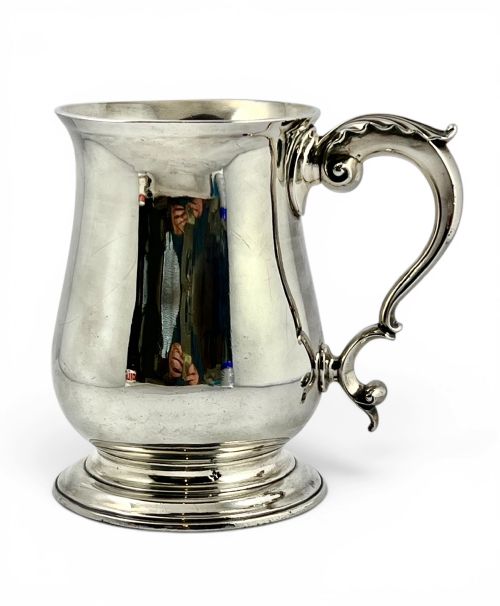


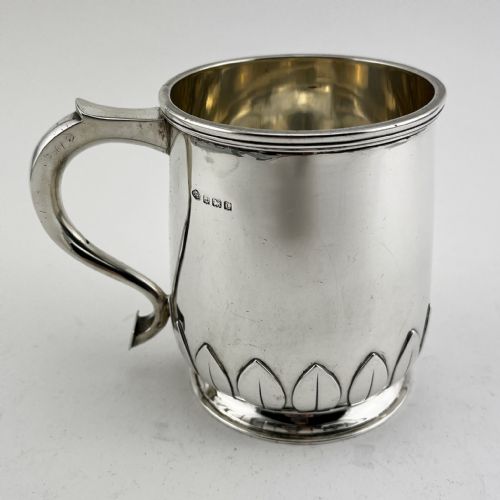


Silver Pint Tankard
A silver pint tankard offers a solid grip on historical drinking vessels, ranging from Georgian solid silver to later plated and pewter examples.
Silver Pint Tankard
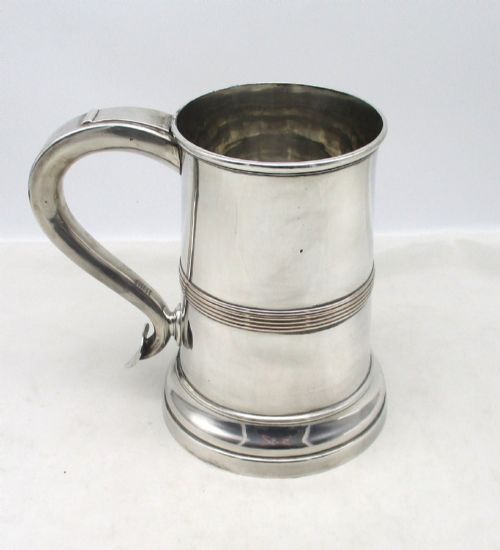
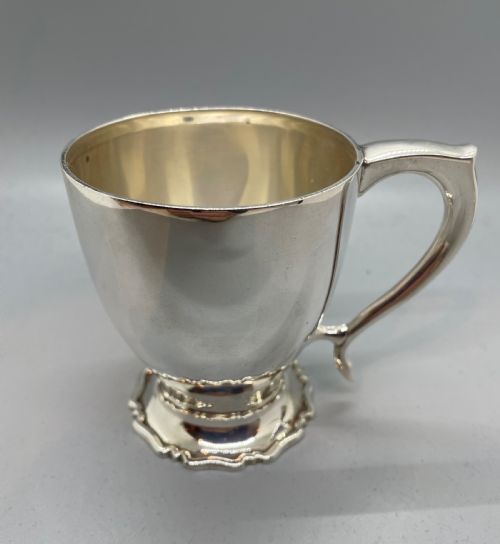
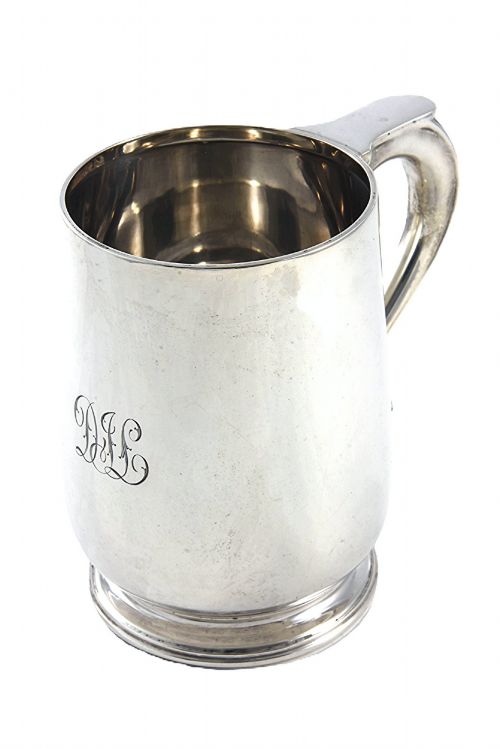
When searching for a silver pint tankard, buyers encounter drinking vessels shaped with single handles and cylindrical bodies, spanning the eighteenth century through to the twentieth century. These pieces appear in solid sterling silver, Old Sheffield plate, silver plate, and pewter, functioning historically as practical tavern or household drinkware.
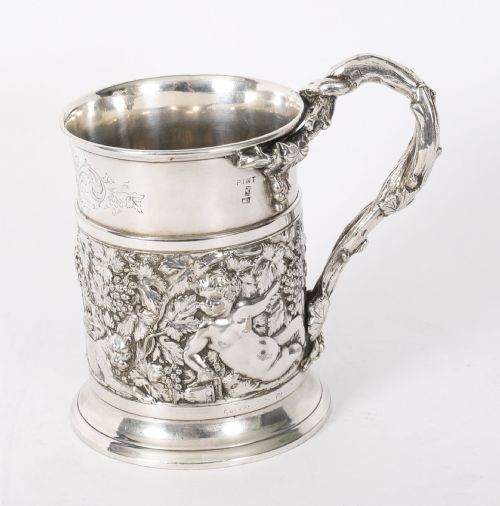
The most common versions met on this page include Georgian solid silver pieces from provincial and London assay offices, alongside George V sterling silver mugs and nineteenth century Old Sheffield plated tankards. Formats vary from plain bodies to embossed, engraved, or lidded designs, encompassing barware, mugs, and traditional tankards.
Materials and Construction
Makers shaped these vessels using sterling silver, Old Sheffield plate, silver plate, pewter, copper, and white metal, working metal through smithing, casting, and plating techniques. Solid silver pieces display hallmarks denoting assay office origins in cities such as London, Sheffield, Birmingham, Newcastle, Chester, and Exeter.
Plated items utilise Old Sheffield plate or silver plating over base metals, while pewter examples demonstrate the enduring appeal of tin alloy compositions. Handles are soldered securely to bodies, and surfaces frequently receive plain finishes, embossing, or engraved crests.
Some sturdy drinking vessels proudly bear seventeenth-century style forms while actually greeting the twentieth century.
Assessing Craftsmanship and Distinction
Quality rests in the weight of the metal, the crispness of the hallmarks, and the balance of the handle relative to the cylindrical body. Heavier solid silver examples demonstrate substantial silver content, whereas plated variations depend on the preservation of the surface plating over copper or base metal.
Distinction also arises from historical provenance, such as identifiable maker marks from silversmiths like William Grundy, Richard Morton, Walker & Hall, or George Unite. Engraved armorial bearings, crests, and period embossing add individual character that elevates certain pieces above plain utility ware.
G R Collis·William Grundy·Richard Morton·Thomas Whipham·Charles Wright·Walker & Hall·George Unite·Liberty & Co Tudric
The Silver Pint Tankard Glossary
- Hallmark
- Official stamps struck into precious metals to indicate the standard of purity, the assay office, and the year of manufacture. These marks provide the primary evidence for dating solid silver pieces.
- Old Sheffield Plate
- A composite material formed by fusing a sheet of silver to a thicker copper base, common in eighteenth and early nineteenth century manufacturing. This technique precedes modern electroplating methods.
- Barware
- Utensils and vessels intended for serving and consuming alcoholic drinks in domestic or commercial settings. Tankards and mugs form a core component of historic drinking service collections.
- Assay Office
- The regulatory body responsible for testing the purity of precious metal items and applying statutory hallmarks. Towns such as London, Birmingham, and Sheffield operated prominent offices.
- Pewter
- A malleable metal alloy consisting primarily of tin, historically utilised for affordable domestic tableware and drinking vessels. Pewter tankards often exhibit soft patinas developed over centuries of handling.
Silver Pint Tankard: Frequently Asked Questions
What is a silver pint tankard?
A silver pint tankard is a traditional lidded or open drinking vessel designed to hold approximately one pint of liquid. These pieces served practical domestic and tavern roles across multiple centuries.
Today, they function as decorative barware, display items, or traditional christening gifts, bridging historical utility with enduring metalcraft.
How do I know if it is solid silver?
Solid silver tankards bear official hallmarks stamped into the metal, usually near the rim or base. These marks include maker initials, a purity standard symbol such as a lion passant, and an assay office mark.
Plated items and pewter lack these specific sterling hallmarks and often display maker marks associated with Sheffield plating or alloy production.
How should I clean a silver tankard?
Cleaning requires a soft cloth and a specialised silver polish formulated to remove tarnish without abrading the surface. Care must be taken around engraved crests and embossed details to avoid removing historical patina.
Plated pieces and pewter demand even gentler handling to preserve the thin outer layer of silver or the soft surface of the tin alloy.
Were these used for beer?
These vessels were historically manufactured for drinking ale, beer, and other fermented beverages in homes and taverns. The sturdy handles and thick metal walls provided durability for daily communal use.
Over time, many transitioned from active tavern service into display collections, presentation pieces, and specialised gift items.