

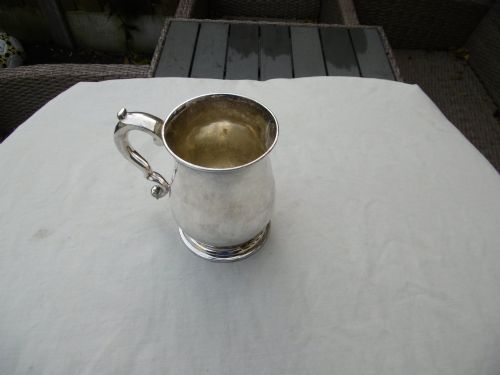
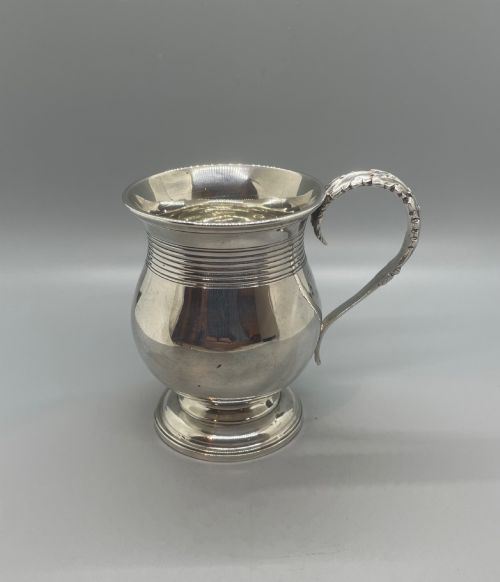
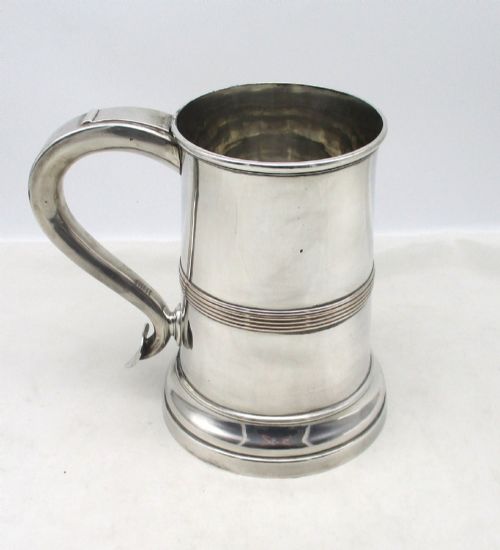
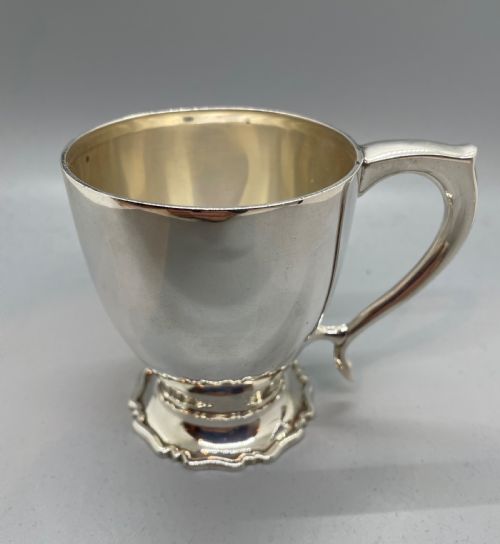






Silver Pint Mug
When you search for a silver pint mug, you are looking at substantial drinking vessels that bridge domestic utility and fine metalwork.
Silver Pint Mug
The versions most commonly met on this page span the eighteenth century through the George V era, originating from major silversmithing centres such as London, Sheffield, and Birmingham. They serve both functional drinkware roles and decorative display functions within historic and modern interiors.
How they were made
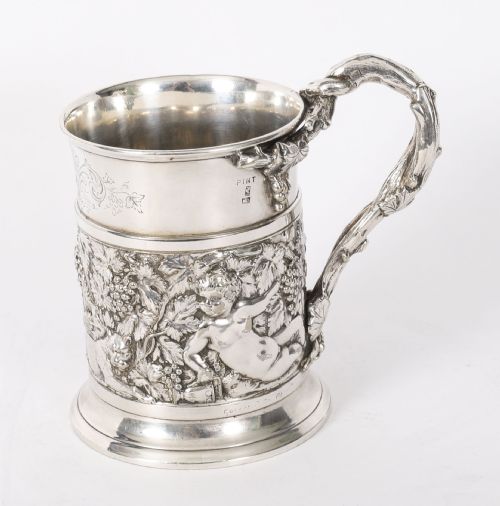
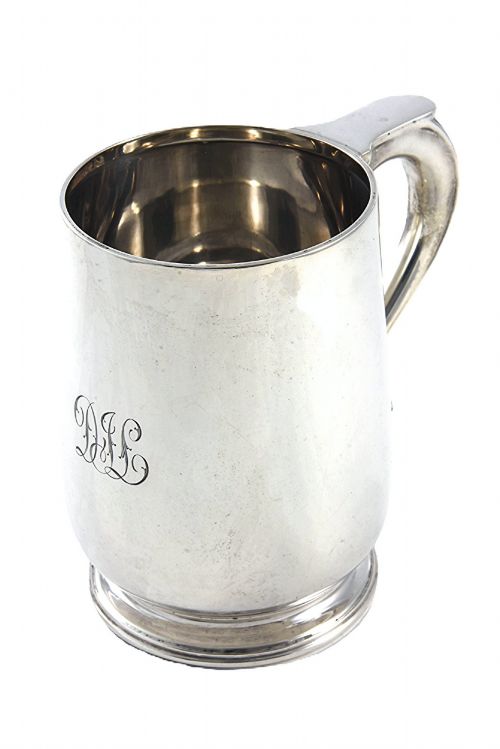
Makers formed these vessels using sterling silver, solid silver, and Old Sheffield Plate, a method of fusing copper and silver sheets together under heat. Metalworkers shaped the bodies by raising them from flat sheets or spinning them, attaching sturdy handles by soldering.
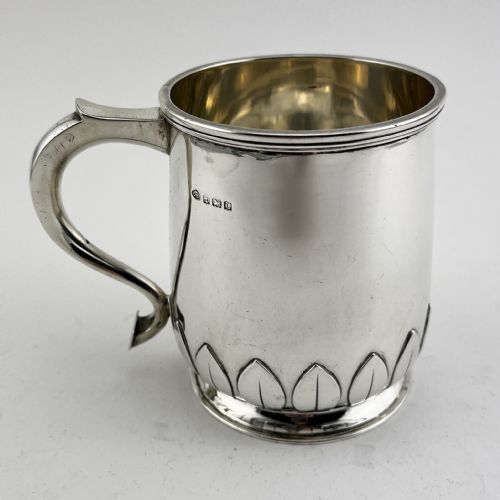
Surface ornamentation involved hand engraving, embossing, and maintaining plain unengraved finishes to highlight the quality of the metal. Workshops applied hallmarks to sterling pieces to indicate the assay office, standard, and date of manufacture.
Silver Pint Mug Retail Price Guide 2026
Typical asking prices for silver pint mug among the pieces listed under this phrase on Sellingantiques today, from the lower quarter to the upper quarter. They describe what is for sale here now, not the wider market.
Listings feature items spanning the eighteenth, nineteenth, and twentieth centuries, utilising sterling silver, Old Sheffield Plate, and pewter.
What varies in quality
The primary distinction across the range lies in the weight of the metal gauge and the integrity of the construction. Thicker silver sheets provide structural heft and resist dents, whilst finer historical examples display crisp, precise assay marks and hand-finished details.
For plated pieces, quality depends on the evenness of the silver layer over the copper substrate and the minimal wear of the base metal through decades of polishing. Proportions also dictate distinction, with balanced handles and clean body lines separating standard items from superior works.
William Grundy·Richard Morton·G R Collis·Liberty & Co·Emes & Barnard·Thomas Whipham·Charles Wright·Carrington & Co
The Silver Pint Mug Glossary
- Sterling Silver
- An alloy comprising ninety-two point five percent silver and seven point five percent other metals, typically copper. This standard composition provides the durability required for daily drinking vessels.
- Old Sheffield Plate
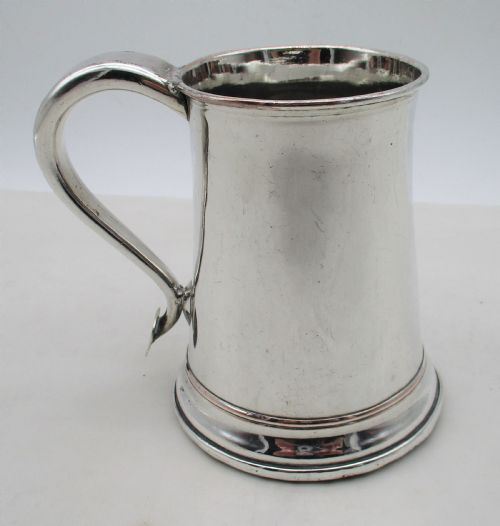
- An early fusing technique where a thin sheet of silver is fused to a thicker copper core. Pieces made this way often reveal subtle lines of copper along exposed rims or edges.
- Baluster
- A curved, vase-like body shape that swells outward towards the base. This profile appears frequently on eighteenth-century beer and christening mugs.
- Hallmark
- A series of stamped official marks indicating the metal standard, assay office, and year of production. These stamps allow collectors to trace the exact origin of silver pieces.
- Tankard
- A tall drinking vessel equipped with a single handle, sometimes featuring a hinged lid. Many historical pint mugs share this form without the lid.
Silver Pint Mug: Frequently Asked Questions
What is a silver pint mug?
A silver pint mug is a traditional drinking vessel designed to hold a full pint of liquid, constructed from sterling silver, solid silver, or silver plate.
These pieces function as both historic barware and display items, reflecting the metalworking standards of their respective periods.
How were silver pint mugs used?
These vessels served primarily for consuming ale, beer, and other beverages in homes, taverns, and communal gatherings.
Over time, many smaller variants also functioned as presentation pieces or traditional christening gifts for infants.
How do I clean a silver mug?
Cleaning requires a specialised silver polish and a soft cloth to remove tarnish without scratching the soft metal surface.
Harsh abrasive cleaners and modern dishwashers should be avoided entirely to preserve the antique finish and hallmarks.
How can I tell the age of a silver mug?
The age is determined by reading the hallmarks stamped into the metal, which indicate the assay office and the specific year letter.
Stylistic cues such as body shape, handle design, and engraving techniques also provide clear indicators of the period of manufacture.