




Silver Pierced Table Basket
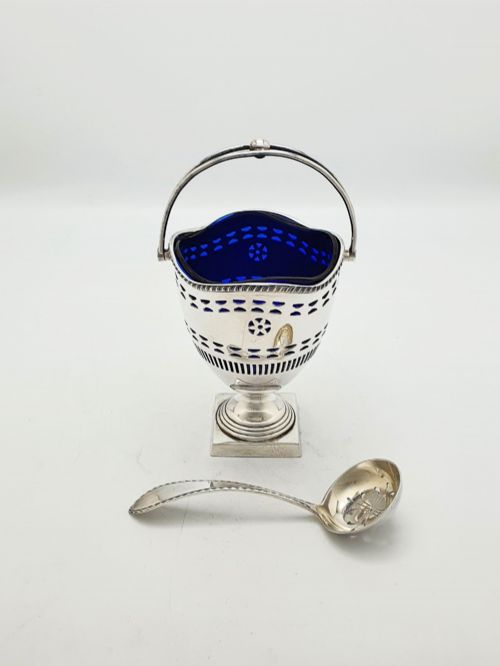
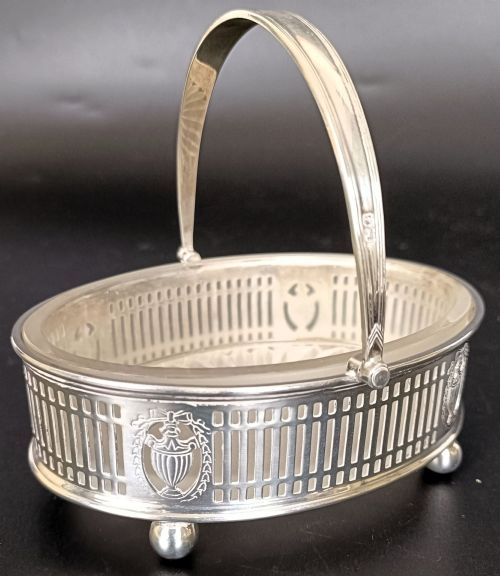
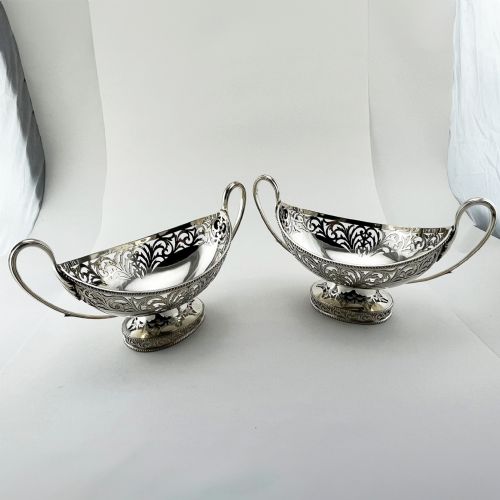
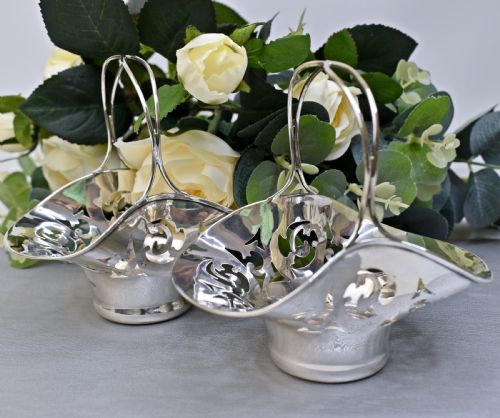
These silver pierced table baskets bring openwork metalwork and colourful glass liners to dining and display settings.
Silver Pierced Table Basket
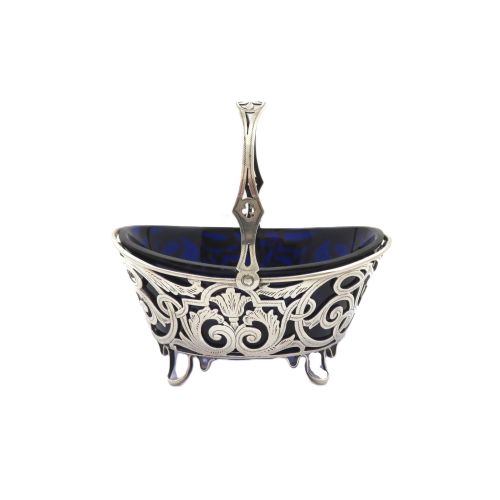
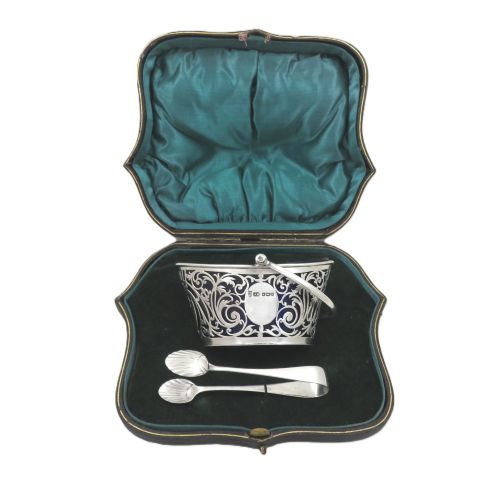
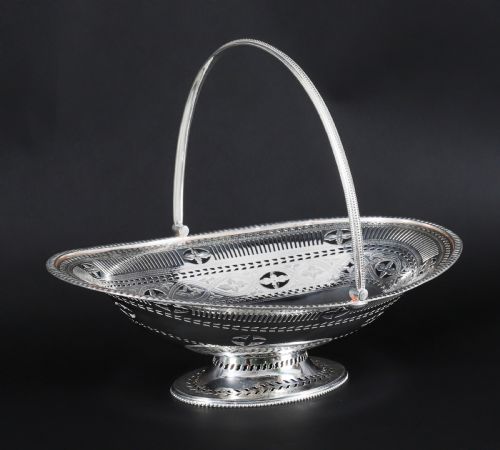
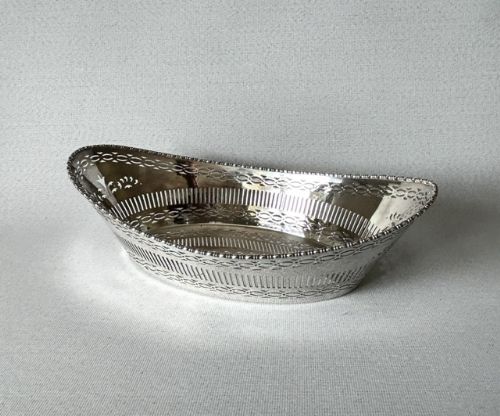
A silver pierced table basket serves multiple dining functions, appearing on this page as sugar baskets, fruit baskets, bread dishes, and centrepiece bowls. Buyers find these items spanning the Victorian and Edwardian eras through to the George V period and the nineteen-thirties.
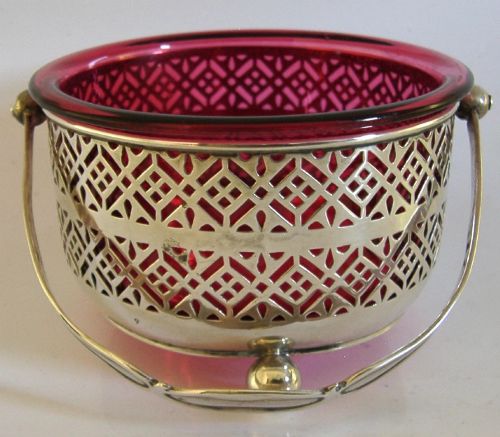
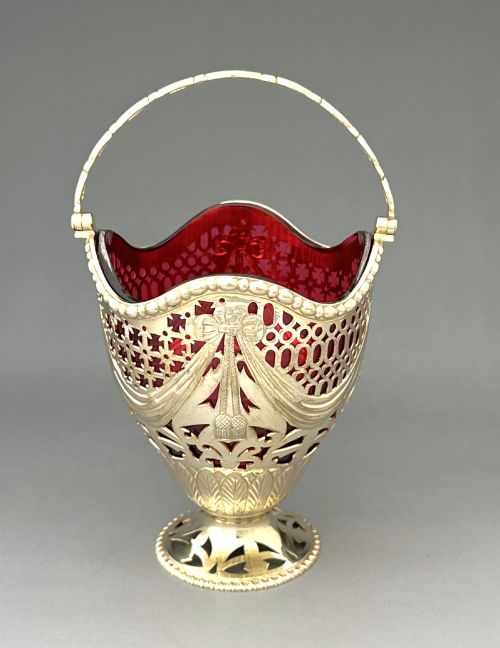
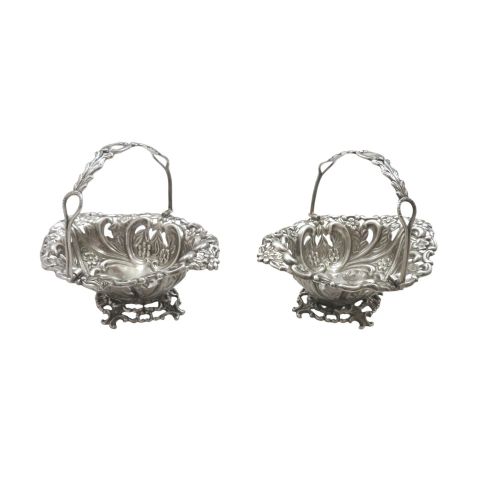
The dominant forms rely on open metalwork walls, frequently paired with contrasting coloured glass liners in cobalt, cranberry, or ruby tones. Smaller sweet stands and bonbon baskets sit alongside large fruit bowls and swing-handled serving vessels.
Materials and Technique
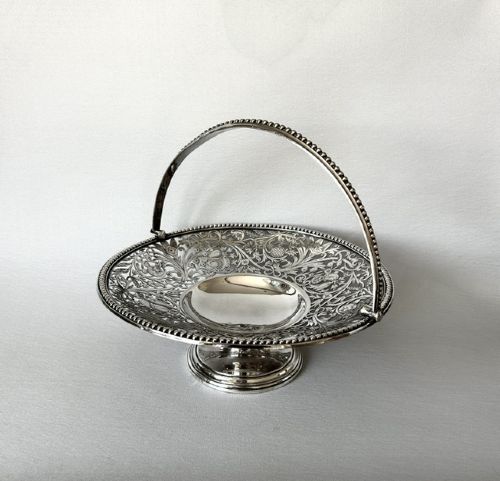
Silversmiths utilised sterling silver and silver plate, alongside electroplate on nickel silver, applying piercing, fretwork, and lattice techniques to create openwork walls. Handles are often hinged or cast with floral and reeded detail.
Makers integrated fitted glass liners, including rock crystal and coloured glass inserts, to hold loose contents safely within pierced metal frames.
The listings span the Victorian, Edwardian, and George V periods, featuring sterling silver, silver plate, and coloured glass.
Assessing Quality
Quality rests upon the crispness of the pierced or fretwork detail and the weight of the metal utilised in the body and handle. Intricate hand-pierced patterns require high skill compared to simpler mechanical stamping.
The presence of an original, undamaged glass liner in cobalt or cranberry glass alters the completeness and visual impact of the piece. Crisp hallmarks and substantial maker names further distinguish finer items.
Mappin & Webb·Elkington·Thomas Bradbury·Fenton Brothers·Joseph Rodgers·William Comyns·Hammond Creake Co·William Hutton Sons·James Dixon Sons·George Fox
The Silver Pierced Table Basket Glossary
- Pierced work
- Metal perforated with geometric, floral, or lattice patterns to lighten the appearance of the vessel. This technique defines the visual style of these baskets.
- Swing handle
- A movable handle attached to pivots on opposite rims of the basket. It allows the vessel to fold flat or stand upright.
- Silver-gilt
- Silver that has been coated with a thin layer of gold on its surface. This treatment provides a warm interior glow.
- EPNS
- Electroplated nickel silver, a common base metal method utilised for plated tableware. It offered an accessible alternative to solid sterling silver.
- Potpourri basket
- A decorative vessel with a pierced lid or body designed to hold dried scented plant material. These items frequently feature glass or crystal inserts.
Silver Pierced Table Basket: Frequently Asked Questions
What were silver pierced table baskets used for?
These baskets served multiple dining roles, holding bread, fruit, sugar, or bonbons during formal meals and afternoon tea.
Larger examples functioned as centrepiece bowls or potpourri containers to adorn sideboard tables.
How do I identify an Edwardian basket?
Edwardian pieces date from nineteen hundred to nineteen ten, often displaying refined lattice work and swing handles.
Assay office hallmarks and date letters stamped into the silver provide precise verification of the manufacturing year.
Why do some baskets have coloured glass liners?
Liners in cobalt, cranberry, or ruby glass protected the pierced metal from moisture and acidic foodstuffs while adding colour contrast.
Original glass inserts enhance the completeness of the item.
How should I clean silver baskets?
Gentle dusting and careful use of non-abrasive silver polish maintain the shine of sterling and plated surfaces without damaging pierced edges.
Glass liners should be removed and washed separately in warm soapy water.
What is the difference between sterling and silver plate?
Sterling silver consists of solid precious metal marked with standard purity standards, whereas silver plate applies a silver layer over a base metal.
Both categories utilise identical piercing and fretwork techniques.