
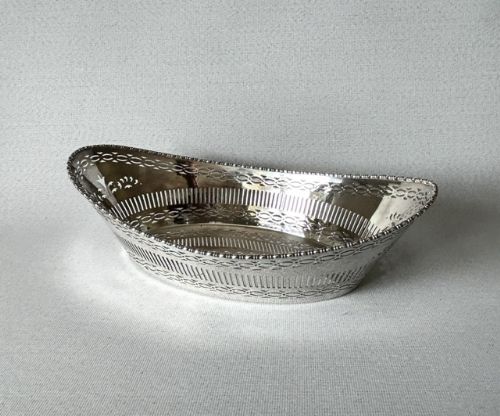
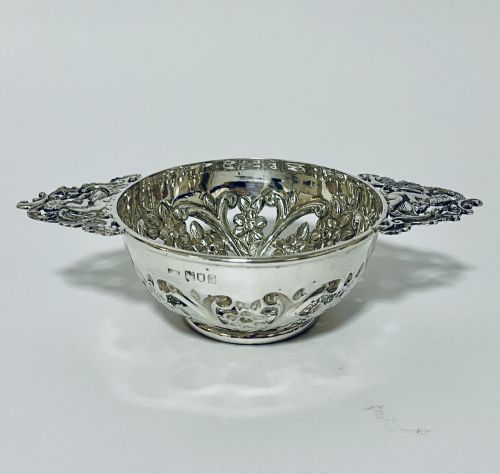
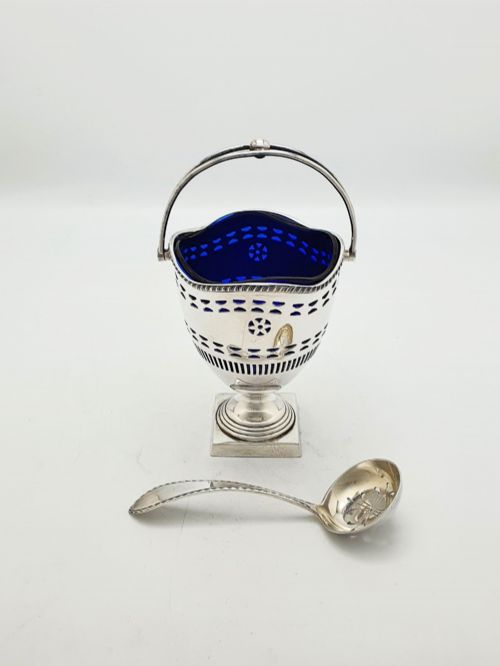
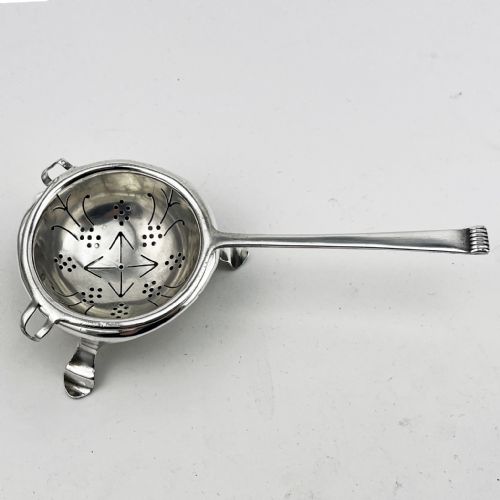


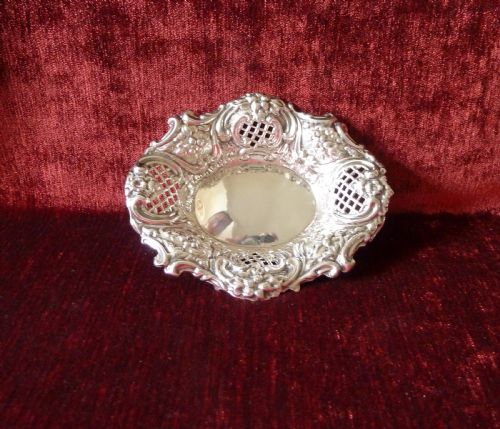

Edwardian Pierced Silver Bowl
An edwardian pierced silver bowl combines delicate metalwork with functional design, offering a decorative centrepiece suited to period interiors.
Edwardian Pierced Silver Bowl
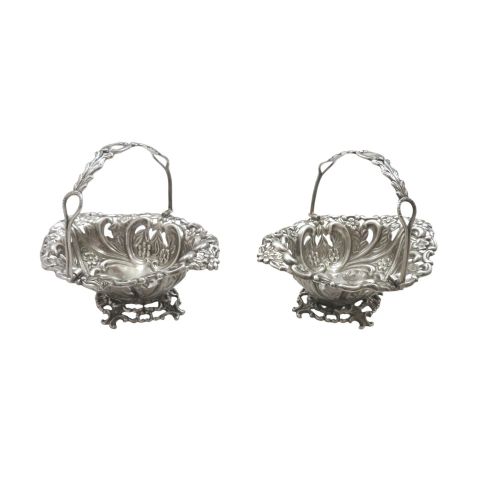
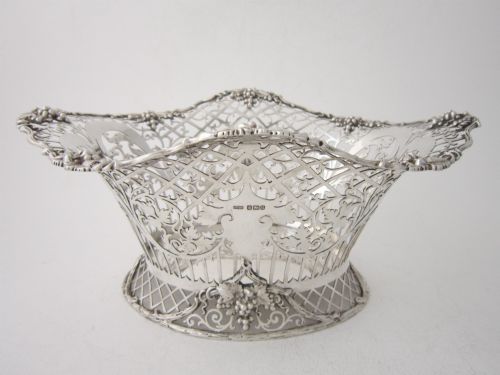
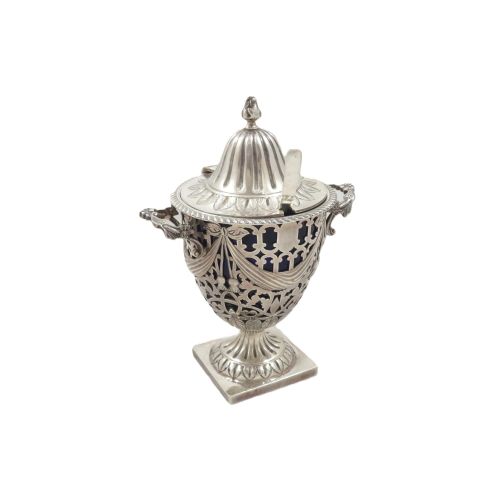
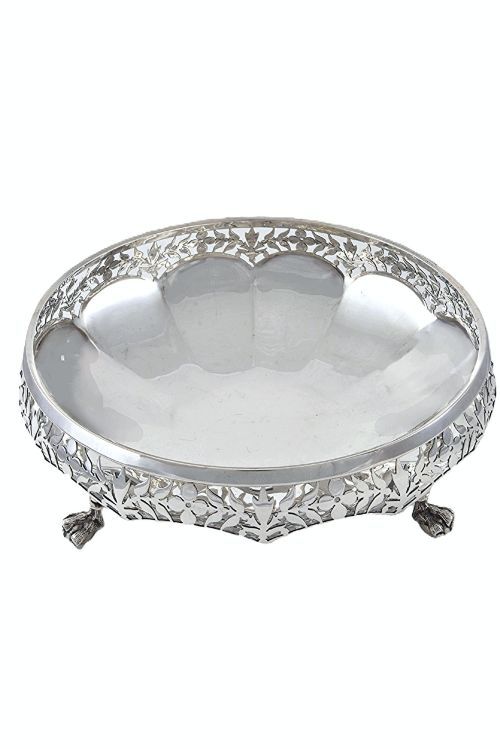
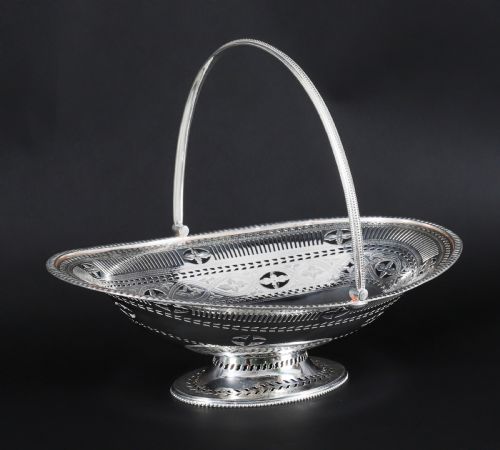
An edwardian pierced silver bowl takes the form of fruit baskets, sugar baskets, and pedestal dishes designed for display and service. These pieces originate primarily from the Edwardian era, alongside related Victorian and George V examples.
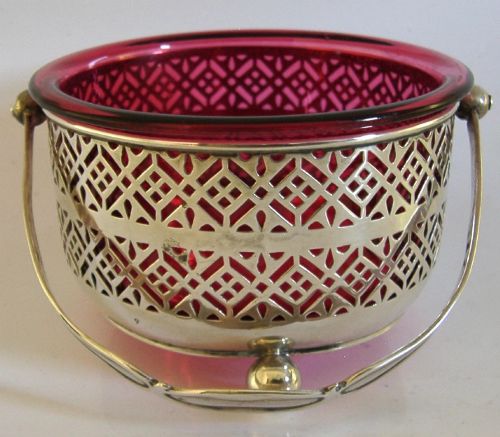
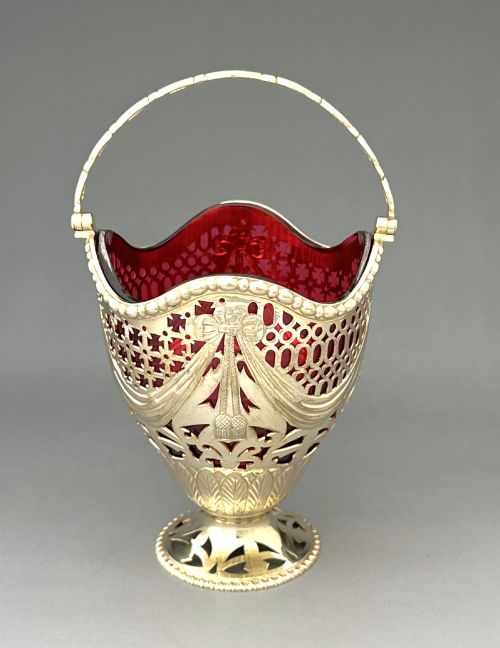
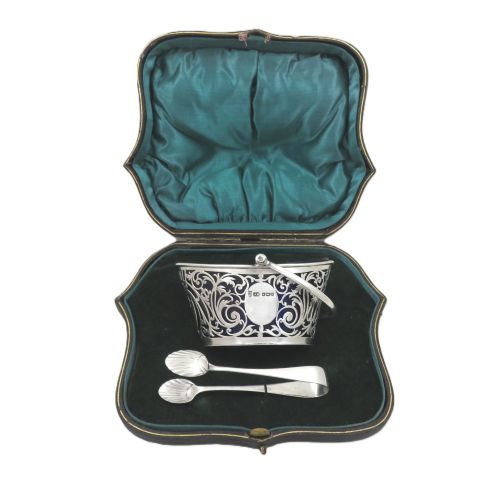
The inventory on this page ranges from swing-handled baskets and footed bowls to covered sugar urns and bonbon dishes. Many examples incorporate coloured glass liners in cranberry, cobalt, or ruby shades visible through the openwork metal.
How They Were Made
Silversmiths utilised sterling silver and silver plate, shaping metals through casting, hammering, and piercing techniques to create intricate fretwork, lattice patterns, and wickerwork designs. Skilled artisans pierced the metal sheet by hand or machine to form symmetrical openwork motifs.
Makers integrated fitted glass liners in cobalt, cranberry, and ruby glass, securing them within openwork silver mounts and pedestal frames. Swing handles, reeded borders, and silver-gilt finishes completed the construction of these decorative vessels.
Object forms include fruit baskets, sugar urns, sugar bowls, quaiches, and pedestal centrepieces spanning the nineteenth and twentieth centuries.
What Varies in Quality
The standard of an edwardian pierced silver bowl depends on the crispness of the openwork piercing and the weight of the silver used in the body. Heavier gauge metal retains its structural integrity better over time, preventing distortion along the rim and swing handle.
Detailing in the fretwork and the presence of original coloured glass liners influence the overall character of the piece. Maker marks from established silversmiths also contribute to the distinction of individual items.
Mappin & Webb·Walker & Hall·Thomas Bradbury·Joseph Rodgers·Hammond Creake And Co·William Hutton And Sons·Edward H Stockwell·William Comyns·James Dixon And Sons·Jay Richard Attenborough
The Edwardian Pierced Silver Bowl Glossary
- Pierced
- Metalwork decorated by cutting or piercing holes through the surface to create decorative openwork patterns. This technique defines the intricate fretwork seen on baskets and bowls.
- Silver-Gilt
- Silver that has been coated with a thin layer of gold on the surface. This treatment provides a warm interior colour visible beneath clear or coloured glass liners.
- Swing Handle
- A movable arched handle attached to the sides of a basket or bowl by pivot pins. It allows the handle to fold down flat against the vessel rim.
- Pedestal Foot
- A raised, supportive base that elevates the main body of a bowl or dish. This form lifts the pierced metalwork to create a more prominent centrepiece display.
Edwardian Pierced Silver Bowl: Frequently Asked Questions
What were pierced silver bowls used for?
These vessels served functional roles on the dining table and sideboard for holding fruit, sugar, bread, or bonbons. The openwork design allowed hosts to display colourful contents or coloured glass liners.
Over time, their primary function shifted toward decorative display as interior styles evolved, making them popular centrepieces for Edwardian rooms.
How do I clean an edwardian pierced silver bowl?
Cleaning requires a soft brush to remove tarnish and polish residue from the intricate pierced openings without bending the delicate metalwork. Gentle cleaning agents formulated specifically for silver help preserve the surface detail.
Avoid abrasive cloths or harsh dips that might damage silver-gilt finishes or vintage glass liners housed within the framework.
How can I tell an Edwardian bowl from a Victorian one?
Edwardian pieces often feature lighter, airier fretwork and neoclassical or Art Nouveau influences compared to heavier Victorian designs. Hallmarks stamped on the silver provide the exact year of assay and help confirm the period.
Examining the style of the lattice work alongside maker marks clarifies the manufacturing era of the item.
Are glass liners original to these bowls?
Many surviving pieces retain their original cranberry, cobalt, or ruby glass liners, shaped specifically to fit the interior dimensions of the pierced frame. Replacement liners occur due to breakages over the decades.
Checking for a snug fit and matching period glass characteristics helps determine if the liner belongs to the original assembly.