




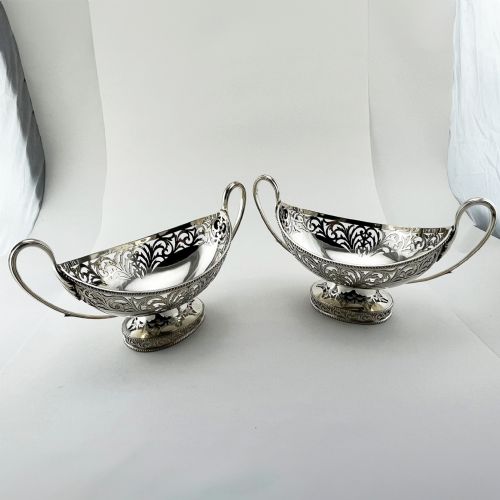


Silver Pierced Handle Bowl
These silver pierced handle bowl pieces bring openwork metalwork and colourful glass liners to your table, offering centuries of decorative serveware.
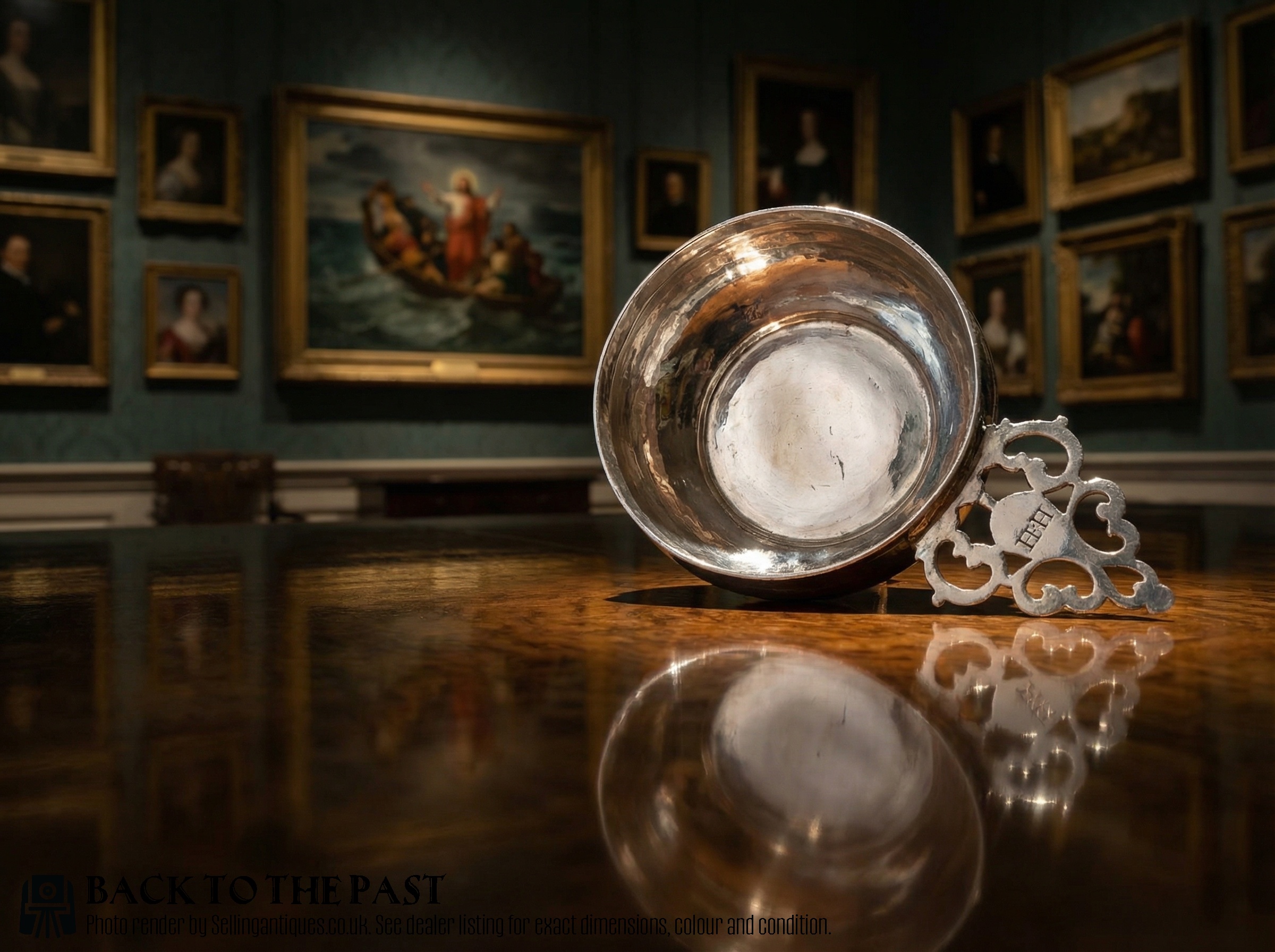
Silver Pierced Handle Bowl
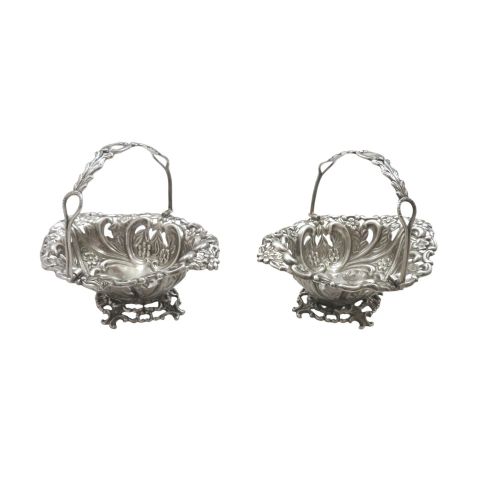
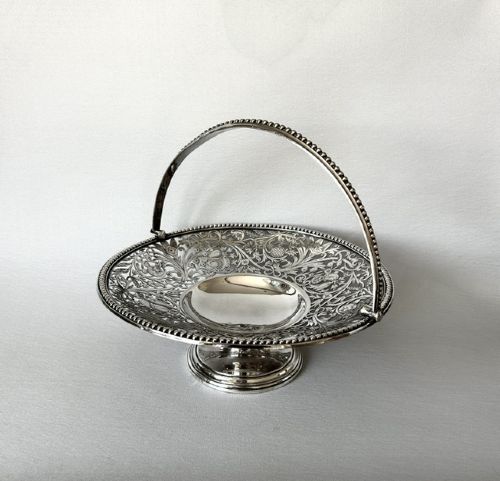
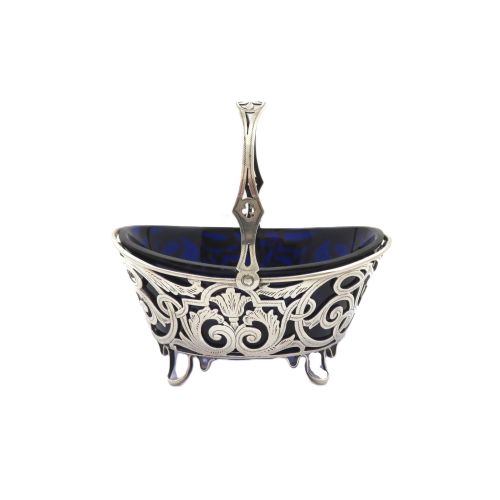
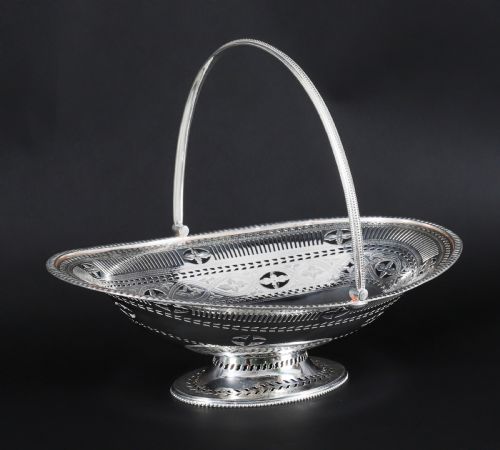
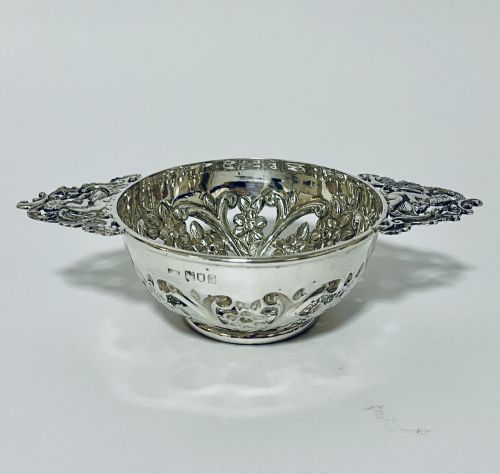
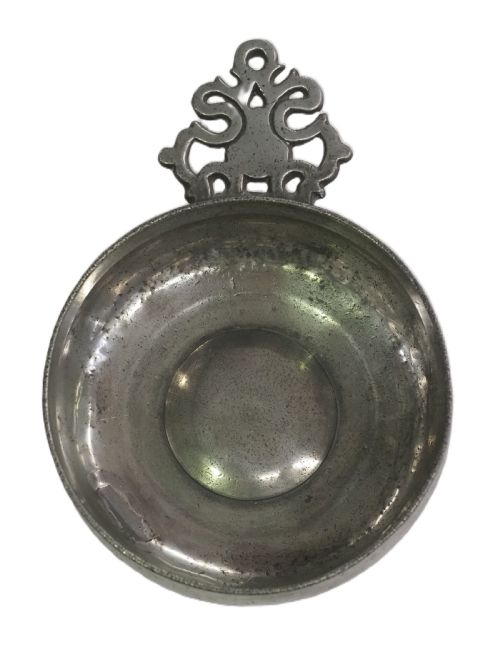
When you search for a silver pierced handle bowl, you look at decorative baskets, sugar baskets, fruit baskets, and serving dishes featuring openwork designs and handles. These items span periods from the seventeenth century through the Edwardian era, taking forms such as cream pails, swing-handled baskets, and porringers.
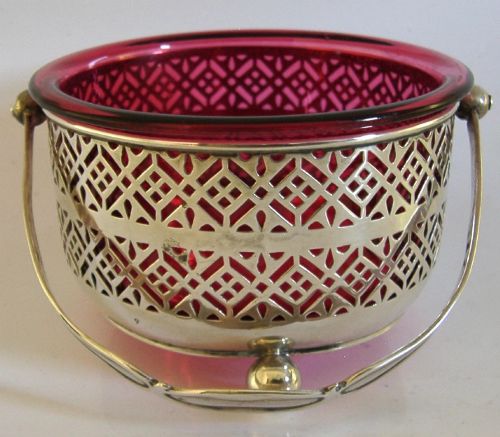
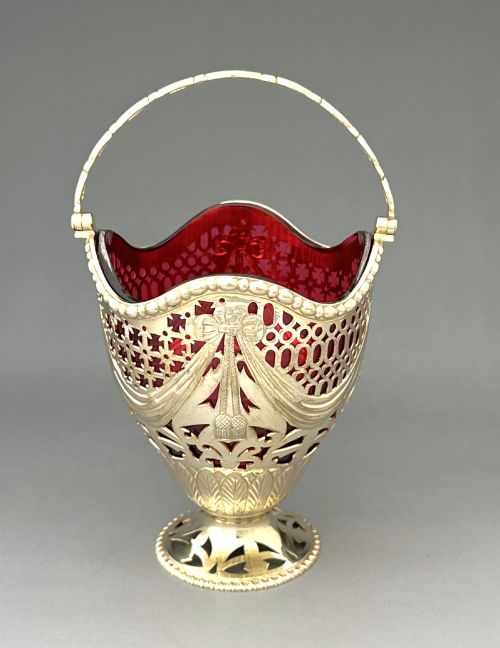
The version you are most likely to meet on this page is the Edwardian or Victorian sterling silver or silver-plated basket, often complete with a cranberry glass, ruby glass, or rock crystal glass liner. These domestic vessels served various functions, from holding sugar and fruit to containing pot pourri or serving as table centrepieces.
What sets the best pieces apart
The distinction between standard examples and the finest items rests upon the crispness of the piercing work and the weight of the metal used. Fretwork that maintains sharp edges and balanced symmetry indicates superior craftsmanship.
The integration of original coloured glass liners and cast handles adds considerable merit. Maker marks from established silversmiths further elevate the standing of a piece.
Some seventeenth-century porringers hold precisely twelve or sixteen fluid ounces, showing that past makers measured broth capacity with surprising care.
Aldridge and Green·Elkington·Thomas Bradbury·Hammond Creake and Co·William Hutton and Sons·William Bond·Edward H Stockwell·William Comyns·George Fox
The Silver Pierced Handle Bowl Glossary
- Piercing
- The technique of cutting decorative patterns through sheet metal to create openwork designs. This method defines the visual character of basketware and bowls.
- Swing-handle
- A movable handle attached to the sides of a basket or bowl via hinges, allowing it to drop to the rim. It is common on fruit and cake baskets.
- Porringer
- A small, shallow vessel with one or two flat, pierced handles, used historically for porridges and broths. Seventeenth-century examples often feature keyhole handles.
- Silver-gilt
- Silver that has been coated with a thin layer of gold on its surface, giving it a rich yellow sheen. This finish appears on select interior bowls and baskets.
- Quaich
- A traditional two-handled drinking vessel of Scottish origin, sometimes rendered in silver during the Edwardian period. It serves as a distinct form of shallow bowl.
Silver Pierced Handle Bowl: Frequently Asked Questions
What were pierced handle bowls used for?
These vessels served various domestic functions depending on their specific form and depth. Sugar baskets and cream pails held table condiments, while larger pieces acted as fruit or cake baskets.
Pot pourri baskets held dried floral materials to scent rooms, and bowls like porringers or bleeding bowls had specific historical dining and medical uses.
How do I identify an Edwardian basket?
Edwardian pieces generally date from the reign of King Edward VII, spanning the early years of the twentieth century. They often feature bright sterling silver construction with intricate lattice or pierced fretwork.
Assay office marks and date letters stamped into the metal provide the exact year of manufacture.
Are glass liners original?
Many baskets were manufactured with fitted glass liners in colours like cranberry and ruby glass. Finding a liner that fits the interior contours securely suggests it belongs to the piece.
Textured rock crystal glass liners also appear in Edwardian examples, designed to catch the light through the pierced silver walls.
How should I clean silver baskets?
Cleaning requires a soft cloth and a gentle silver polish formulated to preserve delicate pierced details. Avoid harsh abrasive cleaners that can wear down engraved or fretworked patterns.
Glass liners can be washed separately in warm soapy water before being placed back inside the dry metal frame.