


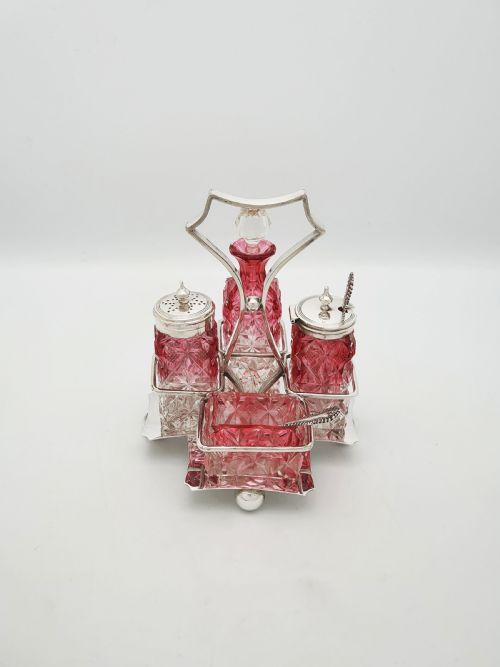


Silver Pepper and Mustard Set
A silver pepper and mustard set brings functional elegance to the dining table, combining precious metal and glass in portable service for seasoning.
Silver Pepper and Mustard Set
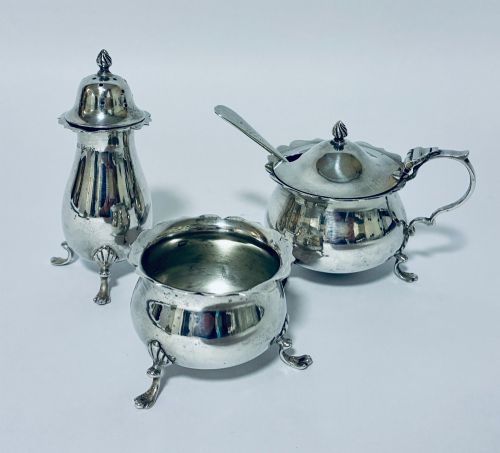
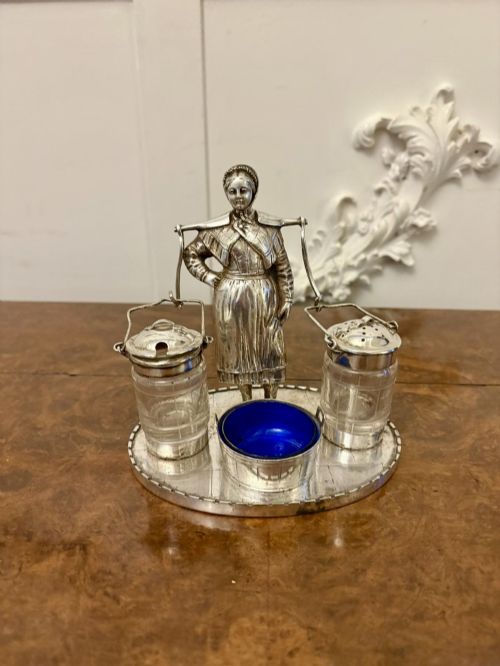
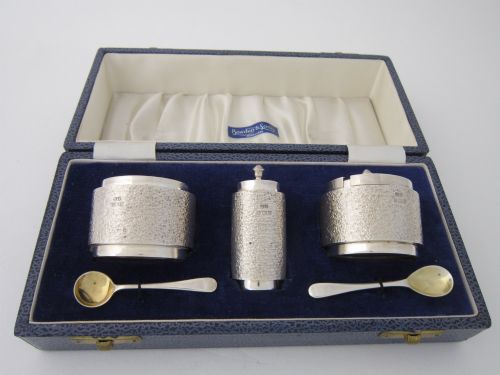
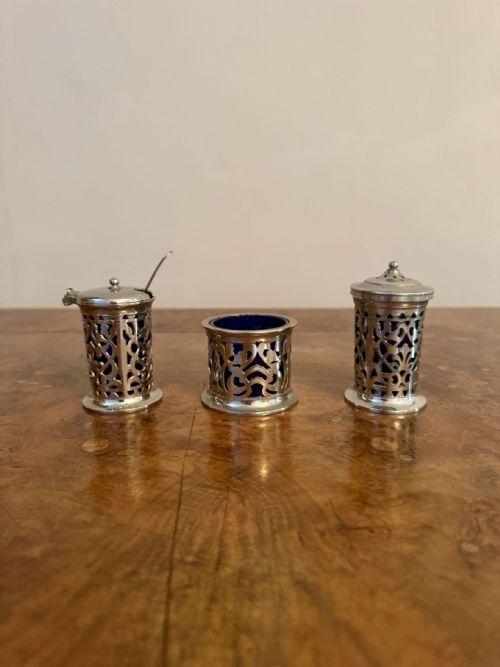
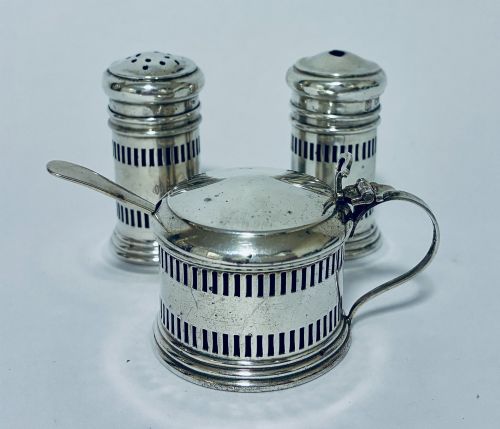
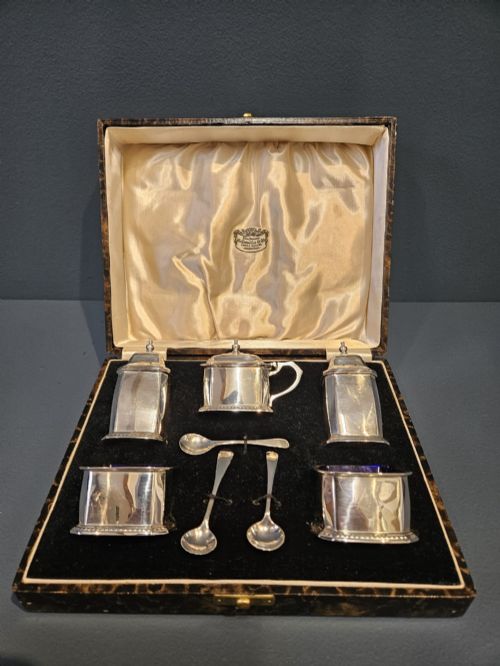
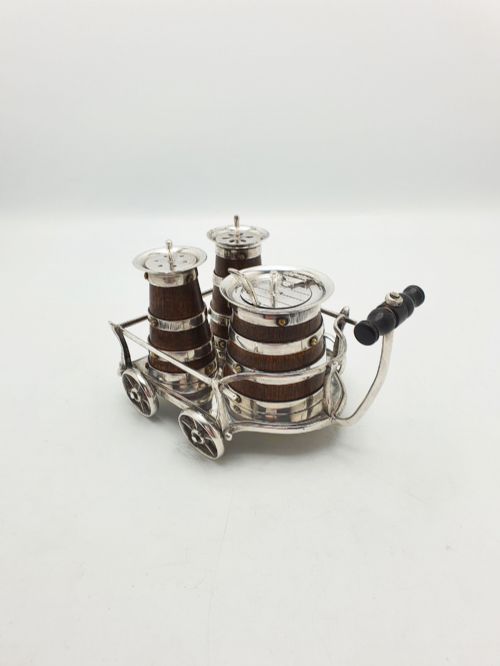
The configurations vary from simple three-piece boxed sets to larger multi-bottle frames incorporating oak or silver stands. Novelty formats take whimsical shapes such as farmyards, chicks, carriages, and musical instruments, while standard domestic groupings focus on clean geometric lines. The majority of surviving examples originate from British silversmiths active across the nineteenth and twentieth centuries.
Materials and construction
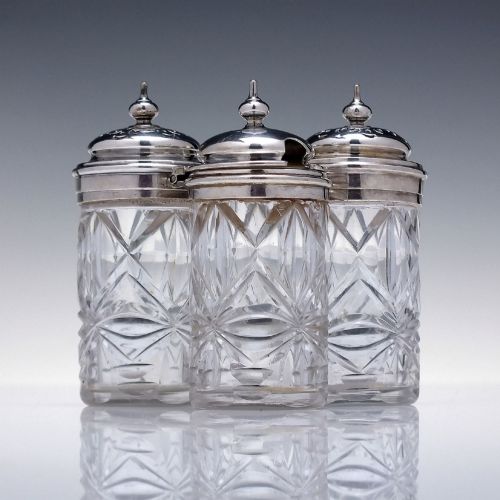
Makers utilised sterling silver and silver plate over base metals, pairing the metalwork with cut glass, cranberry flashed glass, and occasionally oak or satinwood bases. Silversmiths formed the condiment pots and mustard pots through casting, spinning, and stamping, often incorporating hinged lids and delicate blue glass liners to protect the metal from corrosive mustard. Cut glass bottles feature wheel-cut patterns and fitted silver collars or tops.
Stands and frames incorporate cast handles and wirework galleries to secure the individual bottles and shakers in transit. Novelty pieces employ detailed casting and chased surface work to render animal or object forms with texture and realism. Cased sets feature fitted velvet interiors designed to hold each component securely within a wooden box.
Silver Pepper and Mustard Set Retail Price Guide 2026
Typical asking prices for silver pepper and mustard set among the pieces listed under this phrase on Sellingantiques today, from the lower quarter to the upper quarter. They describe what is for sale here now, not the wider market.
Materials appearing across these listings include solid sterling silver, silver plate, cut glass, cranberry glass, and oak.
Assessing craftsmanship and finish
The calibre of a silver pepper and mustard set rests upon the crispness of the chasing, the weight of the metal used in the pots and frames, and the integration of components. Finer sets display substantial gauge silver with uncompromised structural integrity in the hinged lids and handle joints. The clarity and depth of cut glass bottles, along with the precise fit of matching spoons, distinguish superior examples from standard production pieces.
Design ambition separates basic domestic tablewares from novelty pieces and items by notable makers. Well-executed novelty sets maintain balance and anatomical or mechanical proportion while fulfilling their practical function as condiment containers. Original fitted presentation cases and complete, matching component counts further elevate the standing of a set.
William Neale·Mappin Brothers·Bricks & Sons·Wilmot Manufacturing Co·Viners·Mappin & Webb·Elkington
The Silver Pepper and Mustard Set Glossary
- Cruet set
- A collection of glass bottles or ceramic pots mounted on a stand for holding table condiments such as oil, vinegar, pepper, and mustard. These stands usually feature a central carrying handle.
- Condiment set
- A matched grouping of open salt cellars, pepper shakers, and mustard pots used for individual or shared table service. They often rest upon a small matching silver or plated tray.
- Silver plate
- A manufacturing method where a thin layer of silver is fused to a base metal such as copper or nickel silver. This technique offered an accessible alternative to solid sterling silver during the nineteenth and twentieth centuries.
- Cranberry glass
- A rich pink or red glass coloured with gold chloride during the melting process. It frequently appears in Edwardian cruet bottles combined with silver plate mounts.
- Novelty cruet
- A condiment set formed into a pictorial or sculptural shape such as an animal, vehicle, or musical instrument. These pieces combined dining utility with Victorian conversational display.
Silver Pepper and Mustard Set: Frequently Asked Questions
How do I clean antique silver condiment sets?
Clean silver components using a soft cloth and a specialised silver polish, avoiding abrasive pastes that wear away thin plating or soften chased details. Wash glass inserts separately in warm soapy water and ensure they are thoroughly dried before replacing them in the metal mounts.
Keep glass liners away from harsh chemical immersions, particularly if they retain original gilding or delicate cut patterns. Store silver sets in dry conditions to minimise tarnishing between uses.
Were these sets used daily?
Condiment and cruet sets served both formal dining rooms and everyday household meals across the Georgian, Victorian, and Edwardian eras. Wealthy households utilised elaborate multi-bottle frames for dining service, while smaller three-piece sets suited domestic breakfast and dinner tables.
Many sets were also purchased as presentation pieces or wedding gifts, resulting in examples that survived with minimal wear in fitted wooden cases.
How can I date a silver condiment set?
Dating relies primarily on official British hallmarks stamped on sterling silver pieces, which indicate the assay office, year letter, and maker's mark. Stylistic indicators such as Victorian aesthetic movement engraving, Edwardian glass colours, or Art Deco geometric framing help narrow the production period for silver-plated items.
Matching glass bottles and original presentation boxes also provide contextual clues regarding the manufacturing decade.
Are mustard pots lined with glass?
Many antique mustard pots feature removable blue glass liners designed to prevent mustard acid from corroding silver or silver plate. These liners fit snugly inside the pierced or solid body of the mustard pot.
When purchasing a set, check whether the liners are present and undamaged, as replacements can be difficult to source to the exact original dimensions.