
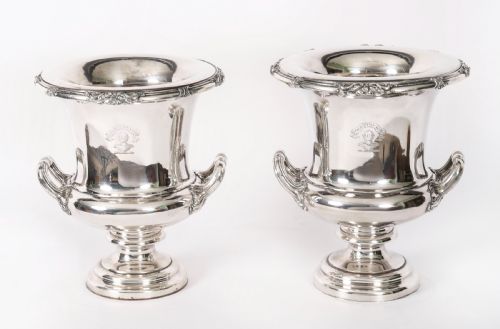
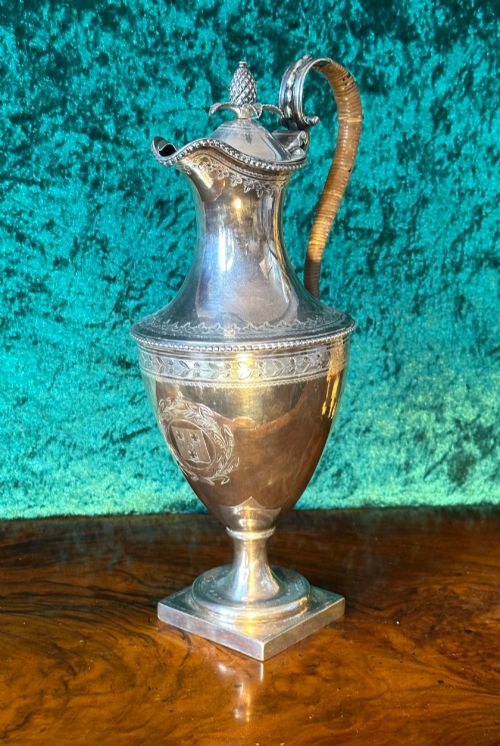


Silver Pedestal Urns
Silver pedestal urns are classical vessels designed for the table and sideboard, prized for their stately proportions and enduring metalwork.
Silver Pedestal Urns
Silver pedestal urns include wine coolers, tea urns, and decorative vases raised upon a distinct foot or base.
The selections span from the 18th century through the Victorian period, encompassing Georgian, Regency, and Grand Tour styles.
Forms range from large wine coolers and champagne buckets down to miniature vases and tea caddies.
How they were made
Makers utilised sterling silver, solid silver, and silver plate over copper, alongside silvered bronze for Grand Tour examples.
Construction techniques involve raising, casting, and plating metal, sometimes combined with glass, wicker, or crystal bodies.
A mischievous dolphin and cherub keep watch from the lid of an Italian ice bucket.
What varies in quality
The distinction lies in the crispness of classical detailing, such as cast handles, cherub motifs, and dolphin lids.
Proportion and weight dictate the presence of an urn, separating substantial George III and Victorian vessels from lighter later pieces.
The Silver Pedestal Urns Glossary
- Old Sheffield Plate
- A method of fusing a thin sheet of silver to a thicker copper core. This technique predates modern electroplating and appears on 18th and early 19th century pieces.
- Wine Cooler
- A large vessel designed to hold ice and bottles at the dining table. They frequently take the form of heavy pedestal urns.
- Grand Tour
- A cultural journey undertaken by wealthy Europeans that inspired souvenirs in classical styles. Pieces from this tradition often utilise silvered bronze.
- Argyle
- A specialised vessel designed to keep gravy warm via a heated internal compartment. They sometimes take an urn-shaped body with a crested exterior.
Silver Pedestal Urns: Frequently Asked Questions
What were silver pedestal urns used for?
These vessels served practical dining functions such as cooling wine, boiling water for tea, or icing champagne.
Over time, many transformed into purely decorative centerpieces or display urns within formal rooms.
How do I identify a Georgian urn?
Georgian pieces from the 18th and early 19th centuries display restrained neoclassical lines and solid silver or Old Sheffield Plate construction.
Look for hallmarks and simple, balanced forms that reflect the classical architecture of the period.
Are these urns solid silver?
The materials vary widely across the selection, encompassing sterling silver, silver plate, copper, and silvered bronze.
Each listing specifies whether the piece is solid silver or plated over a base metal.
How do I care for silver plated urns?
Gentle cleaning with a soft cloth helps maintain the finish without wearing through silver plate or older surfaces.
Avoid harsh chemical dips that can damage copper cores exposed beneath thin plating.