



Silver Openwork Bowl
A silver openwork bowl brings intricate pierced metalwork and classic form to a table, offering both decorative presence and practical service.
Silver Openwork Bowl
The items found here span the Victorian, Edwardian, and interwar periods, featuring origins from English assay offices such as Sheffield and Chester, as well as continental workshops like Vienna and Dutch makers. Buyers encounter items ranging from small footed sweet stands to substantial serving dishes.
The selection frequently includes traditional shapes alongside revivalist aesthetics, such as Rococo revival ornamentation and traditional Dutch barware. Each piece demonstrates how silversmiths utilised piercing techniques to create decorative patterns within functional vessels.
Methods of manufacture
The construction of these vessels relies primarily upon sterling silver, solid silver, and silver plate. Workshops shaped the metal through hammering, casting, and raising before applying decorative techniques.
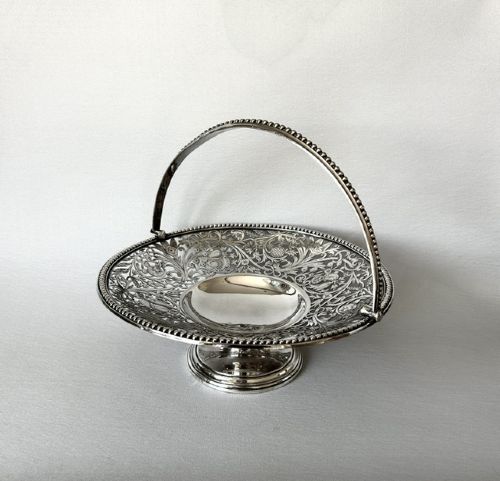
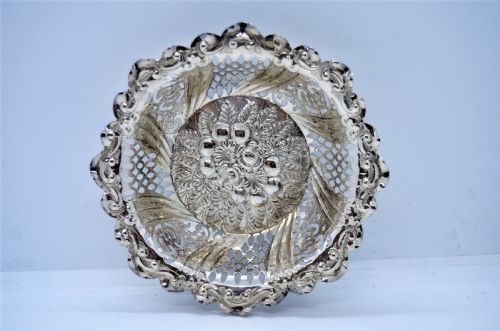
Artisans executed the characteristic openwork patterns through meticulous piercing and lattice work. This required careful hand-sawing or punching of the metal sheet to achieve the desired geometric or floral motifs without compromising the structural integrity of the bowl.
Listings feature sterling silver, solid silver, and silver plate across Victorian, Edwardian, and twentieth-century periods.
Distinctions in quality
Quality in these vessels rests upon the crispness of the piercing and the balance of the overall design. Superior examples exhibit clean, sharp apertures without distortion to the surrounding metal framework.
The weight of the metal and the complexity of the chased or pierced ornamentation differentiate standard production from finer workshop output. Maker marks and clear hallmarks further distinguish pieces produced by established silversmiths.
Fenton·William Hutton and Sons·Martin Hall
The Silver Openwork Bowl Glossary
- Openwork
- Metalwork featuring patterns cut completely through the substance to create a lattice or pierced effect. This technique lightens the object while displaying the surface behind it.
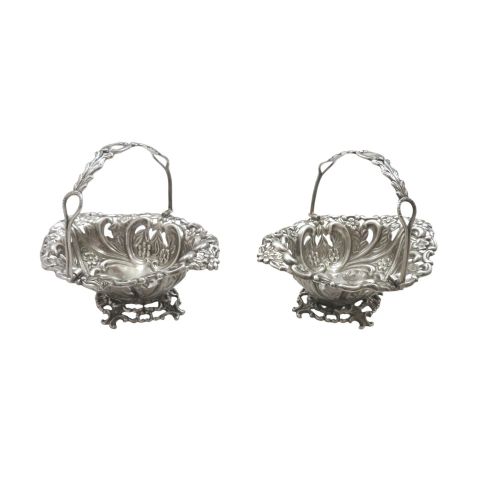
- Bonbon dish
- A small vessel designed specifically for holding sweets or confections. These pieces often feature elevated feet and decorative pierced rims.
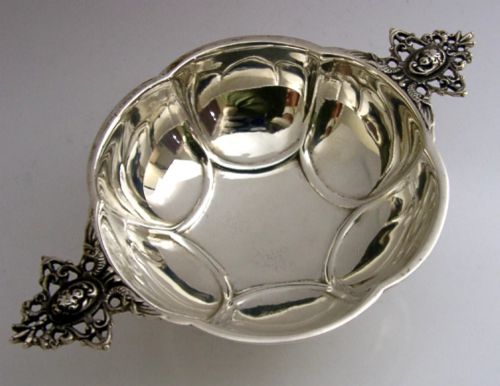
- Quaich
- A traditional Scottish two-handled drinking vessel used for spirits. Versions in solid silver frequently incorporate traditional motifs.
- Hallmark
- An official stamp indicating the metal purity, place of assay, and date of manufacture. These marks allow collectors to verify the origin of silver items.
- Rococo revival
- A nineteenth-century design style characterised by asymmetrical scrollwork, naturalistic shell motifs, and flowing curves. It appears frequently on Victorian silver pieces.
Silver Openwork Bowl: Frequently Asked Questions
What is a silver openwork bowl used for?
These vessels were traditionally employed for serving fruit, bonbons, or dry sweets during formal dining. Their pierced design made them unsuitable for liquids, reserving them for display or dry contents.
Today, they function as decorative centrepieces or tableware accessories that showcase historical metalwork techniques.
How do I clean a silver openwork bowl?
Cleaning requires a soft cloth and a gentle silver polish formulated to avoid abrasive damage to the delicate pierced sections. Care must be taken around intricate lattice work to prevent polish residue from lodging in the cut-out areas.
Frequent light dusting helps maintain the lustre without the need for aggressive chemical cleaning.
How can I date a silver bowl?
Dating relies primarily upon the assay office hallmarks stamped into the metal, which indicate specific years of production. Stylistic markers such as Victorian scrollwork or Edwardian proportions also provide chronological context.
Comparing the maker's mark against historical registry records yields the exact year and location of manufacture.
What is the difference between solid silver and silver plate?
Solid silver or sterling silver consists of a precious metal alloy throughout the entire object, meeting specific legal standards of purity. Silver plate involves a thin layer of silver bonded to a base metal substrate.
Both materials were utilised for decorative bowls across the nineteenth and twentieth centuries.