



Silver Mustard Pot Glass
When you search for silver mustard pot glass, you are looking at functional tableware that combines precious metalwork with colourful glass inserts.
Silver Mustard Pot Glass
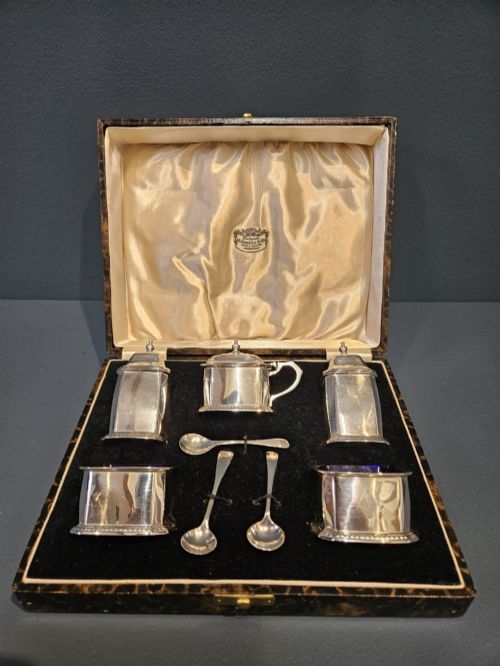
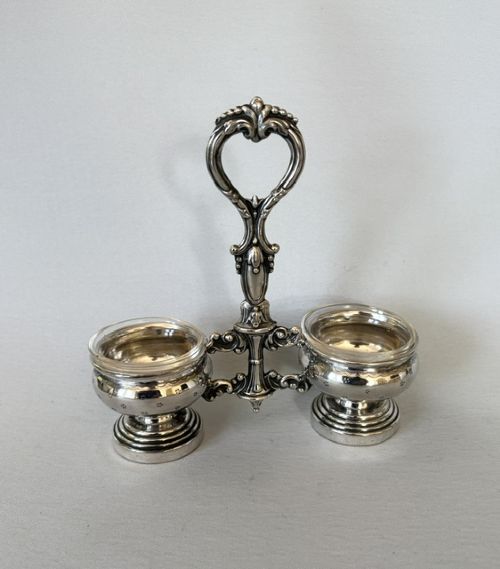
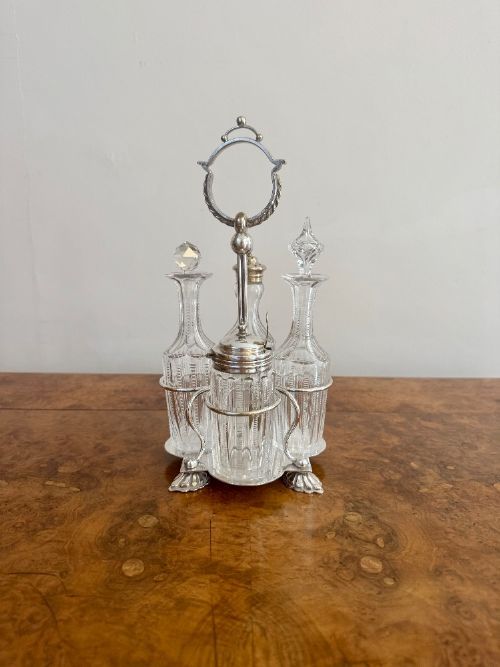
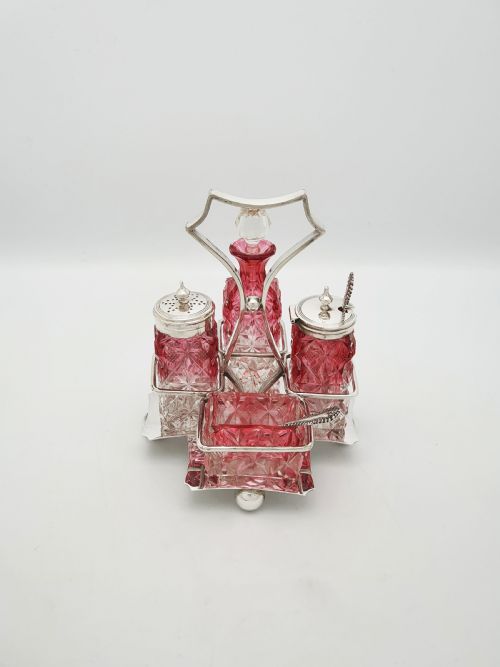
A silver mustard pot glass combination consists of a pierced or solid metal frame holding a removable glass liner, designed for dining table condiments. These pieces appear frequently as part of larger cruet sets or as individual table pieces from the Victorian and Edwardian eras.
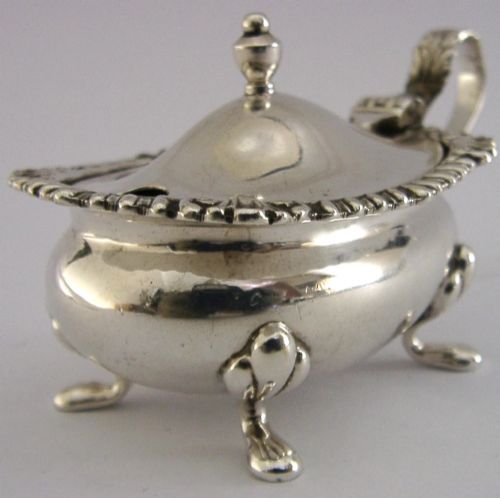
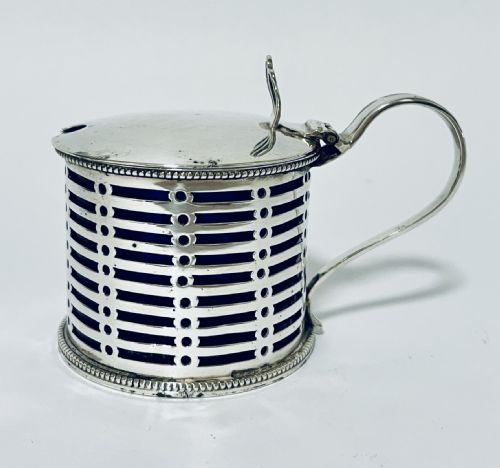
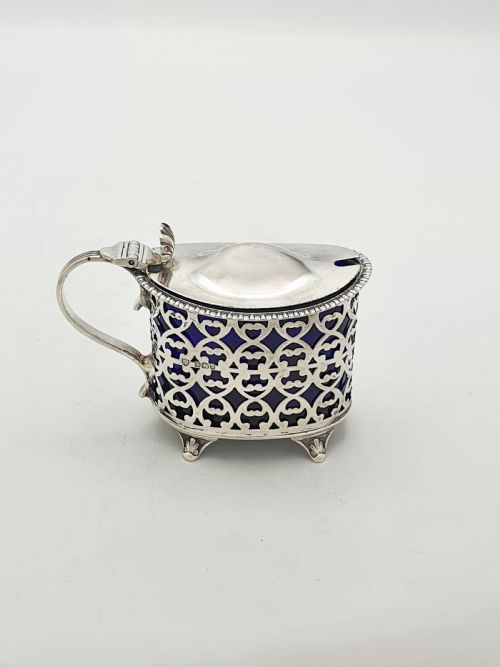
The form ranges from simple drum and oval shapes to novelty designs and Georgian revival styles. Most examples feature hinged lids and small scroll handles, often accompanied by matching spoons for serving.
How They Were Made
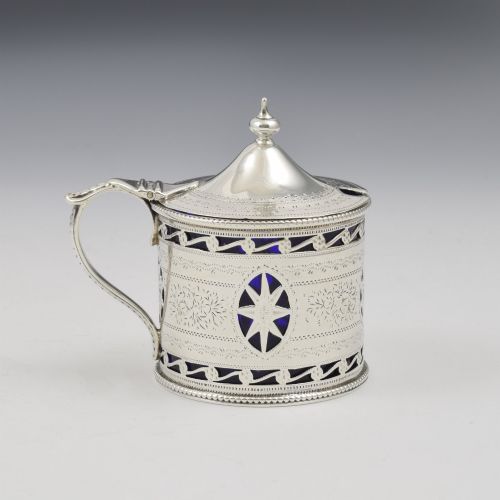
Silversmiths utilised sterling silver or silver plate to construct the outer frames, frequently employing piercing techniques to reveal the coloured glass within. Pierced bodies required careful hand-sawing and file work to create intricate geometric or floral patterns.
The glass liners were typically blown and sometimes cut or flashed, with cobalt blue, cranberry, and ruby red being prevalent choices. These liners protected the silver from corrosive mustard while offering a vibrant contrast through the openwork metal.
Some Victorian silversmiths designed mustard pots shaped like carriages, owls, and devils to amuse diners.
What Varies in Quality
Quality rests in the crispness of the silversmith's piercing and the weight of the metal used in the construction. Heavier gauge silver and substantial glass liners indicate higher manufacture standards compared to lighter, stamped plated alternatives.
The presence of an original, undamaged glass liner that fits the frame precisely contributes significantly to the integrity of the piece. Attention to detail in engraved decoration and sturdy hinge mechanisms also distinguish finer items.
Nathan and Hayes·William Neale·Mappin Brothers·William Hutton and Sons·Charles Stuart Harris·Walker and Hall·Omar Ramsden·Levi and Salaman·George Fox·Thomas Bradbury and Son
The Silver Mustard Pot Glass Glossary
- Cruet set
- A matched collection of bottles or pots for holding condiments like mustard, oil, vinegar, salt, and pepper. These sets usually sit within a dedicated silver or plated stand.
- Liner
- A removable glass insert fitted inside a metal mustard pot to hold the condiment. This protects the silver from corrosion and can be easily removed for cleaning.
- Pierced work
- A decorative technique where metal is cut through to create an open pattern. This allows the coloured glass liner to be seen clearly from the outside.
- Silver plate
- A base metal coated with a thin layer of silver. Many Edwardian and Victorian items utilised this method to achieve a bright finish at a lower cost.
Silver Mustard Pot Glass: Frequently Asked Questions
What is a silver mustard pot glass?
A silver mustard pot glass is a small dining table container featuring a silver or silver-plated outer frame and a removable glass liner. They were designed to serve prepared mustard cleanly and elegantly during meals.
These items range from plain cylindrical drums to heavily pierced Victorian designs holding cobalt blue or cranberry glass inserts.
How do I clean the glass liner?
The glass liner should be gently removed from the silver frame before washing in warm soapy water. Avoid harsh abrasives that might scratch the old glass or damage any remaining residue.
Ensure the liner is completely dry before placing it back into the silver mount to prevent moisture retention against the metal.
Are replacement liners hard to find?
Original glass liners were custom-fitted to individual pots during manufacture. Finding an exact replacement that matches both the period and dimensions can prove difficult.
Many collectors prefer pieces that retain their original coloured glass liner, as mismatched replacements alter the historical integrity of the object.
How can I date my mustard pot?
Dating involves examining the hallmarks stamped on the silver components, which indicate the assay office, year of manufacture, and maker. Stylistic clues like Victorian piercing or Art Deco geometry also help narrow down the period.
Unmarked silver-plated items rely on design motifs, manufacturer marks, and the style of the accompanying glass to determine their approximate age.