
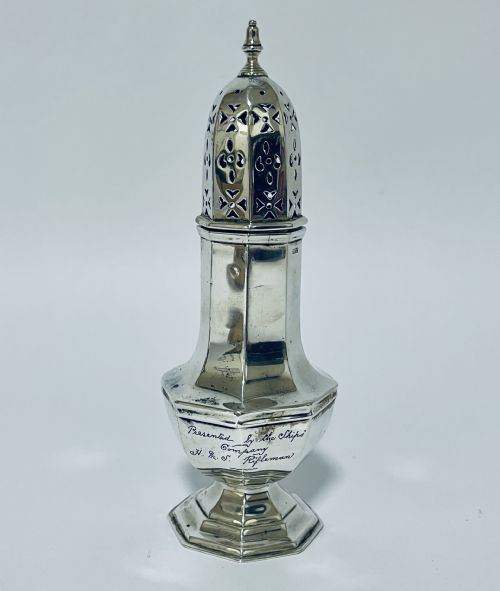


Silver Muffineer Caster
These silver muffineer caster pieces are solid sterling silver vessels designed for dusting sugar, and you want one for its fine period craftsmanship and utility on the dining table.
Silver Muffineer Caster
A silver muffineer caster is a table shaker designed to hold and dispense sugar over food, appearing in forms such as sugar casters, sugar shakers, and dredgers. When you search for this phrase, you find items spanning the 18th Century, Georgian period, Victorian era, and Edwardian years, along with later revivals.
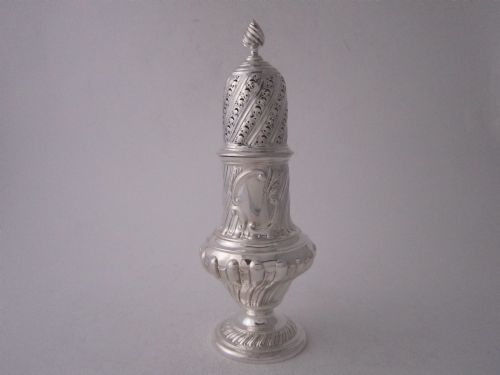
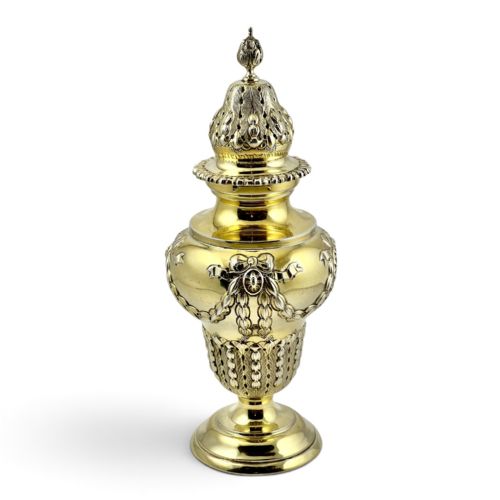
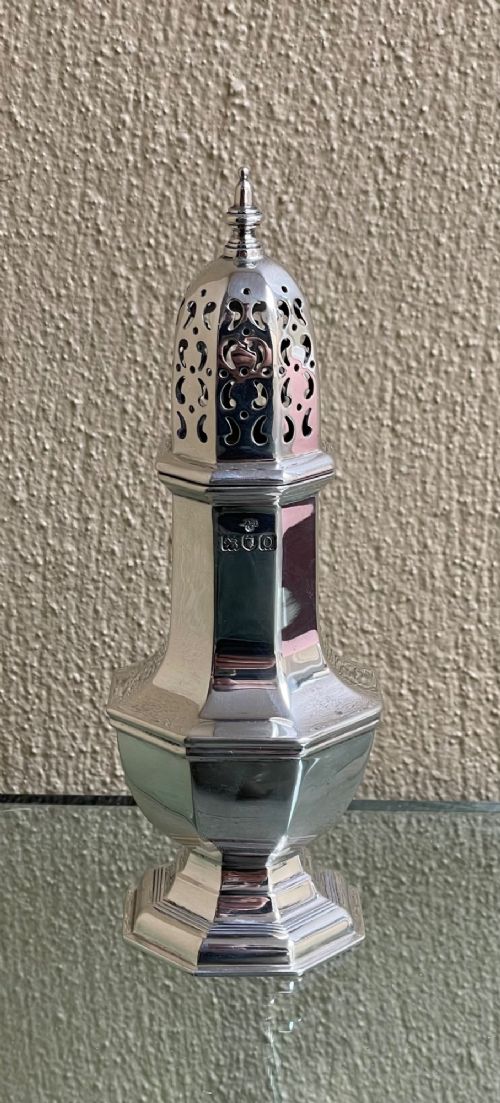
The most common versions on this page are standard sugar casters and shakers made from sterling silver, alongside occasional silver-gilt examples. These pieces range from early 18th-century octagonal forms to later monumental shapes and Victorian interpretations of earlier styles.
How they were made
These vessels are formed primarily from sterling silver, with select pieces featuring a silver-gilt finish that provides a rich golden appearance over the silver base. Silversmiths shaped the metal through raising and casting techniques, creating solid bodies designed for daily household use.
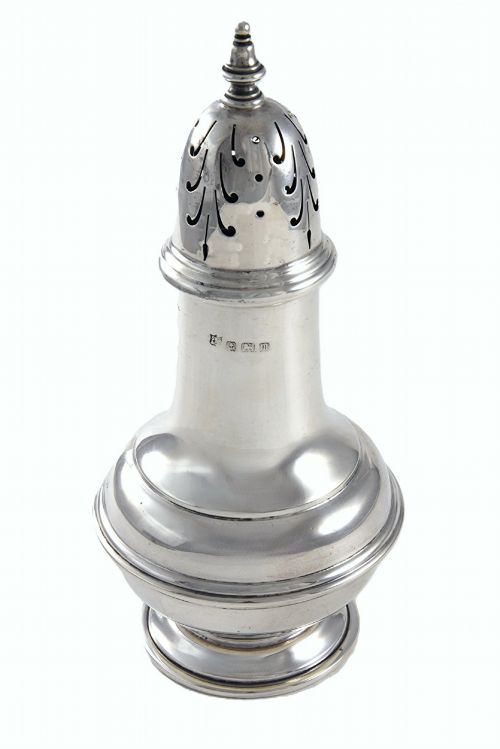
Perforated pierced covers allow the contents to be shaken out evenly over food, secured to the main body by tight-fitting rims or threaded collars. Master makers applied hand-engraved details and distinct multi-sided geometric profiles, such as octagonal sections, to give the metal structure.
Early silversmiths occasionally cut tiny heart shapes into the piercing patterns of sugar casters, ensuring a sweet delivery for breakfast muffins.
What varies in quality
Quality rests upon the weight of the sterling silver used in the body, separating lightweight utilitarian vessels from heavy monumental pieces with substantial metal substance. The crispness of the piercing on the cover and the precision of the hand-cut facets further define the standard of the work.
The presence of a recorded maker and clear hallmarks showing a London assay office origin elevate the standing of a piece. Earlier 18th-century examples demonstrate a distinct level of hand-craftsmanship in their octagonal geometry compared to later mass-produced Victorian revivals.
Stephen Adams·Thomas Ross·Charles Alchorne
The Silver Muffineer Caster Glossary
- Muffineer
- A small caster or shaker traditionally used for sprinkling sugar over hot buttered muffins. This term is often used interchangeably with sugar caster.
- Silver-Gilt
- Silver that has been coated with a thin layer of gold on its surface. This technique provides a warm, golden hue while retaining a solid silver structure underneath.
- Sterling Silver
- An alloy consisting of pure silver and other metals, usually copper, to increase durability. British sterling silver standard is signified by specific hallmarks.
- Hallmark
- An official stamp applied to precious metals indicating the standard of purity, the assay office, and the year of manufacture. These marks allow collectors to date pieces accurately.
- Dredger
- An alternative name for a sugar shaker or caster featuring a perforated top. The term derives from the action of dredging powder over food.
Silver Muffineer Caster: Frequently Asked Questions
What is a silver muffineer caster used for?
These vessels served on dining tables to sprinkle fine sugar over baked goods, pastries, and muffins. Their perforated lids allowed diners to distribute sugar evenly without lumps.
Over time, they evolved in size from small individual muffineers to large monumental casters suited for grand dining rooms.
How do I tell an 18th-century caster apart from a Victorian revival?
Examine the hallmarks stamped on the silver body and cover to determine the exact year and assay office of production. Early pieces from the 18th century often feature hand-raised octagonal bodies and crisp, hand-cut piercing.
Victorian pieces in a Georgian style typically display heavier proportions and machine-assisted finishing alongside nineteenth-century date letters.
What does silver-gilt mean on these pieces?
Silver-gilt describes a sterling silver object that has received a thin electroplated or fire-gilt coating of real gold. This treatment protected the interior from corrosive acidic contents and created a decorative two-tone contrast.
Collectors prize gilt interiors for their untouched preservation and the extra step of craftsmanship they represent.
How should I clean antique sterling silver casters?
Wash the silver gently in warm water using a mild, non-abrasive soap and a soft cloth to remove surface dust. Avoid harsh chemical dips that strip away the natural patination built up over centuries of existence.
Dry the vessel thoroughly with a soft lint-free towel to prevent water spots on the sterling silver or silver-gilt surface.