




Silver Mounted Glass Pitcher
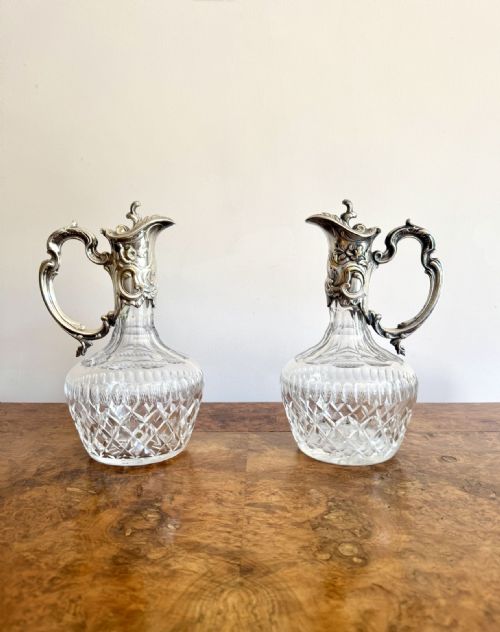
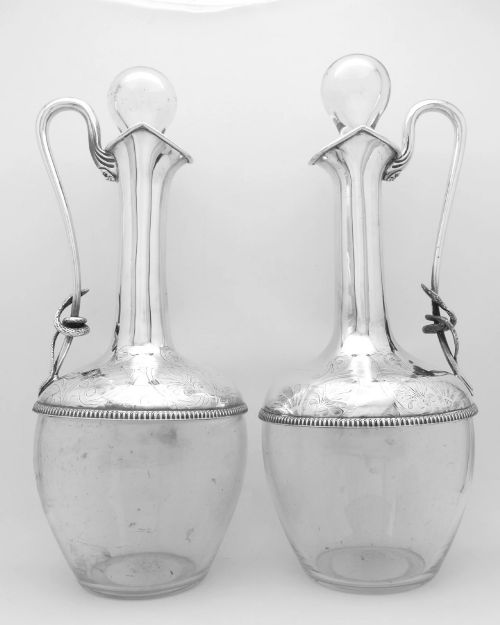
These silver mounted glass pitcher examples bring together cut glass and silver work for practical dining tables and display cabinets alike.
Silver Mounted Glass Pitcher
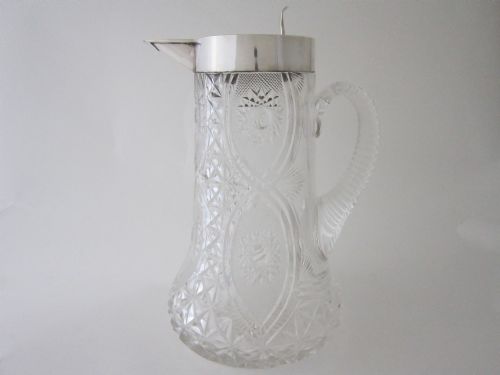
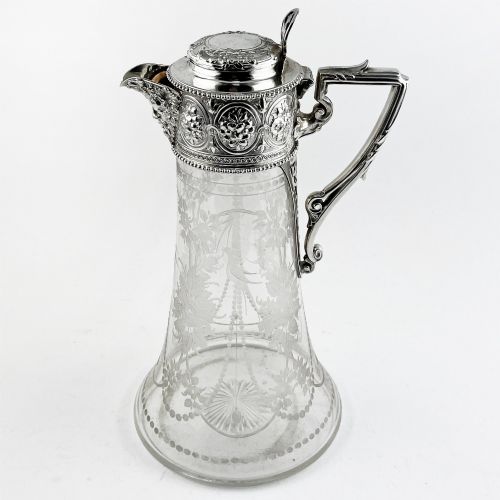
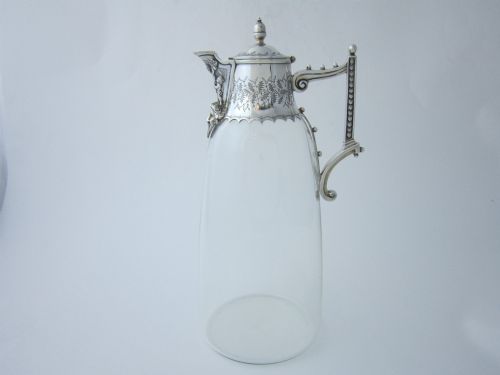
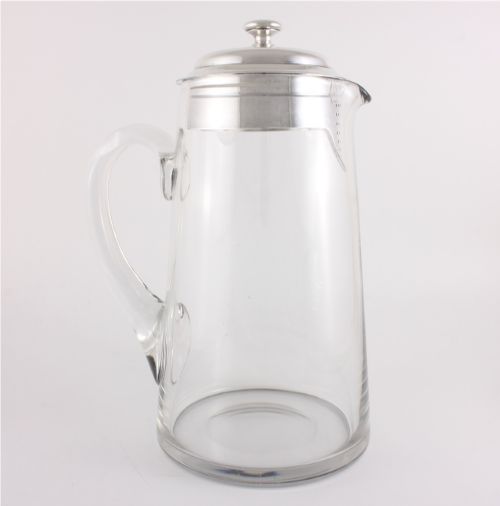
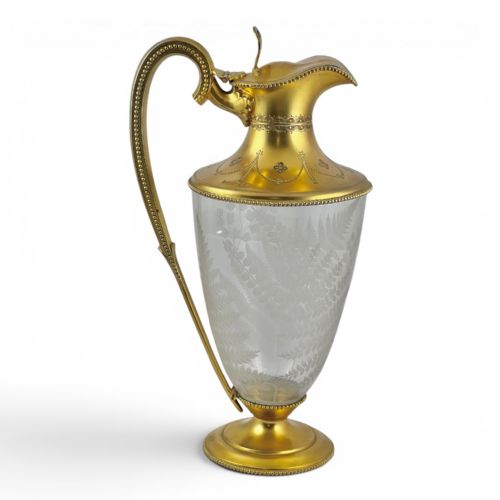
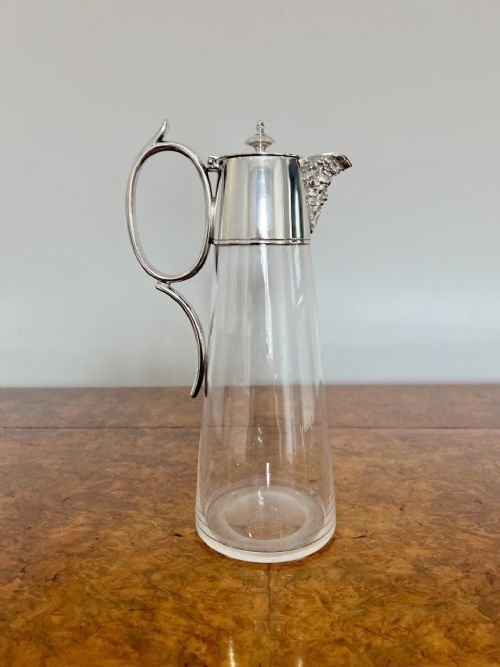
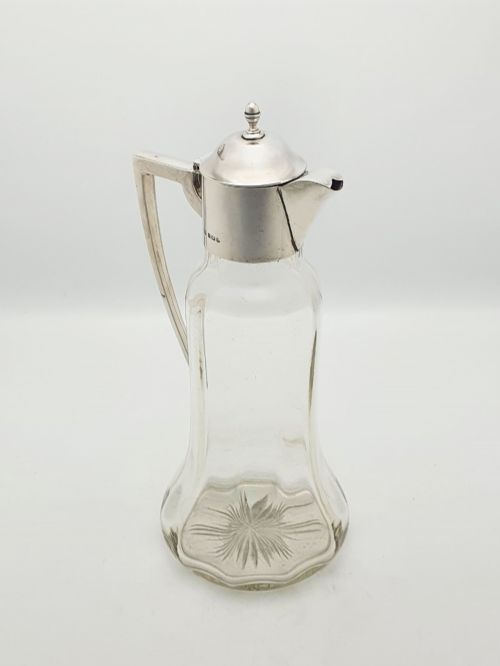
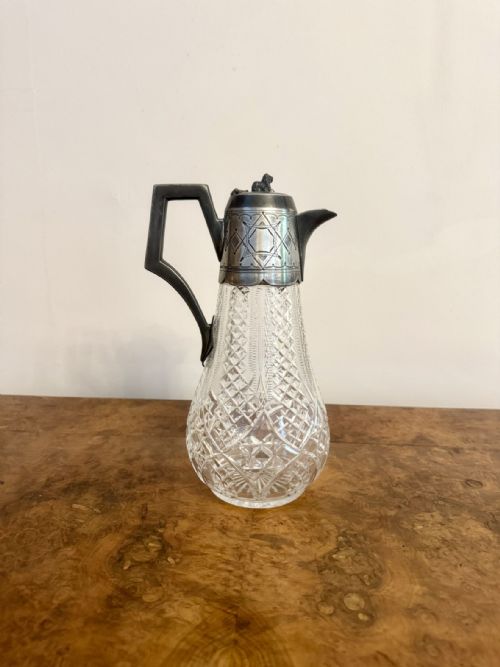
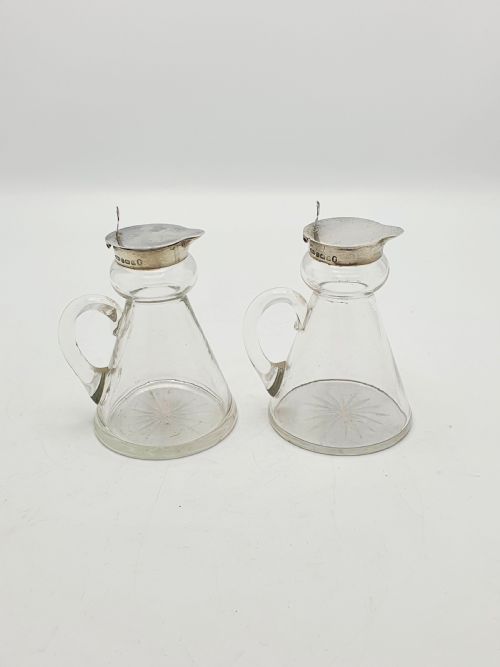
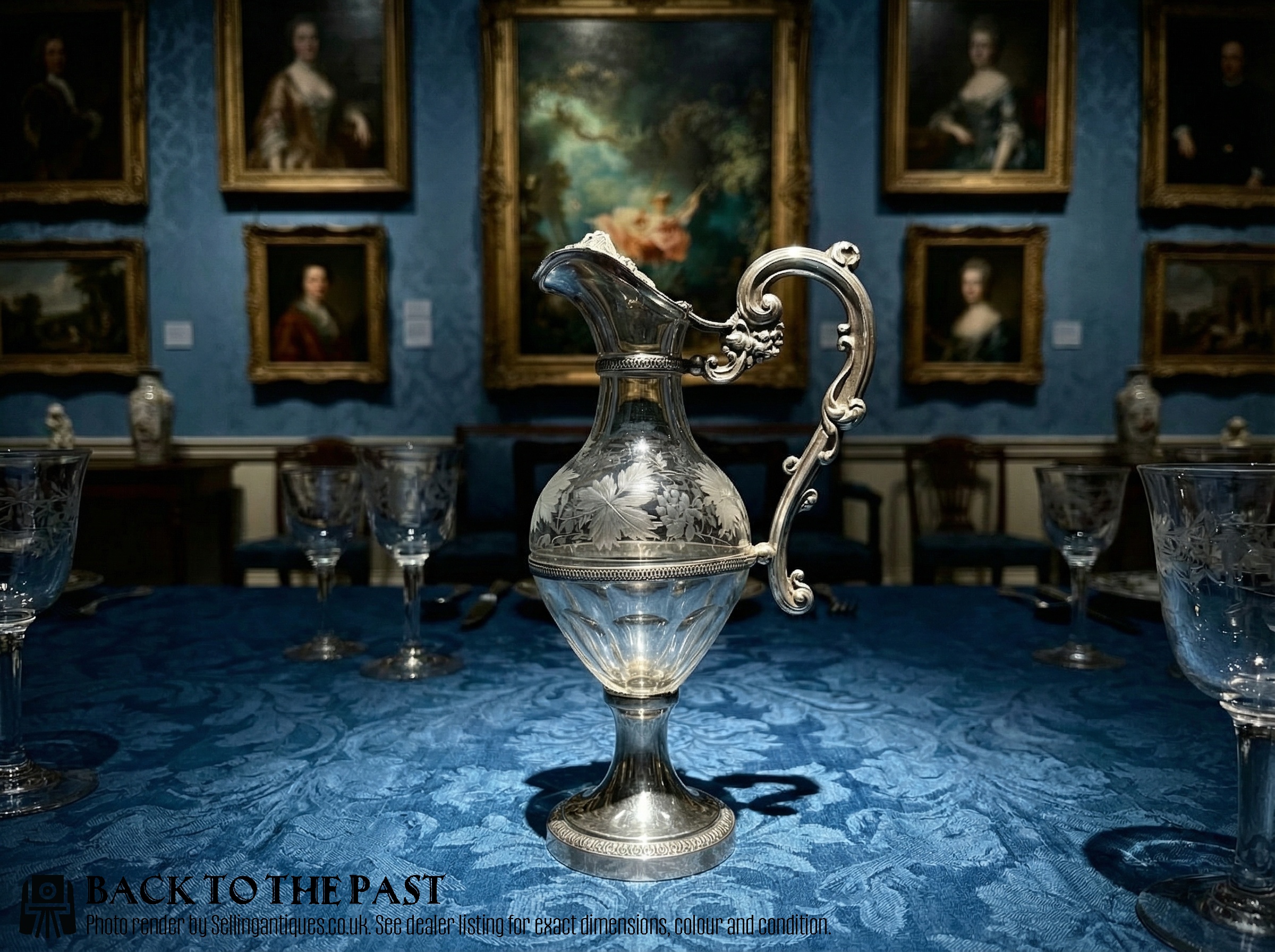
A silver mounted glass pitcher combines clear or coloured vessel bodies with metallic mounts, taking forms such as claret jugs, water jugs, and whisky noggins. You will frequently meet Victorian and Edwardian examples on this page, alongside pieces from other periods.
The objects range from large claret jugs with etched or cut glass bodies to smaller whiskey noggins and lemonade jugs. Makers applied silver and silver plate to shape handles, lips, collars, and hinged lids across these serving vessels.
How they were made
Workshops combined glass-blowing and cutting techniques with silversmithing methods to produce these vessels. Bodies use cut glass, crystal, etched glass, or cranberry glass, paired with mounts of sterling silver, silver gilt, or silver plate.
Craftsmen secured the metal collars and handles around the glass necks, often incorporating hinged lids and thumbpieces for pouring. Surface decoration on the glass relied on wheel-cutting and acid-etching, while the metal components received chasing, engraving, and hallmarks.
Listings feature vessels spanning from the Victorian period through to the 1960s, utilising sterling silver, silver plate, cut glass, and cranberry glass.
What varies in quality
The standard of execution in both the glass vessel and the metal mount dictates the level of quality. Heavier crystal bodies with deep, crisp wheel-cutting sit at the upper end, accompanied by substantial silver mounts with clear hallmarks.
Proportion and balance between the glass body and the metal handle shape the overall success of the piece. Finer examples display meticulous alignment of the mounts and sophisticated decorative motifs such as serpent handles or Bacchus masks.
Asprey and Co. Ltd·Christofle·Mappin and Webb·Elkington and Co·Tiffany·Hukin and Heath
The Silver Mounted Glass Pitcher Glossary
- Claret jug
- A pouring vessel designed specifically for serving red wine, typically featuring a glass body and a silver or silver-plated mount with a hinged lid. These form a major category within table silver and barware.
- Whisky noggin
- A small vessel used for serving spirits, often supplied with a matching silver label and handle. They appear frequently in Edwardian and George V groupings.
- Silver plate
- A layer of silver fused to a base metal, commonly utilised for mounts and handles on Victorian and Edwardian jugs. It provided the visual appeal of solid silver at a lower production cost.
- Cranberry glass
- A rich red-pink glass created by adding gold chloride to the molten batch. It appears in late nineteenth and early Edwardian water jugs on this page.
- Crystal
- A clear glass containing lead oxide, which increases brilliance and weight. It allows for deep, sharp facet-cutting on decorative pitchers.
Silver Mounted Glass Pitcher: Frequently Asked Questions
What were claret jugs used for?
These vessels served red wine at the dining table during the Victorian and Edwardian eras. Hosts used them to decant and pour claret smoothly.
The hinged lid kept the wine covered between pours while allowing the contents to breathe during formal meals.
How do I clean the glass inside?
Fill the vessel with warm water and mild detergent, avoiding harsh abrasives that might scratch the interior or damage the mounts. Use a soft bottle brush to reach the base.
Dry the metal mounts promptly after washing to protect the silver surface from water spotting.
Are silver mounts hallmarked?
Sterling silver components typically bear British assay office hallmarks indicating the town, year, and standard of metal. Silver-plated mounts usually carry maker marks or electroplate stamps instead.
Examining these small marks helps date the vessel and identifies the workshop responsible for the metalwork.
Can I use these for daily serving?
These pitchers and jugs function well for serving water, lemonade, or wine at modern gatherings. Their robust glass bodies and sturdy handles suit practical use.
Hand washing remains essential to preserve both the glass clarity and the historic metal plating or solid silver.