
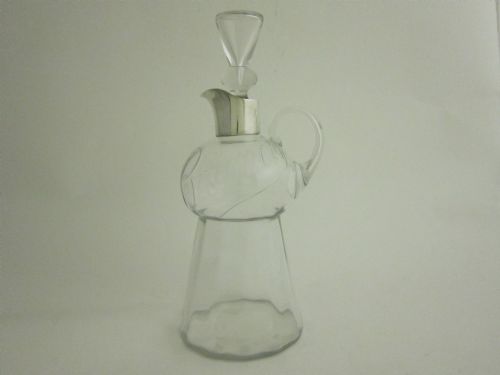


Vintage Glass Silver Flagon
These vintage glass silver flagons are handsome vessels combining lustrous metal mounts with clear or coloured glass bodies, prized for serving wine and spirits.
Vintage Glass Silver Flagon
A vintage glass silver flagon encompasses various serving vessels including claret jugs, decanters, ewers, and tankards designed for the table. You will frequently encounter Victorian and Edwardian examples alongside mid-century and later pieces, spanning periods from the nineteenth century onwards.
These forms range from tall cut crystal wine jugs with hinged metal lids to coloured glass bottles featuring silver necks. The selection includes specific hues such as cranberry, blue, and green glass, often paired with sterling silver or silver plate.
Makers and workshops across England and France produced these serving pieces to meet the demands of formal dining and entertaining. Their primary function remains holding and pouring wine, brandy, or spirits during meals.
Materials and construction
Metal mounts often feature chased floral etching, figural tops, or cast finials such as lions and shields secured around the neck of the bottle. The union of glass and metal requires precise engineering to ensure a secure fit and functional pour.
Object forms on this page include traditional claret jugs, brandy decanters, tankards, and dessert wine ewers fitted with metal collars.
Judging quality and execution
Quality rests in the weight and clarity of the glass, the depth of any cut crystal facets, and the richness of coloured glass variants like cranberry or cobalt. Heavier crystal bodies and vibrant glass tones indicate superior material selection by the maker.
The refinement of the silver mount elevates a piece, visible in crisp floral etching, detailed cast figural elements, and well-balanced handles. Superior examples demonstrate harmonious proportion between the metal collar and the glass body.
The Vintage Glass Silver Flagon Glossary
- Claret jug
- A specialised pouring vessel designed for red wine, usually featuring a handle, hinged lid, and silver or silver-plated mount. They appear frequently in Victorian and Edwardian dining contexts.
- Sterling silver
- A silver alloy containing substantial pure silver content alongside other metals for durability. Pieces bearing this standard often display official assay marks.
- Silver plate
- A base metal substrate coated with a thin layer of pure silver. This technique provided the appearance of solid silver at a more accessible cost during the nineteenth and twentieth centuries.
- Cut glass
- Glassware decorated by grinding and polishing facets into the surface using a wheel. This process creates geometric patterns that enhance the sparkle of the material.
- Ewer
- A large jug with a wide spout and a curved handle, traditionally used for holding and pouring liquids at the table. Their decorative profiles made them prominent display items.
Vintage Glass Silver Flagon: Frequently Asked Questions
How do I clean a vintage glass silver flagon?
Wash the glass interior gently with warm soapy water and a bottle brush, avoiding harsh abrasives that might scratch the surface. Polish the metal mounts separately using a suitable silver cloth while taking care to keep moisture away from any historic adhesives or seals.
Allow the vessel to air dry completely upside down before storing it with the stopper or lid resting slightly open. Regular gentle maintenance prevents tarnish build-up without wearing down the fine metal details.
Can I still use these vessels for serving wine?
Many of these vessels remain entirely functional for serving wine and spirits provided the interior is thoroughly cleaned before use. Inspect the vessel for any internal staining or residue to ensure the contents remain unaffected.
Hand wash only after use and avoid exposing older glass or silver-plated mounts to sudden temperature extremes. Proper care preserves the utility of these historic pieces during modern gatherings.
How do I date a silver mounted decanter?
Examine the style of the glass cutting, the profile of the handle, and the decorative motifs on the metal mount. Victorian examples often display heavier ornamentation or Rococo Revival influences, whereas Edwardian pieces lean towards lighter floral etching.
Look for hallmarks stamped on the silver components, which provide official assay office symbols and date letters. These marks offer the most reliable method for establishing an exact year of manufacture.