
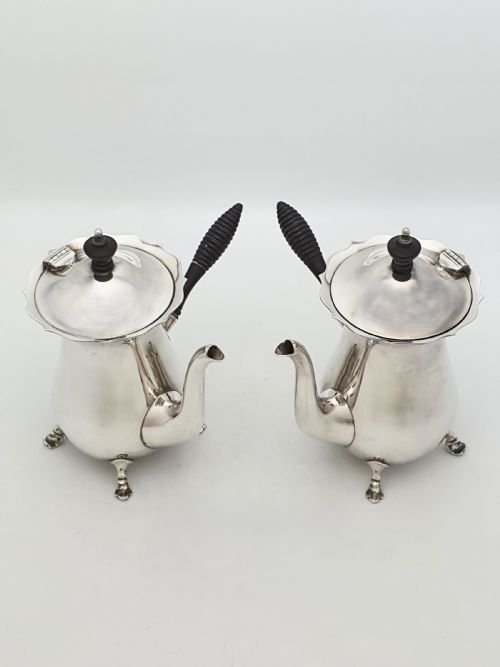


Silver Milk Jug Set
A silver milk jug set brings traditional elegance to the table, and you are looking at genuine examples ranging from the Georgian era through to the Art Deco period.
Silver Milk Jug Set
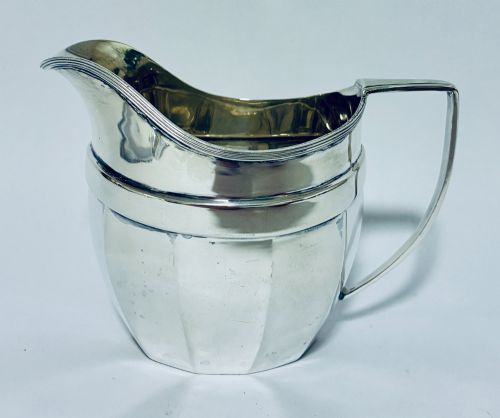
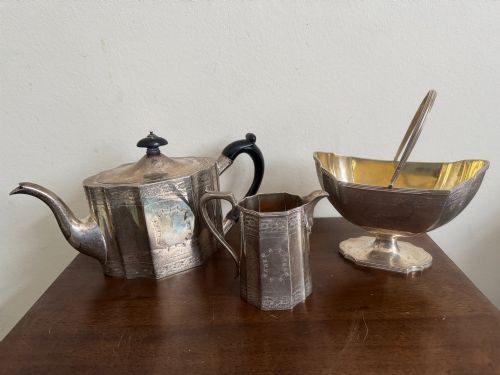
A silver milk jug set unites serving vessels designed for tea or coffee service, frequently appearing alongside matching sugar bowls and teapots. You will encounter everything from individual cream jugs to comprehensive four-piece tea services.
The selections span distinct periods including Georgian, Victorian, Edwardian, and the 1930s, reflecting changing domestic habits. Silver plate and sterling silver dominate the forms, sometimes accompanied by related pieces like café au lait pots.
Regional variations emerge across the selection, with specific pieces originating from makers in London, Glasgow, and Chester. Forms range from simple utilitarian cream jugs to ornate tea and coffee sets featuring elaborate decorative motifs.
Materials and construction
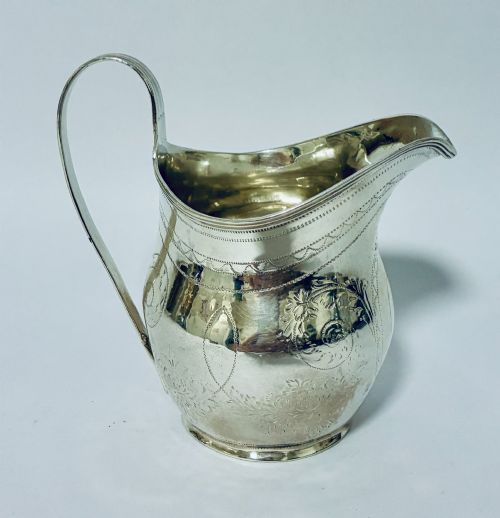
Silversmiths utilised sterling silver and silver plate over metal foundations to shape these vessels, often applying gold gilding to the interiors. Ebony components appear on handles, providing a contrasting tactile grip alongside the polished metallic surfaces.
Techniques varied from solid silver casting and hammering to electroplating nickel silver, a method which expanded access to luxury tableware. Artisans decorated the surfaces with chased details, ornate grapevine motifs, and Indianesque styling.
Grapevine motifs climb across several tea sets, reminding us that morning coffee once required botanical sculpture.
Factors of quality
Quality rests upon the crispness of the chased decoration and the structural integrity of handles, spouts, and feet. Substantial weight in the hand distinguishes solid sterling silver pieces from lighter electroplated alternatives.
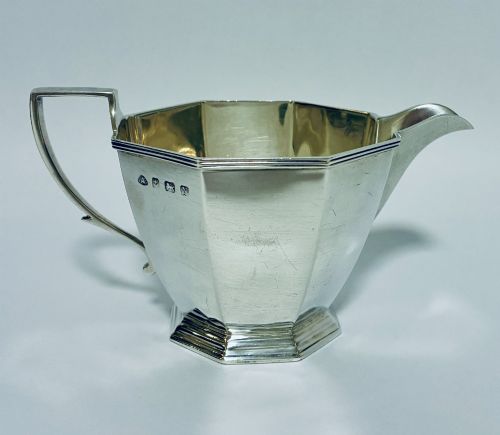
The presence of clear hallmarks or maker marks provides reliable evidence of origin and standard. Preservation of the original silver plate layer and interior gold gilding also elevates the desirability of a service.
Harrison Brothers and Howson·Robert Hennell·George Fox
The Silver Milk Jug Set Glossary
- Sterling silver
- A silver alloy containing 92.5 percent pure silver by mass, valued for its durability and intrinsic worth in tableware.
- Silver plate
- A layer of silver applied to a base metal core, such as copper or nickel silver, offering the appearance of solid silver.
- Electroplated nickel silver
- A base metal alloy of copper, nickel, and zinc coated with silver through an electrolytic process.
- Gold gilding
- A thin layer of gold applied to the interior surfaces of silver jugs or bowls to prevent tarnishing from dairy acids.
Silver Milk Jug Set: Frequently Asked Questions
What is included in a silver milk jug set?
These sets typically feature a milk jug or cream jug accompanied by related vessels such as sugar bowls, teapots, and coffee pots. The exact combination depends on whether the grouping forms a small two-piece pair or a larger four-piece service.
Larger services often provide matching pots for both tea and coffee alongside the milk jug and sugar container. Smaller configurations focus strictly on tea service essentials.
How do I care for antique silver sets?
Regular maintenance involves gentle cleaning with appropriate silver polishes to remove tarnish without wearing away thin plating. Storing pieces in dry conditions helps preserve both the exterior finish and any interior gold gilding.
Avoiding harsh abrasives protects chased patterns and delicate handles made from materials like ebony. Proper handling ensures the longevity of both sterling silver and silver-plated items.
How do I identify the period of a set?
Stylistic clues such as Edwardian Rococo Revival or Art Deco lines offer immediate indications of a set's era. Examining hallmarks stamped onto the metal provides precise clues regarding the manufacturing date and location.
Georgian and Victorian pieces display distinct decorative characteristics that differ from later Edwardian or 1930s designs. Comparing form and ornamentation helps place an item within its historical context.
Were these sets used daily?
These vessels were created for formal dining and drawing room hospitality, serving guests during afternoon tea or after-dinner coffee. Wealthy households utilised matching services to demonstrate status and taste during social gatherings.
Over time, changing domestic routines shifted these items from daily utility to special occasion use or display. Today they function both as decorative dining room centerpieces and practical tableware.