
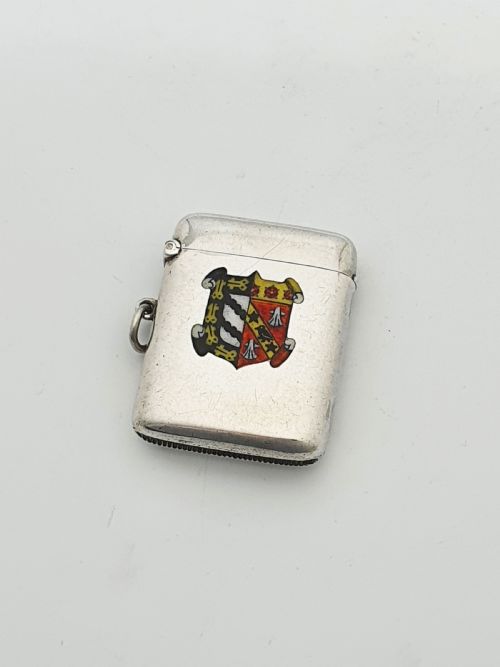


Silver Match Container
A silver match container keeps your matches dry and striking-ready in the pocket, combining practical utility with compact design.
Silver Match Container
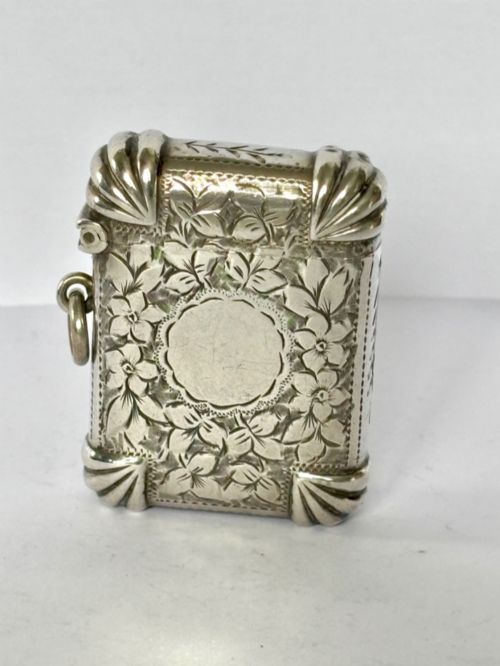
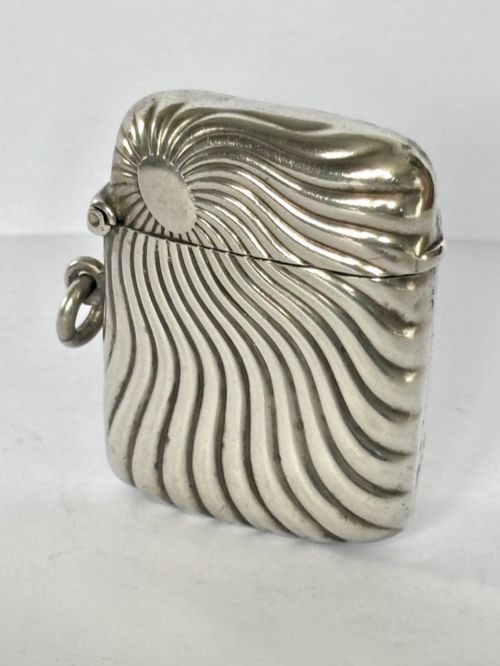
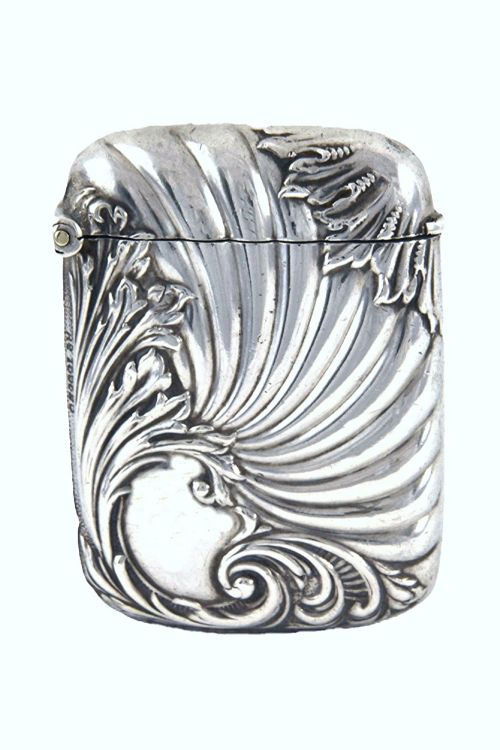
A silver match container primarily takes the form of a vesta case, designed to house and protect matches alongside a striking surface. These pocket accessories date from the Victorian and Edwardian eras, spanning years such as eighteen-eighty through to nineteen-sixty.
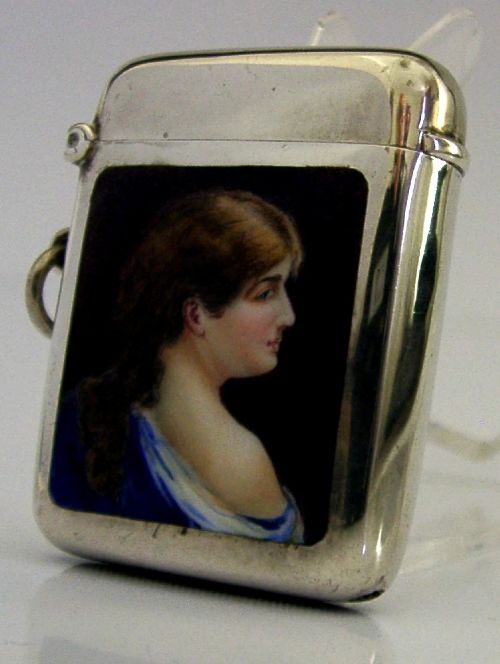
Beyond standard rectangular pocket cases, the selection includes novelty shapes like an elephant, a cat, and a sentry box, plus heart-shaped variants and toothpick holders. Materials range from solid sterling silver to examples enhanced with vitreous enamel crests or hand-painted scenes.
How they were made
Silversmiths utilised sterling silver to form the main body of each match container, often employing hinged lids with integrated strikers at the base. Form and function required precise metalwork to ensure a snug closure that kept matches secure.
Decoration involved hand-painting and vitreous enamel applications, fusing glass powder to the metal surface under high heat. Novelty forms like animals or sentry boxes required specialised casting and detailing by makers.
An unrecorded production error turned a standard sentry box vesta case into a singular conversation piece.
What varies in quality
Quality rests upon the crispness of the casting and the survival of delicate details, particularly in novelty shapes or hand-painted enamel work. Pieces featuring distinct animal forms or complex crests demonstrate higher levels of artistry from the silversmith.
The clarity of hallmarks stamped into the silver also marks the standard of the piece, alongside the functional integrity of the spring hinge. Well-preserved enamel surfaces without loss or heavy wear elevate an example above plain, utilitarian counterparts.
EV PLEDGE AND SON·ROBERT CHANDLER·SAMPSON MORDAN
The Silver Match Container Glossary
- Vesta case
- A small pocket container designed to hold matches, featuring a roughened surface at the base for striking. These accessories became essential during the nineteenth century with the advent of safety matches.
- Vitreous enamel
- A material made by fusing powdered glass to a substrate by firing, producing a durable and glossy decorative surface. Makers applied this technique to add colour and crests to silver cases.
- Sterling silver
- An alloy of silver containing ninety-two point five percent silver and seven point five percent other metals, usually copper. This standard composition provides durability for items carried in pockets.
- Hallmark
- A official mark stamped on precious metals in the United Kingdom to indicate purity, the assay office, and the date of making. These marks help identify the period and origin of each item.
- Toothpick holder
- A small silver container designed specifically for carrying dental picks, often matching the materials and decorative styles of contemporary vesta cases.
Silver Match Container: Frequently Asked Questions
What is a vesta case?
A vesta case is a small pocket container designed to hold and protect matches. They feature a textured striking strip at the bottom.
Victorian and Edwardian gentlemen and ladies carried them daily to light cigars, cigarettes, or candles before the widespread use of disposable lighters.
How do I date a silver match container?
You can date a silver match container by reading the hallmarks stamped into the metal. These marks indicate the assay office, the silver standard, and a specific date letter.
Stylistic clues like enamel work or novelty animal shapes also help narrow down the period of manufacture.
How were novelty vesta cases used?
Novelty vesta cases served the same practical function as standard rectangular pocket cases. Their unusual shapes, such as sentry boxes or animals, provided a touch of personal expression.
Owners kept them in pockets or handbags for everyday use.
What is the difference between a vesta case and a toothpick holder?
A vesta case is built to hold matches and includes a striking surface. A toothpick holder is shaped specifically to store small personal toothpicks.
Both items utilise similar silver materials and date from the same Victorian and Edwardian periods.