


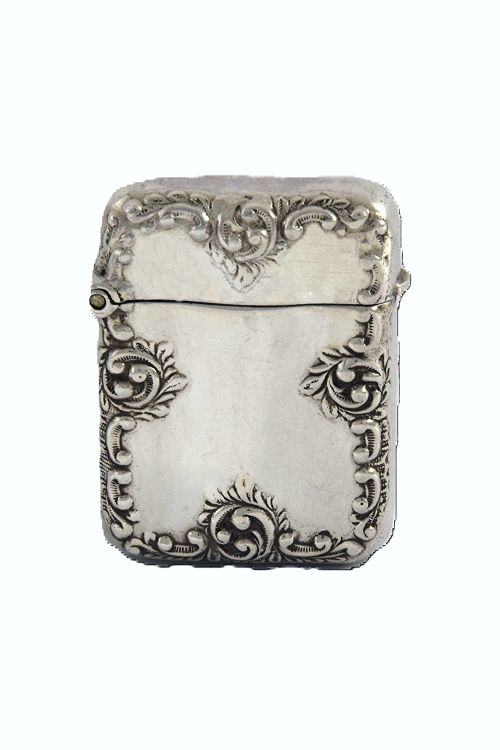
Silver Match Box
When you search for silver match box, you find pocket-sized metal containers designed to hold safety matches and strike them dry.
Silver Match Box
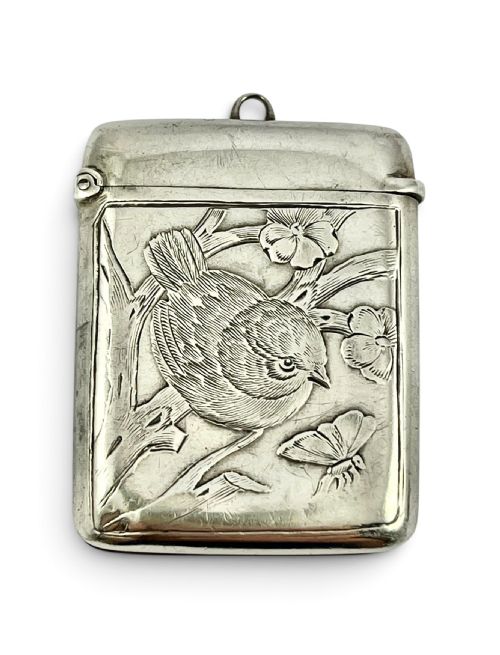
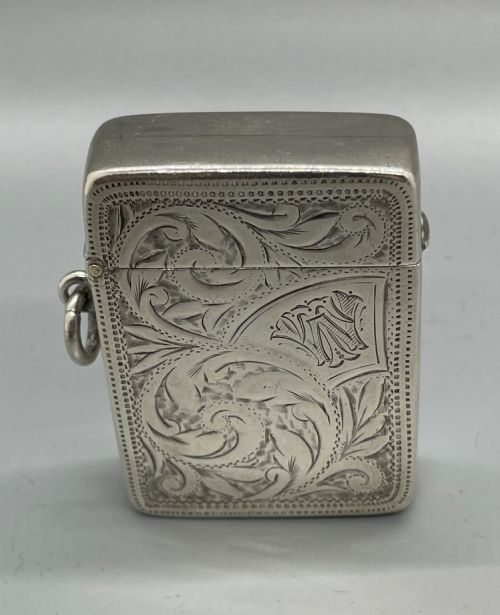
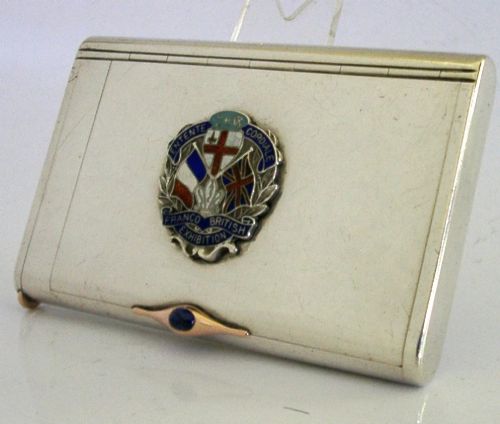
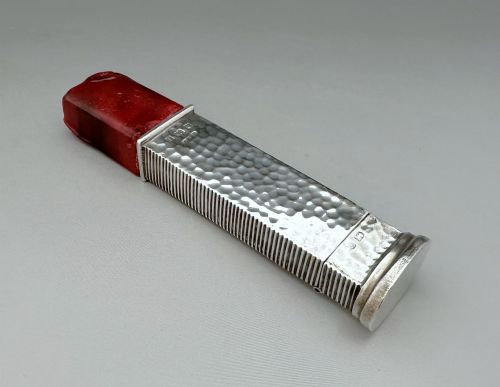
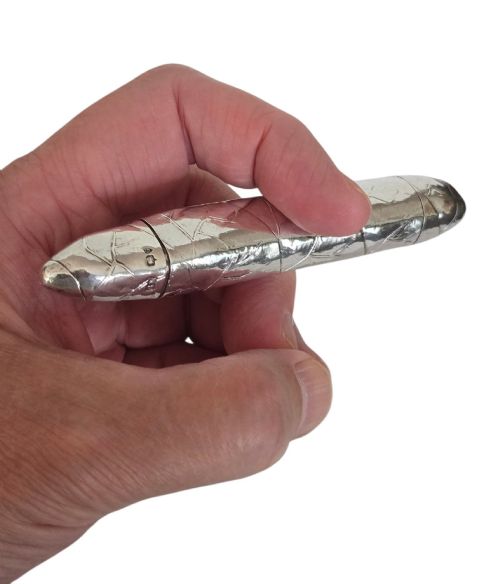
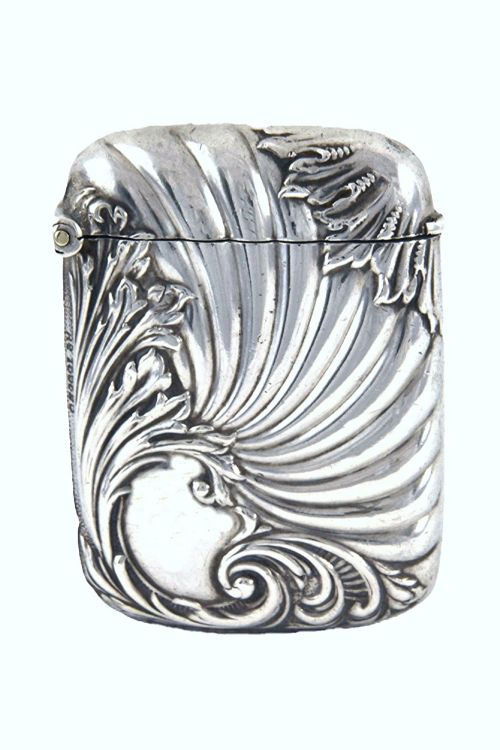
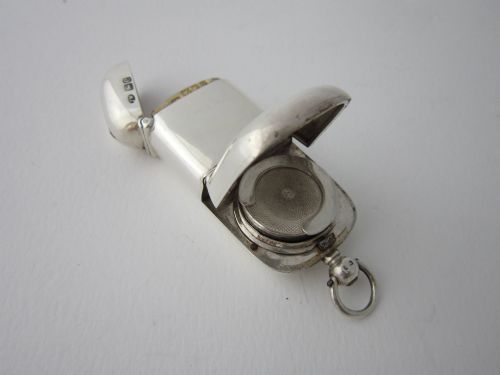
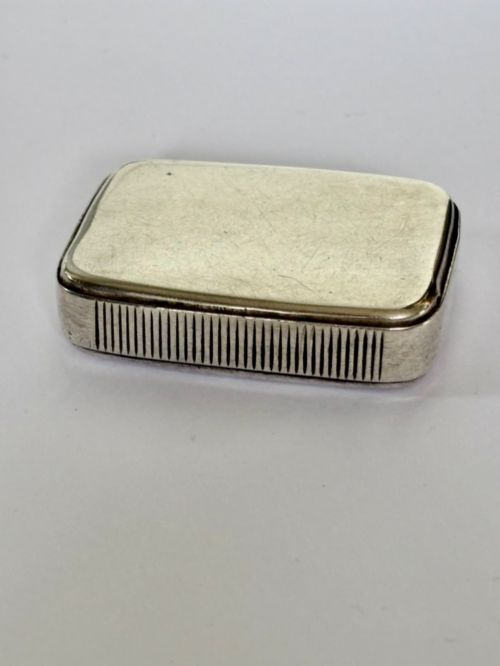
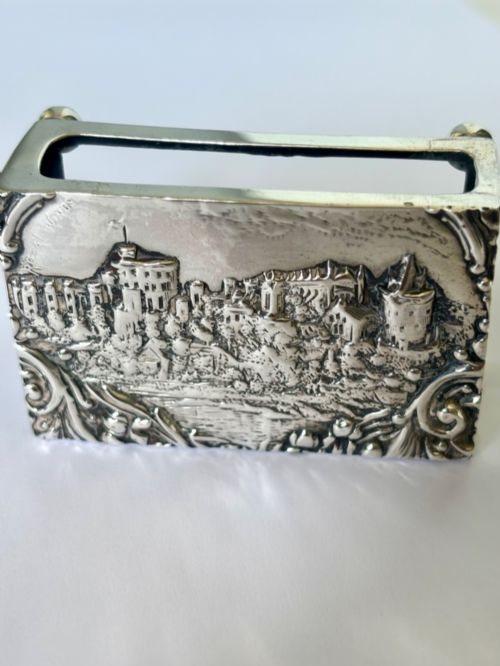
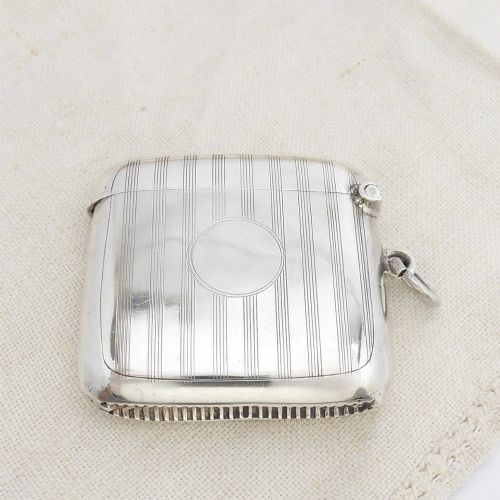
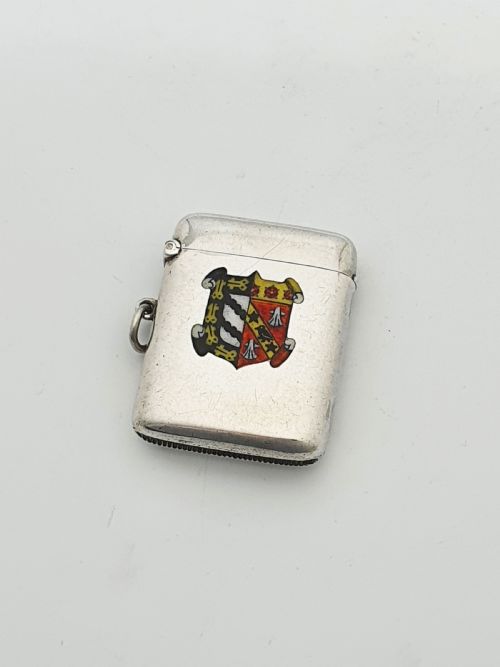
A silver match box, commonly encountered as a vesta case or matchbox cover, represents a portable accessory created to protect matches from moisture and friction in the pocket or on a desk. The pieces seen on this page span the Victorian and Edwardian eras through to the Art Deco period, taking forms such as flat matchsafe sleeves, hinged vesta cases with integrated strikers, and novelty animal figures.
Makers utilised solid sterling silver, silver gilt, and occasionally base metals paired with decorative elements like enamel, gemstones, and tortoiseshell. Pocket vestas feature a spring-loaded lid and a serrated base for ignition, whereas matchbox holders are open frames designed to slide directly over standard safety matchboard boxes.
Originating primarily from British assay offices in Birmingham, London, and Chester, these items served a daily utilitarian function for smokers and households alike before evolving into decorative gentleman's accessories and collectable objects.
How They Were Made
Silversmiths constructed these pieces using sheet sterling silver, shaping the bodies through pressing, folding, and soldering. Hinged lids were fitted with internal springs to ensure a snap closure, while the base of a vesta was filed or cross-hatched to create a striking surface for matches.
Decoration relied on hand engraving, repoussé leaf and scroll motifs, and engine-turning. More elaborate examples incorporated applied guilloche enamel, miniature paintings of animals or portraits, and inset panels of hardstones such as jade, onyx, and lapis lazuli.
What Varies in Quality
Quality rests upon the crispness of the hallmarks, the structural integrity of the hinge, and the depth of the hand-engraved or modelled detail. Superior examples retain sharp leaf and scroll work without softening from polishing, and their spring lids snap shut firmly.
Novelty pieces derive their standing from the realism and complexity of the casting, such as detailed animal heads or architectural castle tops. The presence of undamaged coloured enamel or high-grade gemstones elevates a standard container into a masterwork of miniature metalwork.
Sampson Mordan and Company·A and J Zimmerman·Robert Pringle·Levi and Salaman·Mappin and Webb·Edward I Farmer·Adie Lovekin
The Silver Match Box Glossary
- Vesta case
- A small pocket container specifically designed to hold wax matches known as vestas, featuring an integrated striking surface on the base. They often include hinged lids and suspension loops for watch chains.
- Matchsafe
- An alternative term for a match box or vesta case, used widely in America and Britain during the nineteenth and twentieth centuries. These protect standard matches from accidental ignition.
- Hallmark
- An official stamp applied by an assay office indicating the purity of the metal, the maker's mark, and the year of manufacture. British silver carries symbols like the lion passant and date letters.
- Guilloche enamel
- A decorative technique where geometric patterns are engine-turned onto metal beneath a translucent layer of coloured enamel. This creates shimmering wave or sunburst effects popular in Edwardian pieces.
- Silver gilt
- Sterling silver that has been coated with a thin layer of gold, sometimes referred to as vermeil. This treatment provides a rich golden interior or exterior finish to matchboxes and vestas.
Silver Match Box: Frequently Asked Questions
What is a vesta case?
A vesta case is a small pocket container made to hold and protect short wax matches called vestas. They feature a roughened base used for striking the match upon removal.
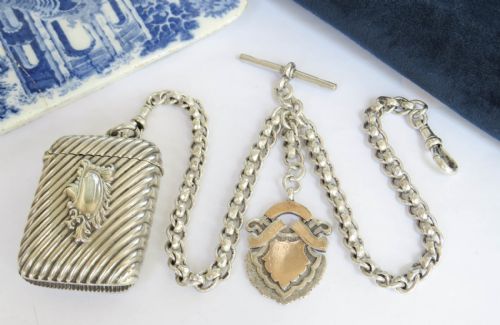
Victorian and Edwardian gentlemen carried them daily in pockets or attached them to watch chains, known as watch alberts.
How do I date a silver matchbox?
You date these pieces by examining the hallmarks stamped into the metal by official assay offices such as Birmingham, London, or Chester. A specific letter stamp corresponds to the year of manufacture.
Stylistic cues like Art Deco geometry or Victorian scrollwork also help narrow down the production period.
How were matchbox covers used?
Matchbox covers are open-ended sleeves designed to slide directly over standard cardboard safety matchboxes. They upgraded plain household matchboxes for display on dining tables or smoking desks.
Wealthier households utilised silver and tortoiseshell versions to match other smoking room accessories.