


Silver Lidded Jug
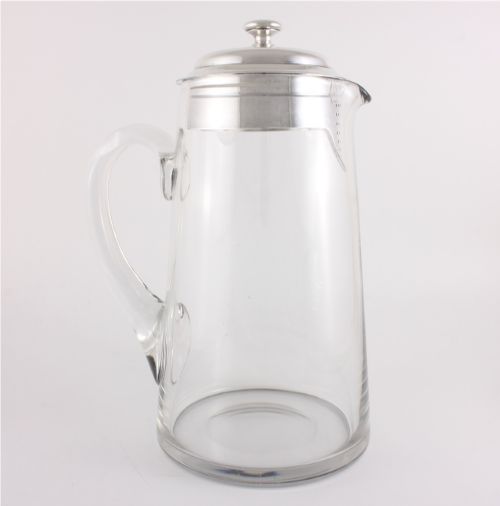
These silver lidded jug forms span claret jugs, beer pitchers and whisky noggins, offering functional elegance for the table and bar.
Silver Lidded Jug
A silver lidded jug serves diverse functions across the centuries, appearing as claret jugs, beer pitchers, communion vessels and small whisky noggins. Buyers encounter these forms shaped by Georgian, Victorian, Edwardian and Art Deco aesthetics.
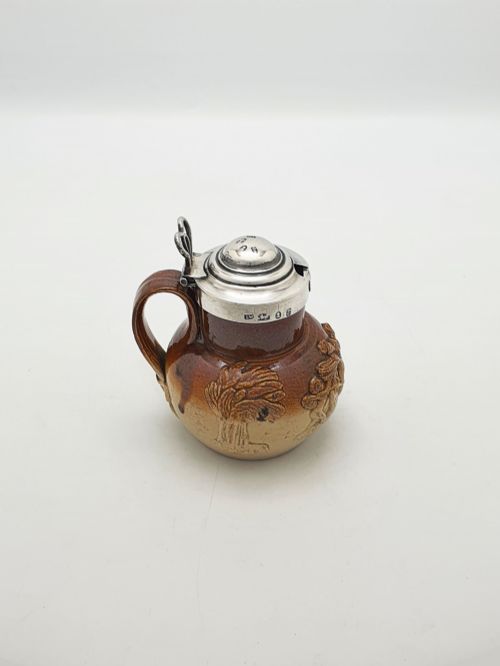
Glass bodies with sterling silver mounts or collars predominate, alongside robust stoneware and silver-plated metal vessels. Examples range from large water and lemonade pitchers to compact spirits containers with hinged lids.
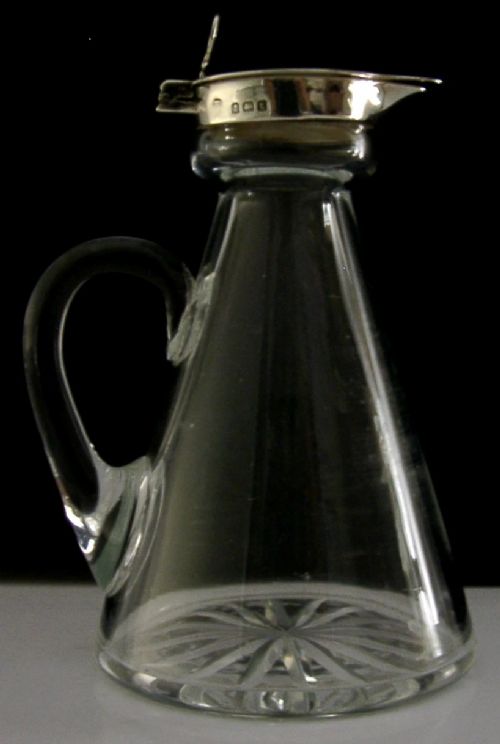
The selection includes Georgian stoneware pieces with sterling collars, Victorian glass claret jugs with engraved details, and early twentieth-century whisky noggins. Makers utilise materials like cut crystal, Old Sheffield Plate and solid silver.
Materials and Technique
Craftsmen combined blown or cut glass and stoneware bodies with fitted metal collars, spouts and hinged lids. Sterling silver and silver plate provide the structural mounts, handles and thumbpieces.
Techniques involve hand-engraving floral designs onto silver surfaces, casting mounts in Victorian rococo revival styles, and applying early Sheffield plating methods to copper cores. Handles incorporate woven materials or metal framing to secure the weight of the vessel.
Listings feature vessels spanning the Georgian era through to Art Deco designs, utilising both sterling silver and silver plate.
Quality and Distinction
Quality rests in the harmony between the glass or ceramic body and the metal mount, where precise fitting of the hinged lid demonstrates superior silversmithing. Crisp hand-engraving on the silver collar elevates a piece beyond plain utilitarian production.
The weight of the silver or plate, the clarity of the cut crystal, and the crispness of maker marks or early hallmarks define the upper tier of these vessels. Structural integrity in the hinge mechanism ensures the lid operates smoothly.
Christofle·Hukin and Heath·Elkington and Co·Goldsmiths and Silversmiths Alliance
The Silver Lidded Jug Glossary
- Claret jug
- A vessel designed specifically for serving red wine, typically featuring a glass body with an ornate silver mount and hinged lid.
- Old Sheffield Plate
- A composite material formed by fusing a sheet of silver to a thicker copper base, common in eighteenth and nineteenth-century jugs.
- Sterling silver
- An alloy of silver containing ninety-two point five percent pure silver and seven point five percent other metals, marked on quality pieces.
- Hinged lid
- A cover attached with a mechanical pivot, allowing the lid to lift easily when pouring beverages from the jug.
Silver Lidded Jug: Frequently Asked Questions
How do I date a silver lidded jug?
Dating relies upon hallmarks stamped onto the silver mounts, which indicate the assay office and year of production. Stylistic markers such as Edwardian proportions or Victorian ornamentation also help narrow the era.
Unmarked silver-plated pieces require analysis of the base metal, construction techniques, and stylistic cues inherited from Georgian or Art Deco periods.
Were these jugs used for wine?
Many of these vessels function specifically as claret jugs or wine ewers designed for dining tables. Clear glass bodies allowed the colour of the wine to remain visible during meals.
Other variations served beer, water, lemonade or spirits, depending on the scale and internal capacity of the pitcher.
What is a whisky noggin?
A whisky noggin is a miniature decanter or jug holding a single measure of spirits, popular in the late nineteenth and early twentieth centuries. They feature a sturdy glass base and a silver collar with a thumbpiece lid.
Collectors prize these small barware pieces for their compact proportions and intricate metal mounts.
How do I clean the silver mounts?
Cleaning requires a soft cloth and a gentle silver polish formulated to preserve antique surfaces. Care must be taken to avoid abrasive contact with the surrounding glass or stoneware body.
Polishing around hinges and engraved floral motifs should be done sparingly to maintain the original patination.