


Silver Knife Rests
Silver knife rests keep dining tables tidy and elevate a formal place setting by lifting used cutlery off the cloth.
Silver Knife Rests
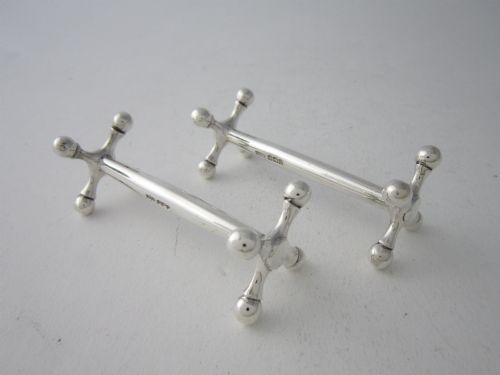
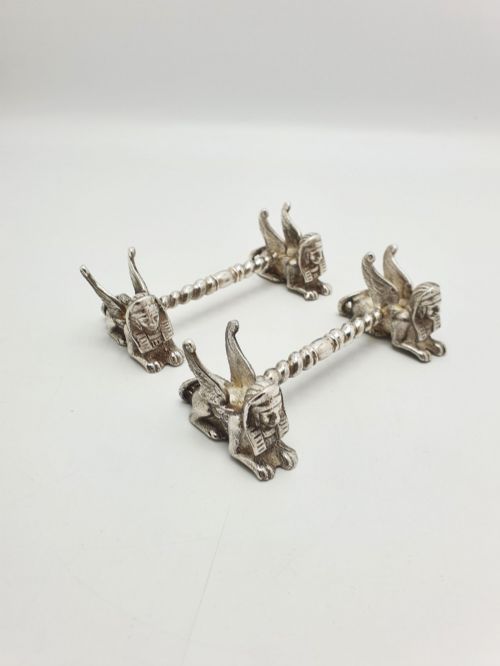
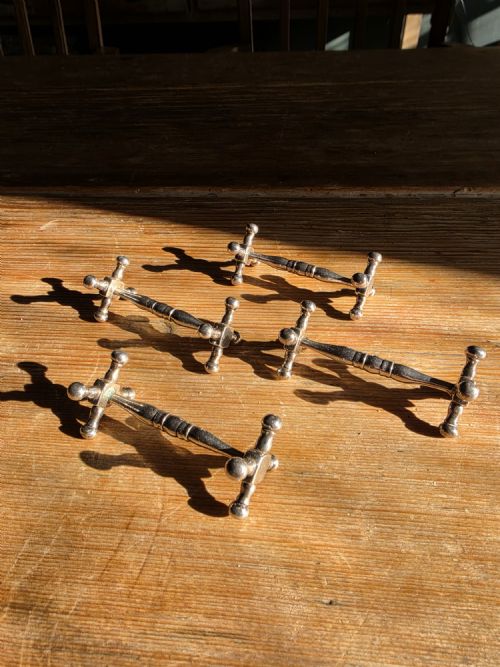
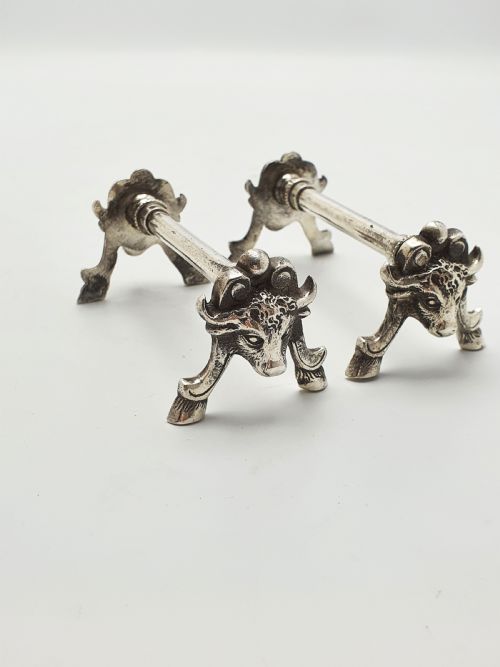
Silver knife rests appear in several distinct periods ranging from the Regency era through to Art Deco designs of the twentieth century. These small table accessories take various forms, including straightforward bar shapes and sculptural animal motifs.
Pairs dominate the selection, though sets of twelve and cased collections also emerge. Buyers encounter solid sterling silver alongside silver-plated bronze, cut glass, ivory, mother-of-pearl, and bone combinations.
Origin points span English assay offices in London, Birmingham, and Sheffield, alongside French makers. The forms reflect shifts in dining customs across Victorian, Edwardian, and Georgian periods.
Assessing Quality
The refinement of the casting defines the upper tier of these objects, particularly in figural animal rests where anatomical detail and clean finishing set pieces apart. Crisp hallmarks and robust structural joins indicate superior workshop output.
The choice of secondary materials influences the overall character, with heavy cut glass, intact mother-of-pearl, and original fitted presentation cases elevating the piece. Simpler stamped or plated utilitarian forms occupy a different tier from cast novelty designs.
Retail Price Guide 2026
Typical UK retail prices for silver knife rests, calculated from the Sellingantiques database of over a million retail prices indexed since 2003. This retail price guide relies exclusively on Sellingantiques data; no external sources or auction records are used, so the figures do not describe the wider market.
Listings feature sterling silver, solid silver, cut glass, velvet, ivory, and mother-of-pearl across Georgian, Victorian, Edwardian, and Art Deco styles.
John Gilbert·Chawner and Co·WMF·Gallia Christofle·Stephane Prudhomme·Elkingtons
The Silver Knife Rests Glossary
- Hallmark
- Official marks stamped into precious metals to indicate the standard of silver, the assay office of origin, and the year of manufacture.
- Assay office
- An official body that tested and marked precious metal items, with towns like London, Birmingham, and Sheffield operating notable offices.
- Cast silver
- Metal poured into a mould to create three-dimensional forms, common in sculptural animal knife rests rather than simple bent bars.
- Silver-plate
- A thin layer of silver bonded to a base metal core such as bronze or copper, allowing intricate forms without the weight of solid silver.
Frequently Asked Questions
How were silver knife rests used?
Dinners placed these supports beside each plate to hold carving knives or individual cutlery between courses, protecting table linen from grease and food stains.
Over the course of a long meal, the rests maintained a neat arrangement and kept the table surface clean.
How do I date a silver knife rest?
British pieces carry assay office marks and date letters stamped directly into the metal, which match historical registry tables to pinpoint the exact year.
Stylistic indicators such as Regency scrollwork, Victorian figural realism, or geometric Art Deco lines also point to specific eras of manufacture.
Are cased sets more desirable?
Boxed pairs and matching sets often survive in better condition because the fitted presentation cases protected the metal and secondary materials from knocks and tarnishing over generations.
Original velvet-lined boxes add context to the pieces and indicate they were intended as gifts or special table service accessories.
Can I mix different styles on the table?
Table settings historically accommodated matched pairs rather than uniform sets across all guests, allowing hosts to combine various designs within a common metal or period.
Mixing animal novelties with traditional bar shapes creates a varied display while retaining the functional purpose of the objects.