


Antique Cutlery Rest
These antique cutlery rest examples keep rich dining tables tidy between courses, holding utensils above the cloth.
Antique Cutlery Rest
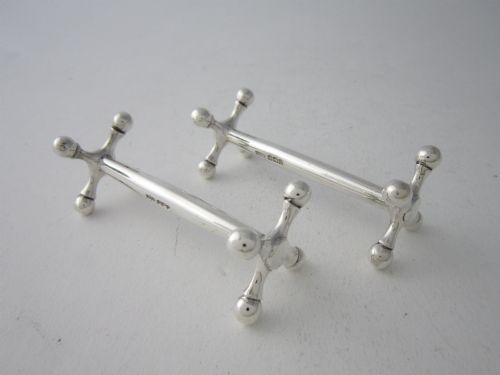
When you search for an antique cutlery rest, you encounter small supports designed to keep carving knives, table knives, and spoons elevated from the tablecloth. The pieces on this page span the Victorian, Edwardian, and Art Deco periods, bringing practical table management from past dining rooms into modern settings. Most commonly, these items appear in pairs or boxed sets, fashioned to accommodate the shifting courses of formal meals.
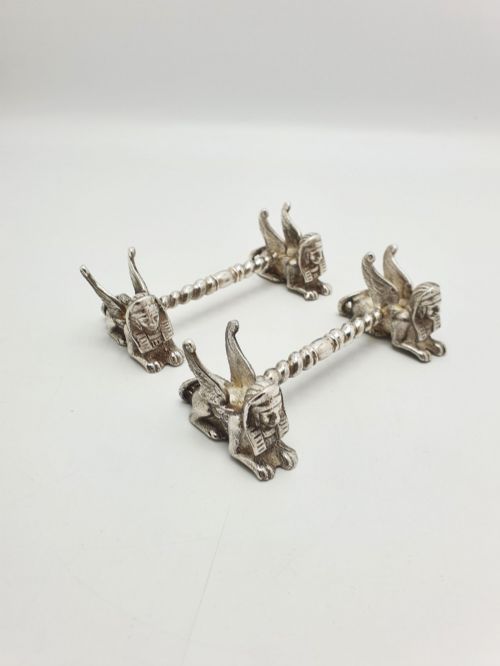
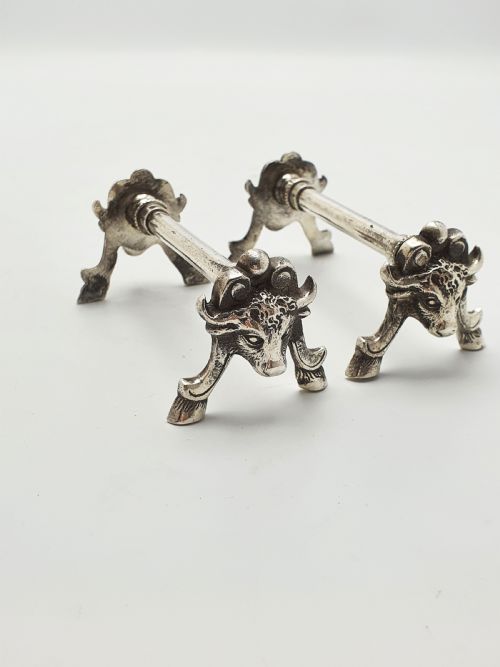
The assortment includes straightforward bar supports alongside figurative novelties depicting animals, sphinxes, lions, and rams. Geometric Art Deco designs and naturalistic forms featuring antlers or floral motifs also appear regularly across these listings. Originating mostly from British workshops, these tableware accessories reflect the changing aesthetic tastes of dining culture from the nineteenth century onward.
Assessing Quality and Execution
Quality rests upon the weight of the metal gauge and the crispness of the cast detail in figurative subjects such as animals or architectural motifs. Heavier pieces demonstrate substantial metal content, whereas lighter items rely on hollow stampings that lack the tactile heft expected of superior tableware.
The precision of assembly dictates overall excellence, ensuring that bars remain level and terminals align without wobble. Original fitted presentation cases and preserved silver plating further separate standard utility pieces from finer examples intended for formal dining.
Listings incorporate items spanning from the early Victorian era through to the Art Deco period, showcasing transitions in dining table accessories.
Christopher Dresser·Delheid Freres
The Antique Cutlery Rest Glossary
- Sterling silver
- A silver alloy containing 92.5 percent pure silver by mass, with the remainder consisting of copper or other metals. This standard grade appears frequently in hallmarked British tableware.
- Silver plate
- A thin layer of silver applied to a base metal core such as nickel silver or copper. This technique offered an accessible alternative to solid silver for dining accessories.
- Novelty rest
- A cutlery rest shaped into a figurative or humorous design, such as an animal or architectural element. These pieces were popular conversation starters at Victorian and Edwardian dining tables.
- Assay office
- An official body that tested the purity of precious metals and stamped items with statutory hallmarks. British offices in locations like Birmingham and Edinburgh marked domestic silver production.
- Cut glass
- Glass decorated by cutting facets or patterns into the surface using a rotating wheel. This material provided a reflective central barrel for mounted silver knife rests.
Antique Cutlery Rest: Frequently Asked Questions
What is an antique cutlery rest used for?
These small supports sit beside plates to keep used knives and spoons elevated above the tablecloth between courses. This practice protected fine linen from grease and food residue during lengthy formal meals.
Today, collectors repurpose them as decorative desk accessories, pen rests, or practical additions to modern dinner parties.
How do I clean silver cutlery rests?
Maintenance requires a soft cloth and a reputable silver polish formulated to remove tarnish without abrading the metal surface. Care must be taken around inset materials like mother of pearl or velvet.
Stored pieces benefit from acid-free tissue paper inside dedicated cases to slow down the natural oxidation process.
Are antique knife rests sold in sets?
Many examples survive in original pairs, which represents the standard configuration for individual place settings or small dining tables. Larger gatherings required sets of four, twelve, or matched boxed collections.
Finding a complete original cased set adds considerable interest for collectors who value the original presentation packaging.
How do I date an antique cutlery rest?
British silver items often feature legible hallmarks that record the specific year letter, assay office, and maker's mark. Comparing these stamps against historical records provides an exact year of manufacture.
Stylistic indicators such as Art Deco geometry or Victorian naturalism help date unhallmarked silver-plated or glass examples.