


Antique Silver Cutlery Rests
Antique silver cutlery rests keep table linen clean between courses, bringing both function and character to a formal dining setting.
Antique Silver Cutlery Rests
Antique silver cutlery rests are small tableware accessories designed to support knives and spoons above the tablecloth, preventing food transfer onto the linen. These items appear in various forms, most frequently as paired supports intended for placement beside individual plates or across serving platters.
The selection here encompasses several distinct decorative periods, ranging from early Victorian designs through Edwardian pieces to Art Deco creations. Buyers encounter both sterling silver and silver-plated options, alongside combinations incorporating cut glass or mother of pearl.
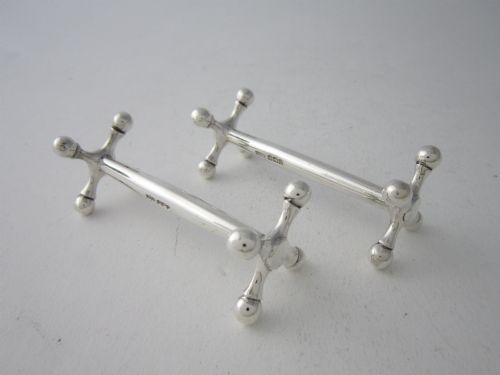
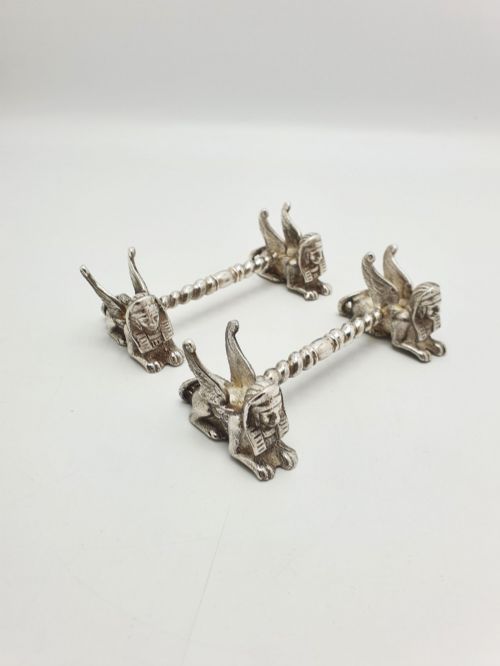
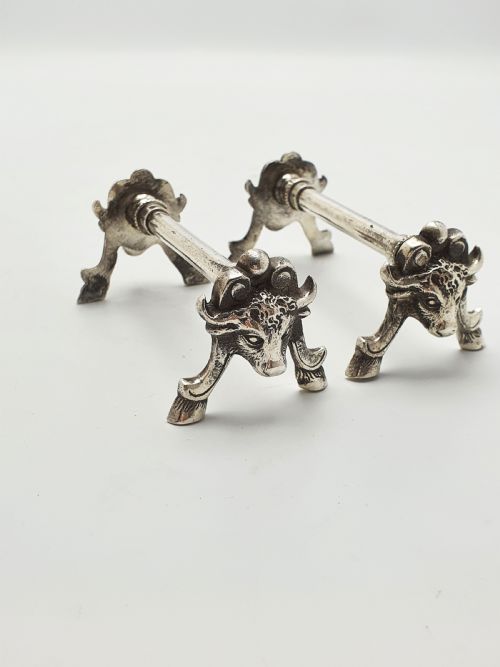
Figural and novelty forms emerge frequently across the available inventory, depicting animals such as lions, bears, sphinxes, and rams. Geometric styles also appear, alongside naturalistic branches and gothic motifs.
Materials and construction
Makers utilised solid sterling silver and heavy gauge silver plate over a base metal, shaping the metal through casting, stamping, and detailed chasing. Cast figural elements like lions, sphinxes, and teddy bears demonstrate considerable sculptural work in miniature.
Cut glass cylinders and panels appear combined with silver mounts, held by securely fitted ends or central bars. Mother of pearl inserts and velvet linings inside original presentation cases provide contrasting textures against the polished metal surfaces.
Dining tables gained miniature menageries when guests rested their cutlery upon tiny solid silver teddy bears, sphinxes, and rampant lions.
Evaluating craftsmanship and condition
The integrity of soldered joints and the retention of original silver plating determine the longevity of plated examples. Presentation cases that survive intact add considerable context to cased pairs and sets.
Christopher Dresser·Delheid Freres
The Antique Silver Cutlery Rests Glossary
- Sterling silver
- A silver alloy containing 92.5 percent pure silver by weight, typically marked with standard hallmarks to indicate fineness and origin.
- Silver plate
- A thin layer of silver applied to a base metal core, common in nineteenth and twentieth-century tableware production.
- Cut glass
- Glass decorated by cutting facets or patterns into the surface using a wheel, frequently used for the central bar of knife rests.
- Mother of pearl
- An iridescent internal layer of shells used for decorative panels or handles, prized for its natural lustre.
- Naturalism
- A decorative style mimicking organic forms such as branches, antlers, and floral motifs rather than geometric arrangements.
Antique Silver Cutlery Rests: Frequently Asked Questions
How were cutlery rests used?
Diners placed their used knives and spoons across the rest between courses to keep sauces and juices off the tablecloth.
They sat beside each plate or supported serving utensils on the main dining table.
What periods do these pieces date from?
The inventory spans the Victorian, Edwardian, and Art Deco periods, with manufacturing dates stretching from the mid-nineteenth century into the 1930s.
Design influences shifted from gothic and naturalistic themes toward geometric and modernist lines over time.
Are they sold as pairs?
Many sets comprise matched pairs designed to sit symmetrically on either side of a dinner plate or serving dish.
Larger sets of four or cased boxed pairings also occur across the available items.
How do I care for silver rests?
Regular polishing with a soft cloth keeps silver and silver plate bright without abrading the metal surface or wearing down raised details.
Storage in dry conditions prevents tarnishing and protects delicate elements like glass barrels or mother of pearl.