



Silver Insect Brooch
A silver insect brooch brings a touch of nature to the lapel, combining fine metalwork with the charm of small creatures.
What these pieces are
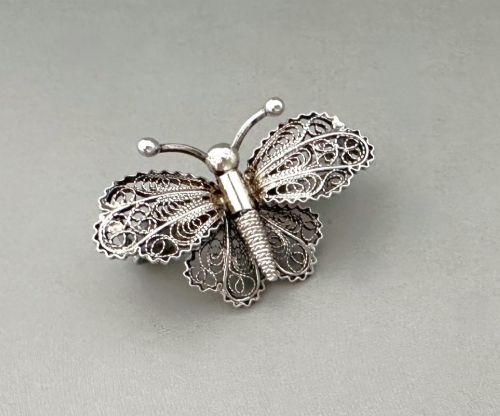
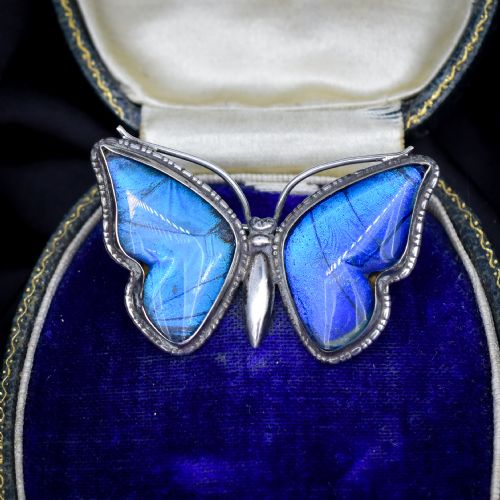
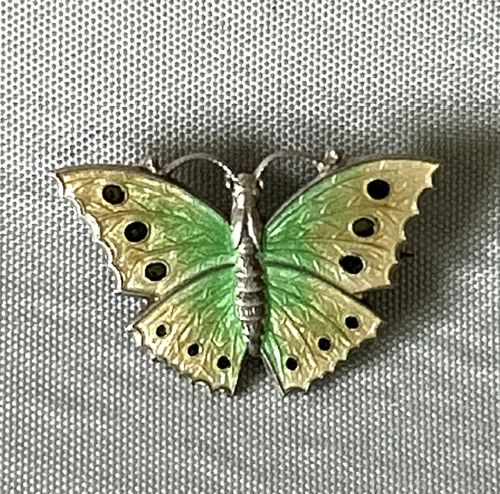
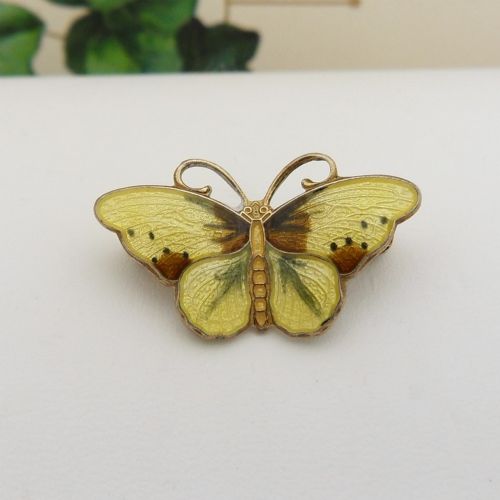
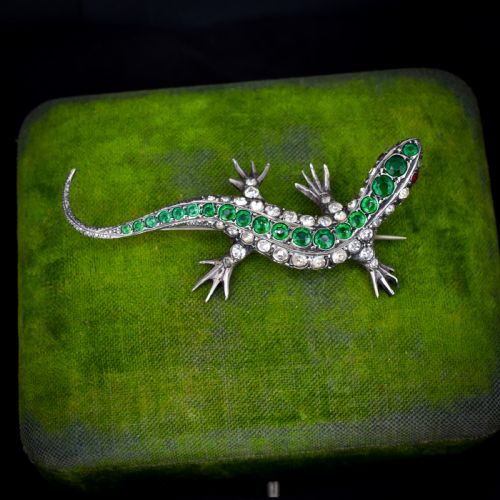
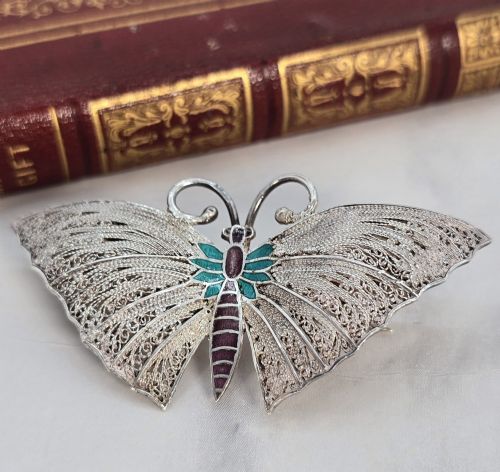
A silver insect brooch captures creatures of the garden in miniature, taking the form of butterflies and lizards. These ornaments appear across periods from the Victorian and Edwardian eras through to the nineteen twenties.
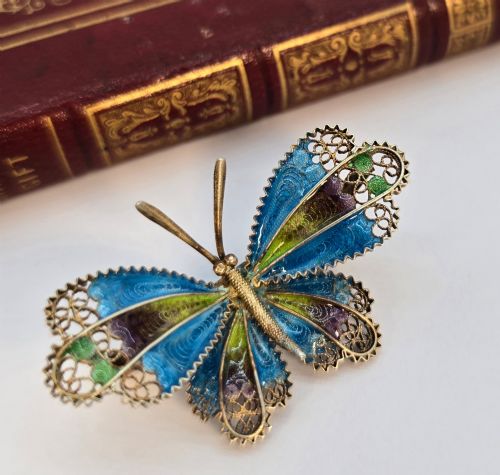
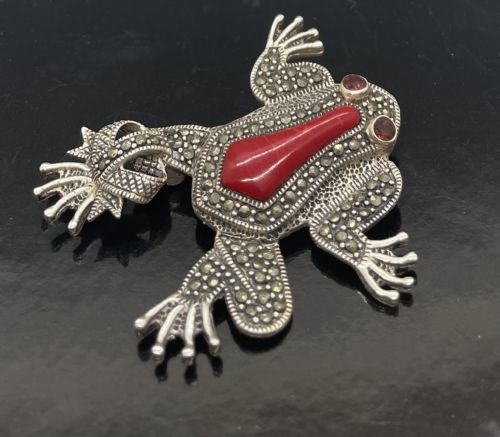
The selections on this page include petite butterfly designs finished with guilloche enamel and lizard forms set with paste stones. Each piece offers a wearable sculpture shaped from silver.
Collectors encounter distinct stylistic shifts between these eras, moving from the organic curves of the Art Nouveau influence to the tailored lines of early twentieth century work.
How they were made
Craftsmen shaped the bodies and wings from silver, often applying translucent enamel over an engine turned guilloche ground to catch the light. This technique required precise temperature control during firing to achieve a smooth finish across delicate insect wings.
Makers set sparkling paste stones into the silver mounts of lizard brooches to simulate precious gems. The metal was chased and engraved by hand to delineate antennae, legs, and scales.
Listings for silver insect brooches feature materials such as silver, enamel, and paste, spanning the Victorian, Edwardian, and nineteen twenties periods.
What varies in quality
The distinction between ordinary and exceptional pieces lies in the crispness of the hand engraving and the evenness of the enamel work. Superior examples show meticulous detail in the rendering of insect anatomy rather than generic casting.
The quality of a brooch also rests on the security and brilliance of the stone setting, where hand cut paste catches the light far better than mass produced glass.
The Silver Insect Brooch Glossary
- Guilloche enamel
- A decorative technique where transparent enamel is laid over machine engraved metal. This creates repeating geometric patterns that shine beneath the coloured glass.
- Paste
- Hand cut lead glass used as a gemstone substitute in antique jewellery. It is faceted and polished to mimic the brilliance of precious stones.
- Edwardian
- A period spanning the early twentieth century known for lighter, more delicate jewellery styles. Pieces from this era often feature intricate openwork mounts.
- Victorian
- The era spanning the reign of Queen Victoria, characterised by diverse stylistic revivals and sentimental motifs. Insect jewellery during this time often drew inspiration from the natural world.
Frequently Asked Questions
How do I wear a silver insect brooch?
These brooches suit the lapel of a jacket, the collar of a blouse, or the fabric of a hat. Their modest scale allows them to sit comfortably on lighter fabrics without pulling.
Pin them securely through sturdy weaves, and pair them with simple clothing to let the intricate silver and enamel details stand out.
How do I date an antique insect brooch?
Dating relies on examining the materials, the style of the metalwork, and the clasp mechanism on the reverse. Victorian and Edwardian pieces often display distinct design motifs and heavier pin fittings.
Comparing the enamel techniques and the cut of any paste stones against known period examples helps narrow down the decade of manufacture.
Are these brooches made of solid silver?
Most pieces from these periods utilise sterling or standard silver for the main body and pin mount. Makers often stamped the reverse with hallmarks or purity marks to indicate the metal standard.
Examining the metal under magnification reveals the characteristic soft lustre and weight of genuine silver.
How should I clean my enamel brooch?
Enamel requires gentle care to avoid scratching the glass surface or loosening the delicate silver prongs. Use a soft, dry cloth to remove dust rather than liquid cleaning dips.
Keep these pieces away from harsh chemicals and ultrasonic cleaners, which can damage both the enamel and the paste settings.