
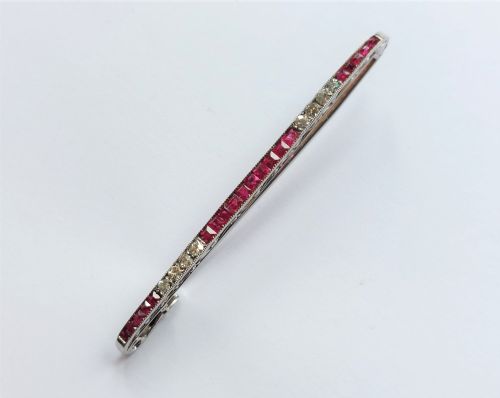
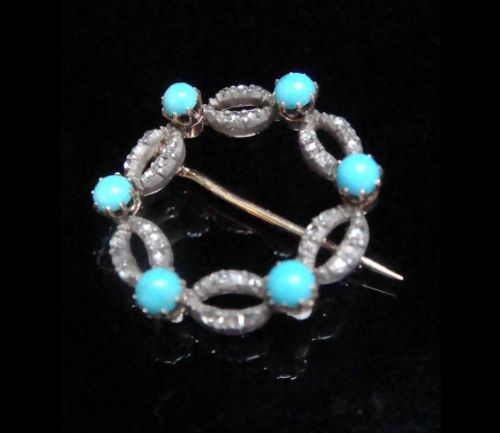


Silver Gold Diamond Brooch
A silver gold diamond brooch brings together centuries of fine metalwork and old-cut stones designed to fasten onto velvet and silk.
Silver Gold Diamond Brooch
When you search for a silver gold diamond brooch, you encounter pieces spanning from the Georgian and Victorian eras through the Edwardian period and Art Deco years. The selection here leans heavily towards Victorian and Edwardian examples, alongside French provincial work and later twentieth-century designs.
Makers fashioned these jewels into floral sprays, stars, insects, crescents, and bows. Many items served multiple functions, operating equally as pendants or convertibles into tiaras.
The combination of silver and gold reflects traditional mounting techniques intended to maximise the brilliance of stones before the widespread adoption of platinum.
How They Were Made
Jewellers typically utilised a dual-metal construction, setting diamonds into silver mounted over a backing of yellow gold, 18ct gold, or 9ct gold. Silver provided a bright, reflective face that enhanced the whiteness of old European and rose-cut diamonds, while gold supplied structural strength.
Stones were hand-cut using old European or rose-cut facets, accompanied occasionally by natural sapphires, rubies, emeralds, turquoise, pearls, or labadorite. Settings relied on meticulous hand-collets and foil backs in earlier Georgian instances, transitioning to open-backed claw and bezel settings by the late Victorian and Edwardian periods.
Listings feature periods ranging from Georgian and Victorian to Edwardian and Art Deco, utilising diamond, silver, gold, platinum, and various gemstones.
What Varies in Quality
The distinction between ordinary and exceptional pieces rests upon the crispness of the hand-carved motifs, the symmetry of starbursts and floral sprays, and the integration of the silver-to-gold fusing. Superior examples display harmonious proportions where the weight of the gold backing supports intricate tremblant mechanisms or convertible bails without distortion.
Stone selection dictates the upper tier of the range, distinguishing uniform old-cut diamond groupings from mixed or heavily included gems. The finesse of the granulation, repoussé work, and the clean execution of multi-gem settings elevate certain brooches into masterclasses of period lapidary art.
The Silver Gold Diamond Brooch Glossary
- Old European Cut
- A precursor to the modern brilliant cut featuring a small table, high crown, and deep culet. These stones were hand-faceted during the nineteenth and early twentieth centuries to catch candlelight.
- Rose-Cut
- A symmetrical dome-shaped diamond cut with a flat base and triangular facets arranged in a star pattern. This historic style offers a soft, translucent gleam rather than fiery brilliance.
- Convertible Brooch
- A versatile jewel engineered with removable fittings such as pin stems or screw-backs. Such pieces transform easily into pendants or central elements for tiaras.
- Silver-on-Gold
- A traditional manufacturing method pairing a silver upper layer with a gold backing. This technique allowed jewellers to utilise silver for bright stone settings while avoiding tarnish contact with clothing.
- Collet Setting
- A secure metal collar surrounding the girdle of a gemstone. It represents one of the foundational techniques in antique jewellery fabrication.
Silver Gold Diamond Brooch: Frequently Asked Questions
How do I wear a silver gold diamond brooch?
These pieces pin securely onto heavy fabrics such as wool coats, velvet lapels, or thick scarves. The substantial weight of silver and gold requires sturdy cloth to prevent sagging.
Convertible versions detach from their pin stems to slide onto chains as pendants. This versatility allows you to shift the jewel from daytime tailoring to evening wear.
Why use both silver and gold together?
Silver was the preferred metal for facing diamonds because its naturally bright, reflective surface enhanced the stones. Pure or alloyed gold provided the hidden structural backbone needed to secure the pin.
This dual-metal approach persisted until platinum became widely accessible in the twentieth century. It remains a definitive marker of antique manufacture.
How can I tell a Victorian brooch from an Edwardian one?
Victorian pieces often feature robust starbursts, naturalistic insects, and heavy foliate motifs executed in yellow gold and silver. Stones like garnets, turquoise, or deep sapphires frequently accent these heavier designs.
Edwardian items transition towards lighter, lacy platinum and gold wirework dominated by bows, garlands, and crescents. The overall aesthetic shifts from romantic solidity to airy elegance.
Were these brooches meant to convert into other jewellery?
Many fine pieces from the nineteenth century incorporated hidden loops, screw mechanisms, or detachable frames. This engineering allowed a single ornament to function as a brooch during the day and a pendant or tiara centrepiece by night.
Examining the reverse reveals small hinges, threaded posts, or sliding bails designed for rapid transformation.