


Victorian Star Pin
A victorian star pin captures the celestial obsession of the nineteenth century in miniature, offering a wearable spark of diamonds and gold.
Victorian Star Pin
When you search for a victorian star pin, you are looking at celestial jewellery designed in starburst or sunburst formations. These pieces function primarily as brooches, pendants, or occasionally stick pins to fasten clothing.
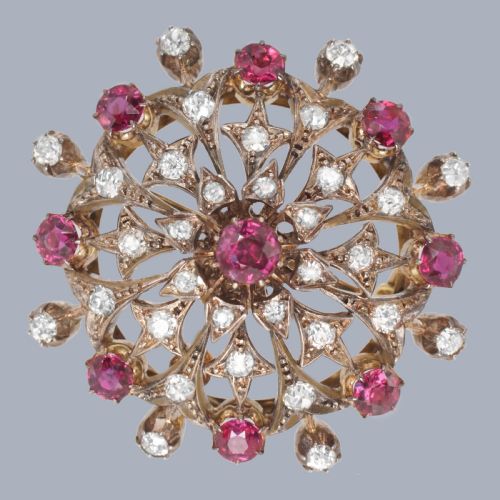
Makers shaped these starry designs in gold, silver-topped gold, and occasionally copper or enamel. They range from small sweetheart pin cushions to large, multifaceted diamond and ruby clusters.
How they were made
Jewellers utilised contrasting metals, frequently mounting diamonds in silver over a gold backing to enhance the brilliance of old European cut stones. This technique kept the metalwork bright against the dark fabric of nineteenth-century garments.
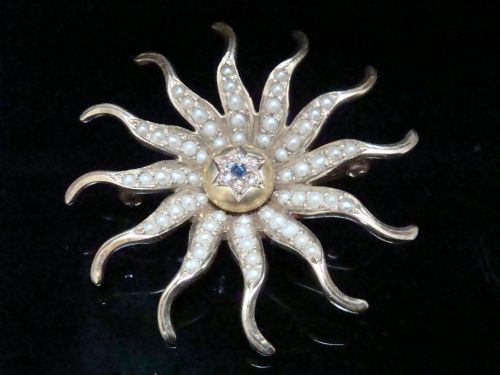
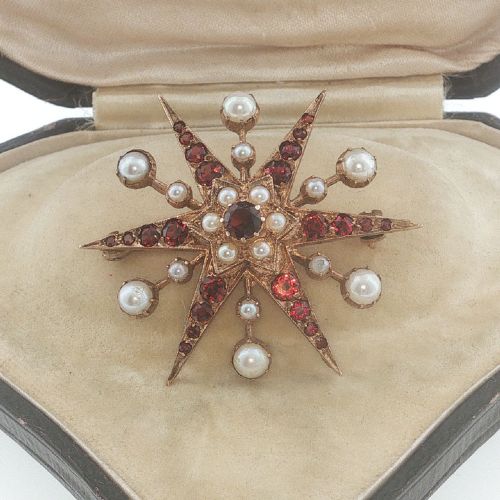
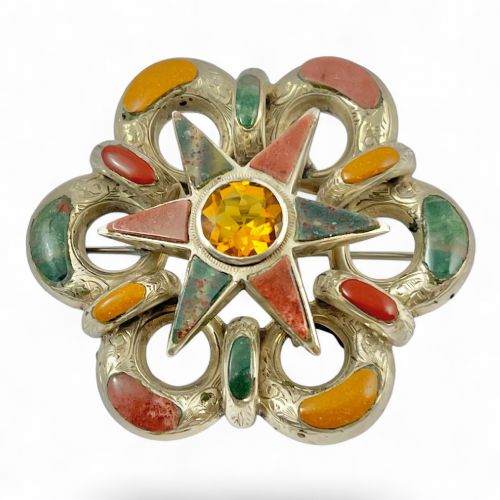
Gems such as seed pearls, garnets, turquoise, and opals were meticulously set by hand into radiating star arms. Some items incorporate agates and citrines within structured silver frames, while others feature delicate blue enamel detailing.
One recorded item is a forget-me-not star shaped sweetheart pin cushion, proving Victorians liked their sewing practical and celestial.
What varies in quality
The tier of a star pin rests on the selection and weight of the principal gemstones, particularly where old cut diamonds or natural untreated rubies form the focal point. Heavier gold standards, such as fifteen carat and eighteen carat, elevate the substance of the piece compared to lighter nine carat alternatives.
The fineness of the ray construction dictates the visual harmony of the starburst, distinguishing rigid work from fluid, balanced prong and collet settings. Accompanying gem reports and original maker marks further define the standing of individual examples.
The Victorian Star Pin Glossary
- Old European cut
- A vintage diamond cutting style characterised by a small table, heavy crown, and round girdle, typical of the nineteenth century.
- Seed pearl
- A very small, natural or saltwater cultured pearl, often drilled and threaded onto wire or glued into cluster formations.
- Pendant brooch
- A versatile piece of jewellery fitted with both a pin fitting for garments and a loop for suspension on a chain.
- Stick pin
- A long pin with a decorative terminal head, originally used to secure cravats, ties, or lapels.
- Starburst
- A radiating decorative pattern mimicking the points of a star, popular throughout the Victorian era.
Victorian Star Pin: Frequently Asked Questions
How were victorian star pins worn?
These pieces were typically pinned to the bodice, collar, or hat of a Victorian wearer. Many included hinged loops to double as pendants on a gold chain.
Heavier items required sturdy wool or velvet garments to support the weight of stones and metal.
What metals are common in these pins?
Yellow gold in various carats, including nine, fourteen, fifteen, and eighteen carat, forms the structural base of most examples. Silver is frequently paired on the face of the piece to mount diamonds securely.
Copper and blue enamel appear in specific functional or decorative variants within the broader selection.
Are these pins also pendants?
A significant portion of the available star jewellery is configured as pendant brooches. These items feature a fold-down or fixed loop hidden behind the central star cluster.
This dual purpose allowed nineteenth-century owners to transition the piece from daywear on a lapel to evening wear on a necklace.
How do I care for antique star jewellery?
Gentle cleaning with a soft brush and warm water preserves the integrity of delicate seed pearls and soft stones like opals and turquoise. Harsh chemical dips should be avoided to protect the aged metal and foil-backed or open-set gems.
Store each piece separately in a lined box to prevent friction against other items.