




Silver Glass Claret Pitcher
A silver glass claret pitcher combines heavy metal mounts with transparent vessels, built to pour wine at the Victorian and Edwardian table.
Silver Glass Claret Pitcher
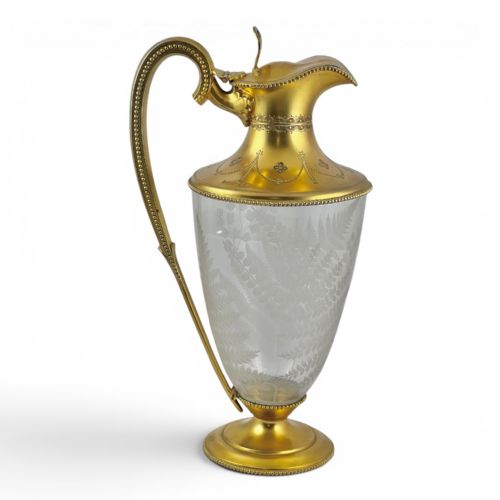
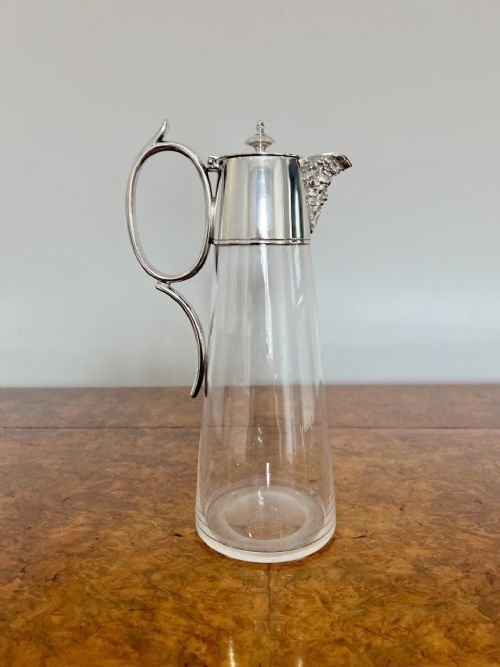
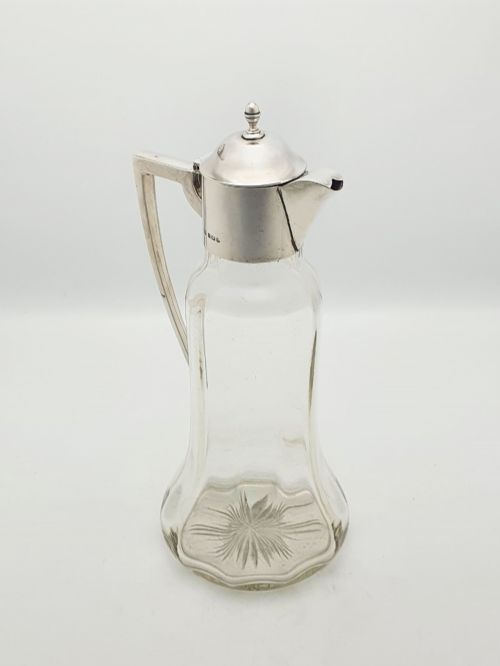
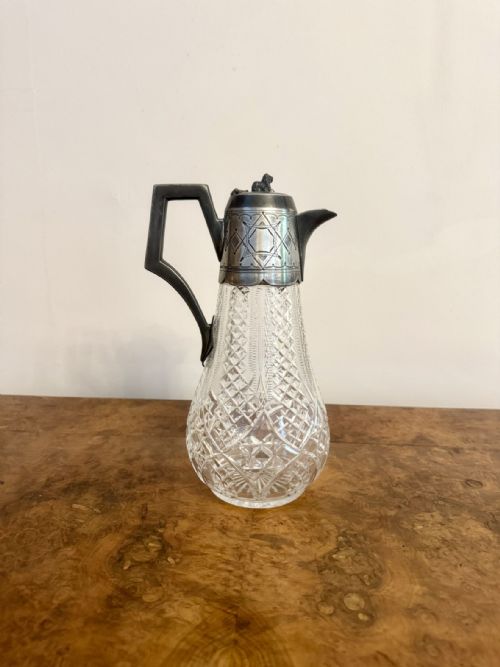
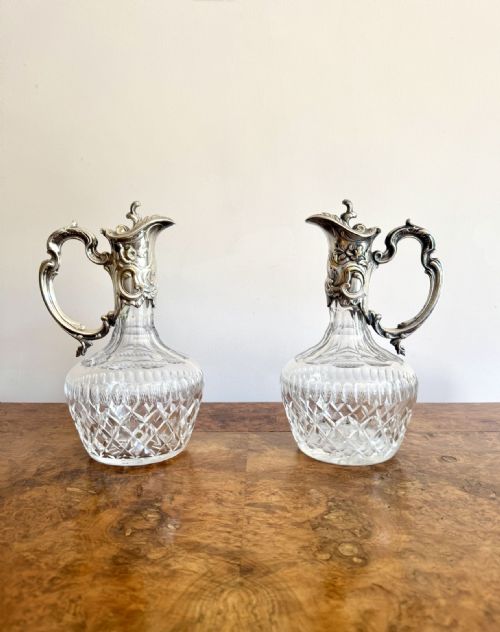
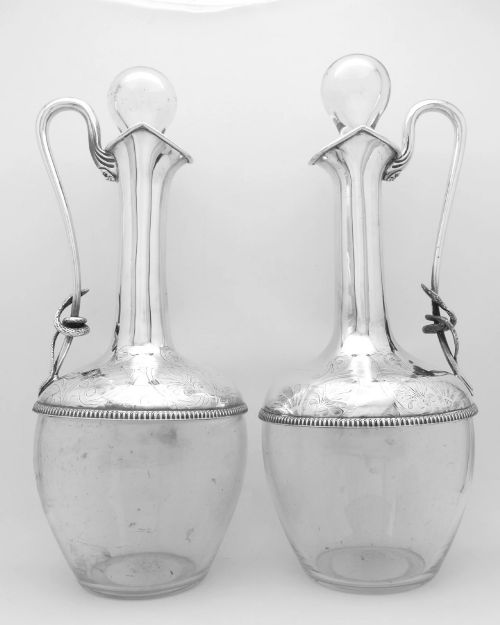
A silver glass claret pitcher pairs a clear or coloured glass body with metal mounts, handles, and spouts. These vessels appear predominantly in Victorian and Edwardian forms, stretching from the mid-nineteenth century into the twentieth.
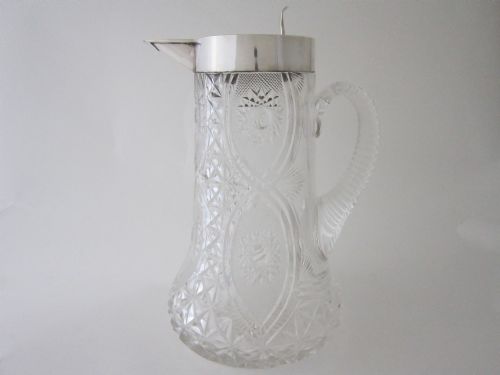
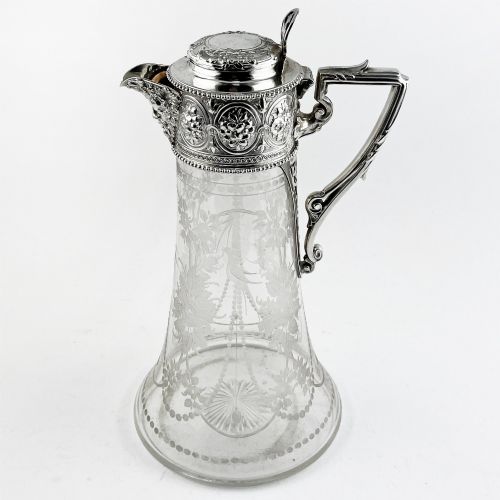
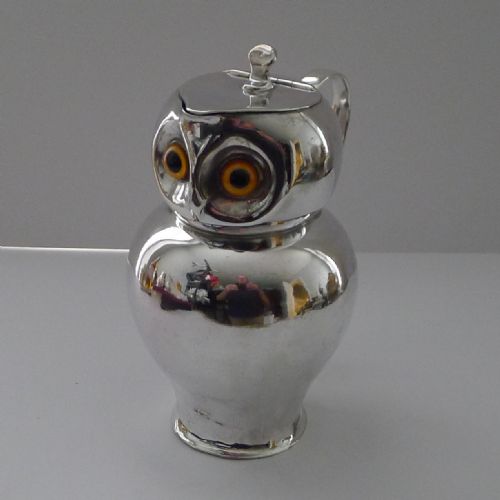
Makers shaped these jugs into standard decanter profiles alongside novelties like owls and Bacchus masks. Buyers encounter both sterling silver mounts and silver plate versions paired with cut, etched, or cranberry glass.
Materials and construction
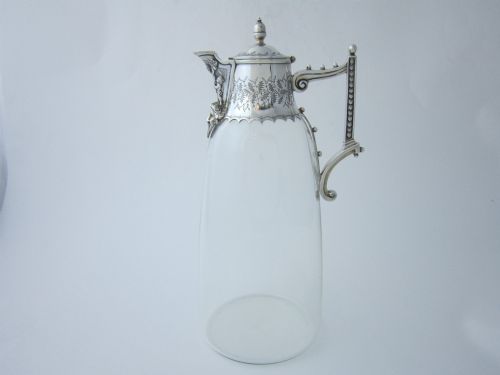
Silversmiths formed mounts from sterling silver or applied silver plate over base metals, securing them around the necks and bases of blown vessels. Handles often took the form of serpents or scrolled metal fastened tightly to the glass body.
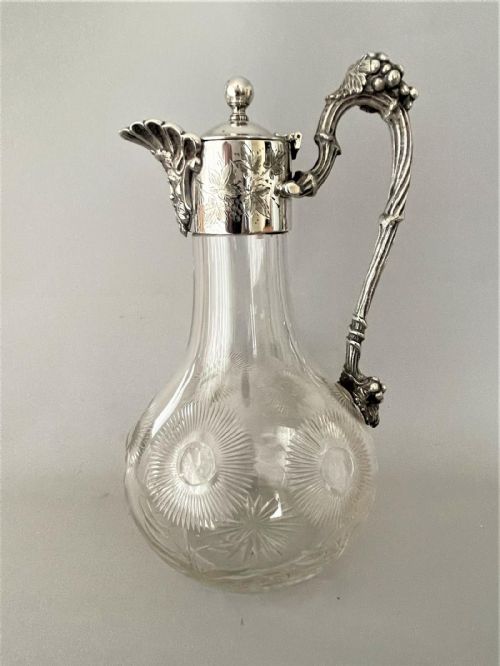
Glass bodies received decoration through deep wheel cutting, surface etching, or mould blowing. Coloured glass varieties, particularly cranberry, were shaped while molten before receiving their metal collars and hinged lids.
Owl-shaped jugs watch back with glass eyes.
Assessing craftsmanship and finish
The weight and clarity of the crystal or glass set the foundation for the piece. Heavy, deeply cut glass reflects light differently than thin, machine-moulded alternatives.
The precision of the silversmith work dictates the upper tier of execution. Crisp casting on handles, balanced hinges, and fully marked silver mounts separate standard production items from finer workshop output.
Asprey and Co. Ltd·Mappin and Webb·Elkington and Co·Tiffany·Hukin and Heath
The Silver Glass Claret Pitcher Glossary
- Claret jug
- A vessel designed specifically for serving red wine at the dining table. They frequently feature hinged lids to keep contents covered.
- Silver plate
- A layer of silver bonded to a base metal core such as copper or Britannia metal. This technique allowed makers to offer substantial tableware at a lower cost than solid sterling.
- Crystal
- A high-clarity glass containing lead oxide, which increases the weight and refractive index. It allows for deep, sharp wheel-cut patterns.
- Bacchus mask
- A decorative motif depicting the face of the Roman god of wine, wreathed in grapes and vines. It appears frequently on the spouts or mounts of wine jugs.
- Silver gilt
- Silver that has been coated with a thin layer of gold on its surface. This finish protects the silver from tarnishing in liquid-prone environments.
Silver Glass Claret Pitcher: Frequently Asked Questions
What is a silver glass claret pitcher?
A silver glass claret pitcher is a pouring vessel made from cut, etched, or coloured glass fitted with metal mounts, hinges, and handles. These pieces were designed for serving wine during formal meals.
Most surviving examples date from the Victorian and Edwardian eras, combining heavy glass bodies with elaborate silver or silver-plated metalwork.
How do I date a silver glass claret jug?
Dating relies heavily on the hallmarks stamped into the metal mounts, which indicate the assay office, year of production, and maker. Stylistic clues such as floral engraving, Art Nouveau curves, or heavy Victorian cutting also help narrow the period.
Unmarked silver-plated items require assessment through design patents, registration numbers, and manufacturing marks stamped directly into the base metal.
Were these jugs used only for wine?
While intended primarily for claret and other red wines, many of these pitchers served water, lemonade, or mixed punches. Some variations included internal ice tubes to keep liquids chilled without dilution.
Larger forms function as general beverage jugs, while smaller versions serve as whisky noggins or table decanters.
How should I clean silver mounts on glass?
Clean silver mounts with a soft cloth and dedicated silver polish, taking care to avoid getting polish onto the glass surface or inside etched crevices. Apply polish sparingly around hinged lids and handles.
Wash the glass body separately using warm soapy water and a bottle brush, avoiding harsh abrasives that might scratch the surface or dull old crystal.