
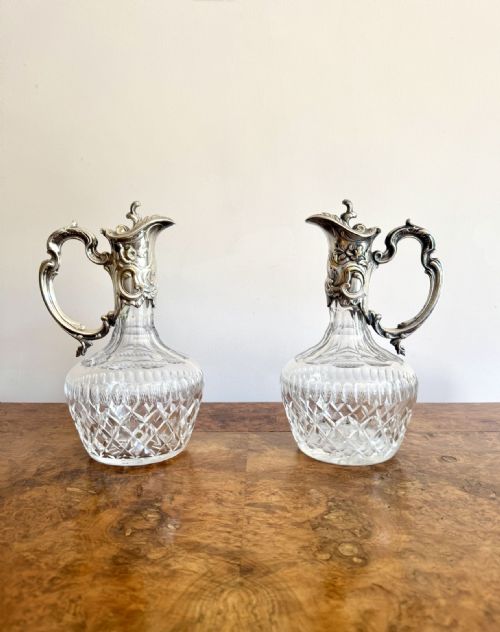


Cut Glass Claret Pitcher
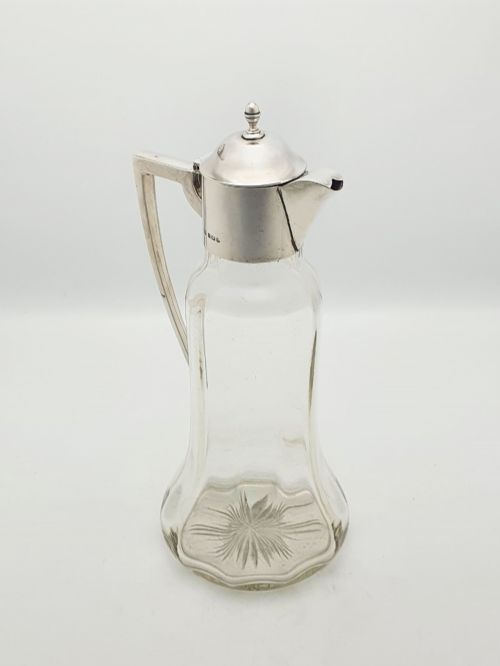
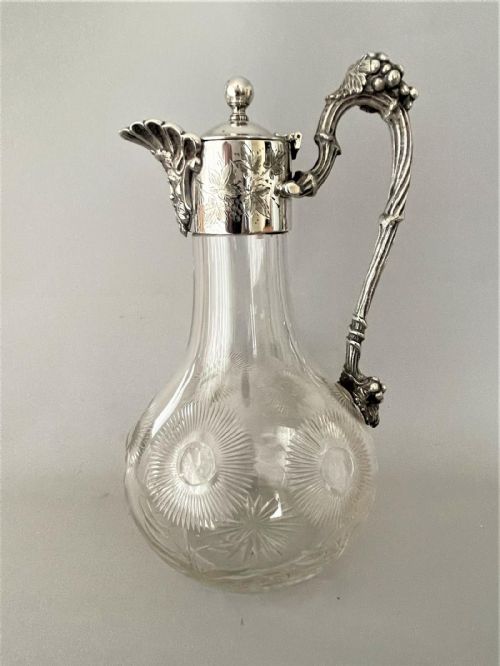
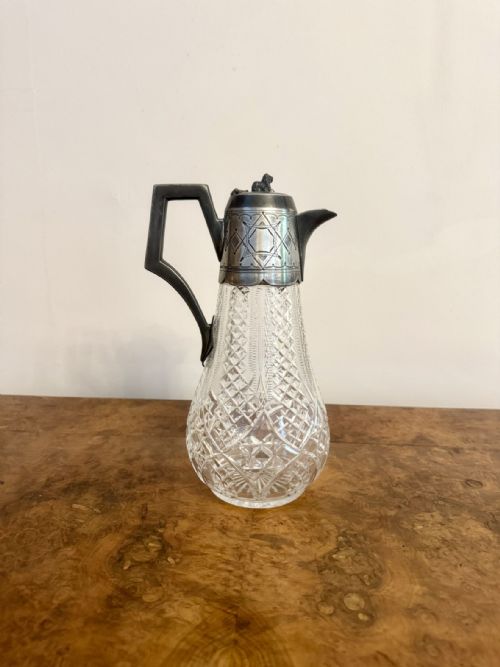
A cut glass claret pitcher combines heavy faceted crystal with bright silver mountings to serve wine at the Victorian and Edwardian table.
Cut Glass Claret Pitcher
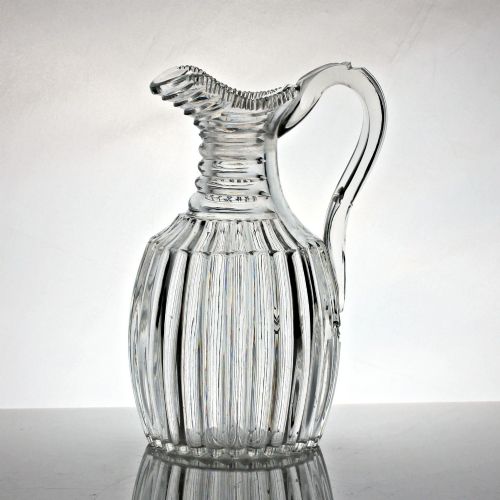
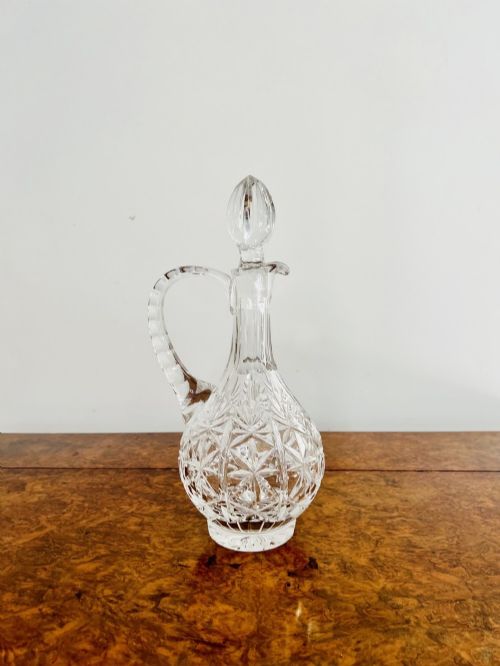
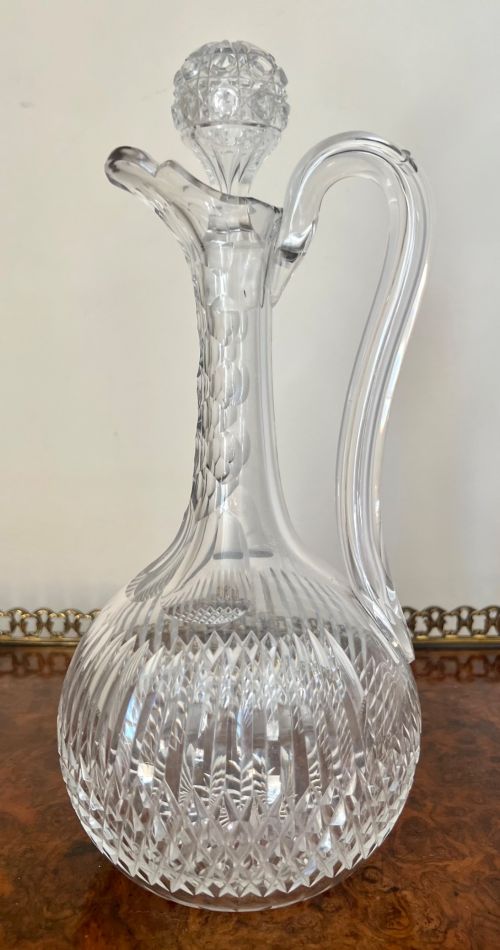
A cut glass claret pitcher serves as a table vessel designed specifically for pouring red wine or claret during formal dining occasions. The examples gathered here span the Victorian, Edwardian, and George V periods, alongside nineteenth-century expressions.
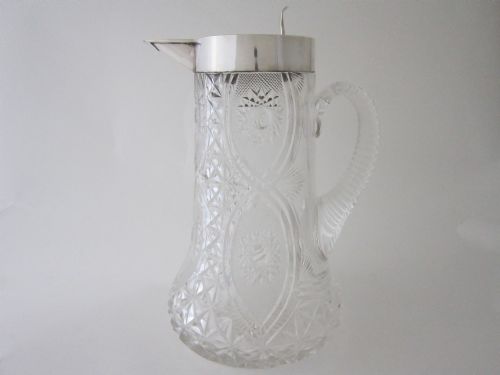
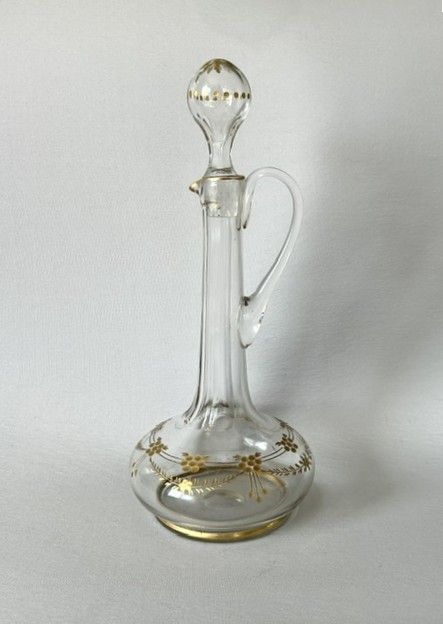
The dominant forms on this page include tall ewers, decanters with hinged lids, and silver-mounted jugs. Many pieces pair heavy lead crystal bodies with substantial handles and spouts forged from sterling silver or silver plate.
How they were made
Glassmakers blew molten metal into moulds or shaped it by hand before cooling the vessel for the cutting shop. Artisans then used wheel-cutting lathes to carve deep prismatic patterns, flutes, and star motifs into the surface of the clear or coloured glass.
Silversmiths constructed hinged mounts, collars, and lids designed to fit the specific contours of each individual glass body. These metal mounts were secured around the neck of the pitcher, often incorporating thumbpieces for one-handed pouring.
Bohemian examples in the evidence feature coloured glass overlays, including green glass cut back to clear crystal.
What varies in quality
The crispness of the wheel-cut facets dictates the visual weight and brilliance of the glass body. Sharply defined prismatic cuts refract light cleanly, whereas softer or smoother facets indicate a simpler production standard.
The thickness and purity of the metal mounts contribute significantly to the overall substance of the piece. Substantial sterling silver collars with clear hallmarks demonstrate greater workshop investment than thin silver plating over base metal.
Mappin and Webb·Richardsons·Elkington and Co·Tiffany·William Davenport
The Cut Glass Claret Pitcher Glossary
- Claret jug
- A vessel designed for holding and pouring red wine at the dining table. These pieces typically incorporate a hinged lid to preserve the vintage.
- Ewer
- A pitcher with a wide spout and a large curved handle. This form descends from historical water vessels and frequently appears in nineteenth-century glass.
- Sterling silver
- An alloy consisting of pure silver and other metals, traditionally copper, standardly marked to guarantee its metal content. It provides the heavy mountings found on finer pitchers.
- Silver plate
- A layer of silver fused to a base metal core such as copper or Britannia metal. It allowed nineteenth-century manufacturers to produce decorative mounts at a lower cost.
- Prism cut
- A linear cutting style on glassware featuring flat, angled facets that reflect light in geometric bands. This technique creates the characteristic sparkle of period vessels.
Cut Glass Claret Pitcher: Frequently Asked Questions
How do I date a claret jug?
Dating relies on the combination of the glass cutting style and any metal hallmarks present on the mounts. Victorian pieces often display deeper, more elaborate wheel-cutting, while Edwardian examples tend toward lighter floral engravings.
Silver mounts stamped with city assay marks and date letters provide the most precise point of manufacture. When mounts are absent, the silhouette and weight of the glass offer clues to the working decade.
Are these pitchers suitable for serving wine?
These vessels function effectively for decanting and serving wine at the modern table. The generous spouts allow smooth pouring, and the heavy glass maintains the temperature of the contents.
Care must be taken when washing antique pieces, particularly those with silver-plated mounts or delicate engravings. Hand washing in warm water prevents damage to the historic materials.
What is the difference between crystal and glass?
Crystal contains lead oxide, which adds weight, brilliance, and a resonant sound when struck. This higher density allowed Victorian and Edwardian artisans to cut deeper facets without weakening the structure.
Standard glass lacks this lead content, resulting in a lighter feel and less light refraction. Many pieces on this page utilise heavy cut crystal to achieve their sharp geometric patterns.
How should silver mounts be cleaned?
Silver mounts require gentle cleaning with a specialised cloth to remove tarnish without touching the surrounding glass. Avoiding abrasive pastes prevents scratching both the metal and the surface of the vessel.
Keeping moisture away from the interior of hinged lids helps protect the internal pins and mechanisms from corrosion over time.