



Silver Food Cover Dome
A silver food cover dome brings grandeur to the dining table, keeping large joints and hot roasts warm while elevating the presentation of a feast.

Silver Food Cover Dome
A silver food cover dome provides a traditional method for keeping large cuts of meat, poultry, and dishes warm on the dining table. When searching for a silver food cover dome, buyers encounter substantial serving pieces designed to fit over platters and entree dishes.
The pieces listed on this page span the Georgian, Victorian, and Edwardian periods, alongside nineteenth-century French and English designs. Forms range from large meat domes and game covers to pairs of oval entree dishes and cloches.
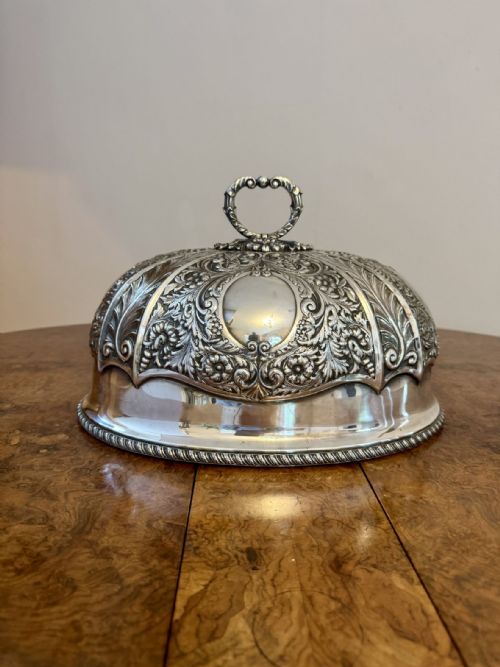
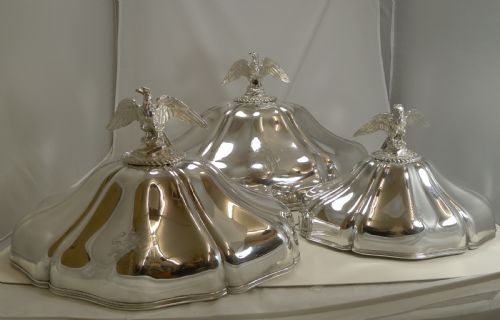
Makers and workshops from Sheffield, London, and Paris produced these items in various sizes, sometimes appearing as graduated sets. Collectors find both plain utilitarian covers and ornately decorated versions bearing crests or handles.
Materials and construction methods
Makers formed these domes from copper, base metal, solid silver, or copper fused with silver through the Old Sheffield Plate technique. Later nineteenth-century items often utilise silver plate on copper or electroplated nickel silver, known as EPNS.
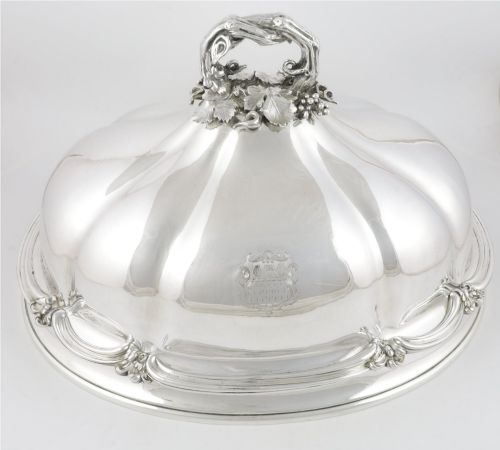
Silversmiths shaped the metal sheets into large curves and reinforced the rims with applied wire borders to ensure structural strength. Handles, often cast in the form of foliage, branches, or animal crests, were securely attached to the top of each dome.
Materials range from solid silver and Old Sheffield Plate to copper, base metal, and electroplated nickel silver.
Distinctions in quality and execution
The weight of the metal and the thickness of the silver plating dictate the substance and longevity of a dome. Heavier gauges of Old Sheffield Plate or solid silver provide a more substantial feel in the hand compared to lighter base metal alternatives.
The crispness of chased decoration, the security of the applied handle, and the balance of the dome over a matching platter separate standard production items from masterworks. Pieces bearing documented maker marks or noble provenance display superior finishing and detail.
Roberts Cadman·Henry Wilkinson·Boulton·Durand Paris·Atkin Brothers·Christofle
The Silver Food Cover Dome Glossary
- Old Sheffield Plate
- A fused composite material made by melting a sheet of silver onto a copper core before rolling them together. This technique creates a rich surface where the underlying copper occasionally shows through the wear.
- EPNS
- Electroplated Nickel Silver, a method introduced in the nineteenth century that applied a coating of silver to a base metal alloy using electrical current. It became the standard industrial process for manufacturing silver plated wares.
- Cloche
- A bell-shaped cover used in food service to retain heat and aroma until the moment of serving. The term derives from the French word for bell.
- Regency
- A British design period spanning the early nineteenth century, characterised by classical restraint and neoclassical motifs. Pieces from this era often feature clean lines and restrained classical ornamentation.
- Entree dish
- A serving vessel designed for the course served before the main meat dish. These often include a base, a liner, and a matching dome cover.
Silver Food Cover Dome: Frequently Asked Questions
How were silver food domes used?
These domes were placed over large joints of meat, poultry, or hot dishes on the sideboard or dining table. They trapped heat and steam, ensuring food remained warm during long multi-course meals.
Servants would lift the dome at the table to reveal the dish, adding theatrical presentation to formal dining throughout the Georgian and Victorian eras.
Can I use an antique dome for modern dining?
Many people continue to use these domes for serving large roasts and Sunday lunches at home. Their generous proportions accommodate modern platters and joints easily.
Care must be taken with historic plated surfaces, washing them by hand with gentle agents rather than placing them in modern dishwashers.
How do I tell Old Sheffield Plate from EPNS?
Old Sheffield Plate was produced by fusing silver and copper together before shaping, often revealing a thin reddish line of copper along exposed edges or high points of wear. This technique was largely superseded in the mid-nineteenth century by electroplating.
EPNS, or electroplated nickel silver, uses an electrical current to bond a thin layer of silver over a greyish nickel alloy base, lacking the characteristic copper bleed-through.
Why do some domes have crests or coats of arms?
Wealthy families commissioned silversmiths to engrave their family crests, coats of arms, or initials onto the body of the dome. This personal mark denoted ownership and added status to grand household silver services.
Today, these engraved details help researchers trace the provenance and original historic context of individual pieces.