


Silver Dome Dish Cover
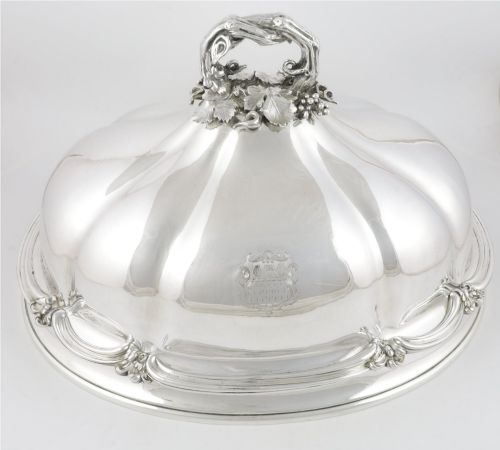
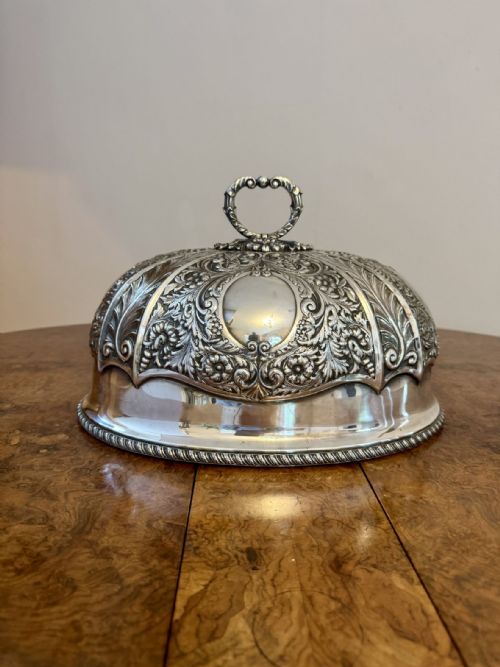
These silver dome dish cover pieces are substantial table silver built to keep roasted joints and courses warm at formal dining tables.

Silver Dome Dish Cover
A silver dome dish cover brings impressive scale and gleaming presence to the dining table, originating to protect large roasts and meat courses from cooling before carving. When buyers search for a silver dome dish cover, they encounter substantial serveware designed in Georgian, Victorian, Edwardian, and Regency styles.
The selections on this page span meat domes, game covers, entree dishes, and cheese dishes, with Old Sheffield Plate and silver plate dominating the physical evidence. These pieces range from small c1830 items to large Regency period covers and matched sets, originating primarily from the nineteenth and early twentieth centuries.
How They Were Made
Makers utilised copper, base metal, and Old Sheffield Plate, a fusion technique bonding silver to a copper core that often reveals a warm copper bleed along exposed edges. Electroplated methods such as EPNS and standard silver plate emerged later in the Victorian and Edwardian eras, coating base metals with a smooth silver layer.
Craftsmen shaped these heavy covers through beating and soldering, pairing the metal domes with glass inserts for cheese dishes or mounting them onto dedicated stands. Structural elements included applied wire borders and cast handles, which allowed servants to lift the heavy covers from the table.
Materials documented across the inventory include Old Sheffield Plate, silver plate, copper, glass, and base metal.
What Varies in Quality
The weight and gauge of the metal set the foundation for durability, separating sturdy meat domes from thinner utilitarian pieces. Heavier gauge Old Sheffield Plate exhibits a distinct depth where the fused silver meets the underlying copper base.
The crispness of cast handles and applied decorative borders indicates workshop standard, alongside provenance linking specific pieces to makers like Boulton or historical figures such as the Duke of Somerset. Integration of auxiliary components, such as matched glass dishes, adds architectural completeness to the serveware.
Roberts Cadman·Henry Wilkinson·Boulton·Atkin Brothers
The Silver Dome Dish Cover Glossary
- Old Sheffield Plate
- An early fusing technique where a sheet of silver is melted onto a copper ingot before rolling. This method predates electroplating and leaves characteristic copper edges.
- EPNS
- Electroplated Nickel Silver, a manufacturing process introduced in the nineteenth century. It applies a thin coating of pure silver over a nickel and copper alloy base.
- Cloche
- A bell-shaped dome cover used to retain heat over individual plates or serving dishes. The term derives from the French word for bell.
- Meat Dome
- A large, vaulted cover designed to fit over a platter of roast meat. These items form the primary category of large serveware on this page.
- Entree Dish
- A shallow serving vessel with a matching cover, used for side dishes at formal meals. These often appear as matched pairs in Georgian and Edwardian dining sets.
Silver Dome Dish Cover: Frequently Asked Questions
What is a silver dome dish cover used for?
These covers protected large joints of meat, game, and cheese from cooling or drying out on grand dining tables. Servants lifted them at the table just before carving or serving.
They also served to contain aromas and present courses with theatrical scale during formal nineteenth-century banquets.
How do I clean a silver plated dome?
Clean these surfaces with a gentle silver cream and a soft cloth to preserve the plating or fused silver layer. Avoid abrasive pads that wear through thin plating down to the base metal.
Old Sheffield Plate requires particular care along exposed copper edges to maintain the historical contrast of the metals.
How do I date a meat dome?
Dating relies on manufacturing techniques, style periods, and maker marks stamped into the metal. Old Sheffield Plate points toward Georgian and early nineteenth-century production.
Later Victorian and Edwardian pieces frequently utilise electroplating methods like EPNS and carry distinct maker stamps.
What is the difference between Old Sheffield Plate and silver plate?
Old Sheffield Plate involves physically fusing a layer of silver to a copper base before rolling the sheet out. This process creates a distinct material structure compared to later chemical plating.
Standard silver plate and EPNS rely on an electrical current to deposit a silver coating over a nickel alloy or base metal.