



Silver Dining Service
A silver dining service brings historic weight and polished elegance to the table, uniting centuries of craftsmanship across complete canteens, flatware sets, and serving pieces.
Silver Dining Service
A silver dining service encompasses everything needed for formal meals, ranging from extensive cutlery sets and canteens to individual serving vessels like sauce boats and meat covers. When exploring a silver dining service, buyers frequently encounter pieces spanning from the eighteenth century through the twentieth century.
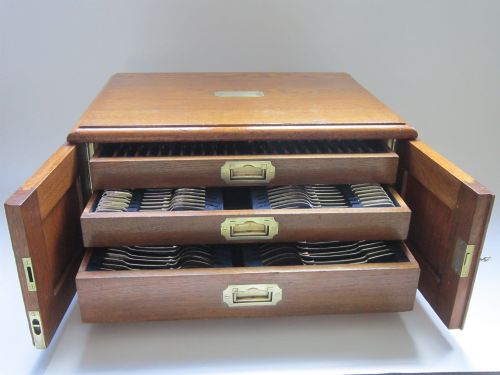
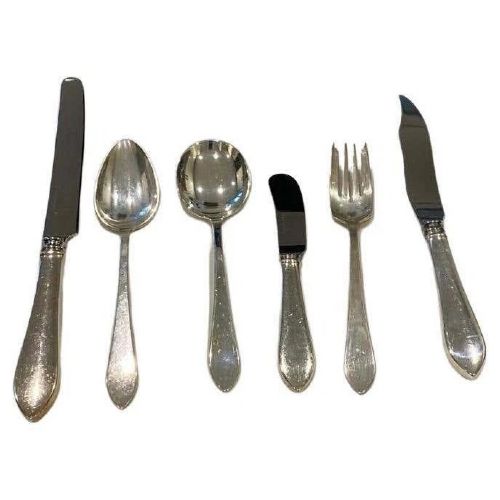
The selections on this page bridge multiple eras, incorporating Victorian canteens, Edwardian fish cutlery sets, and Art Deco flatware alongside robust George V sauce boats and Regency-era Old Sheffield Plate meat covers. Functional serving items such as marrow scoops, charger plates, and salad services complement the primary cutlery groupings.
Originating predominantly from British and international workshops, these formations combine sterling silver and silver plate with supporting materials like oak, brass, and crystal. Each item fulfils a distinct role in traditional dining, maintaining utility while offering tangible historical provenance.
How they were made
The construction of a silver dining service relies upon the skilled working of sterling silver and silver plate, shaped into robust flatware patterns like Fiddle and Faneuil, as well as heavy chargers and meat covers. Metal components are frequently paired with structural elements in oak, brass, and steel to create durable canteens and functional service pieces.
Advanced plating techniques, including Old Sheffield Plate methods, allow base metals to carry rich silver layers, while delicate items incorporate crystal glass and velvet linings. Artisans employ traditional smithing and casting methods to achieve the weight and balance demanded by formal dining traditions.
Listings feature sterling silver and silver plate alongside oak, brass, and crystal elements across multiple eras.
What varies in quality
Quality within a silver dining service depends upon the heaviness of the gauge, the crispness of pattern detail in flatware designs like Fiddle or Faneuil, and the integrity of the base metal beneath silver plating. Substantial weight in items such as chargers and meat covers indicates superior craftsmanship and durability.
The preservation of original maker marks, harmonious matching across extended canteen sets, and the quality of associated fitted cases in oak and velvet elevate the standing of individual groupings within the broader range.
Tiffany
The Silver Dining Service Glossary
- Sterling silver
- A standard alloy consisting of ninety-two point five percent silver by mass, with the remainder composed of copper or other metals. This ensures the structural strength required for cutlery and serving pieces.
- Old Sheffield plate
- An early form of plated metal produced by fusing a sheet of silver to a thicker copper ingot before rolling them together. This technique creates a durable dual-metal sheet visible on antique meat covers.
- Marrow scoop
- A narrow, elongated utensil designed to extract marrow from bones during formal dining. Eighteenth-century examples reflect specialised dining habits of the period.
- Canteen
- A fitted box, chest, or case designed to securely store a complete set of cutlery. These containers often feature internal divisions lined with velvet or cloth.
- Charger plate
- A large decorative base plate placed beneath other dinnerware during formal courses. Heavy silver-plated versions add formal presence to the table setting.
Silver Dining Service: Frequently Asked Questions
What is included in a service?
A silver dining service typically includes matched sets of cutlery, canteens, and specialised serving vessels such as sauce boats, meat covers, and salad services.
Selections vary from compact flatware bundles to extensive multi-piece settings designed for formal dining occasions.
How do I care for silver?
Regular polishing with appropriate silver care products maintains the lustre of sterling silver and silver-plated items without damaging the metal.
Proper storage in lined canteens or protective wraps prevents tarnishing when the pieces are not in active use.
What periods are available?
The available pieces span the eighteenth, nineteenth, and twentieth centuries, incorporating Georgian, Victorian, Edwardian, and Art Deco designs.
Each period introduces distinct aesthetic movements and manufacturing techniques to the dining table.
Are these items for daily use?
Many buyers choose to incorporate antique flatware and serving pieces into contemporary dining routines to elevate everyday meals.
Careful hand washing and mindful handling ensure these historic items remain functional for generations.