
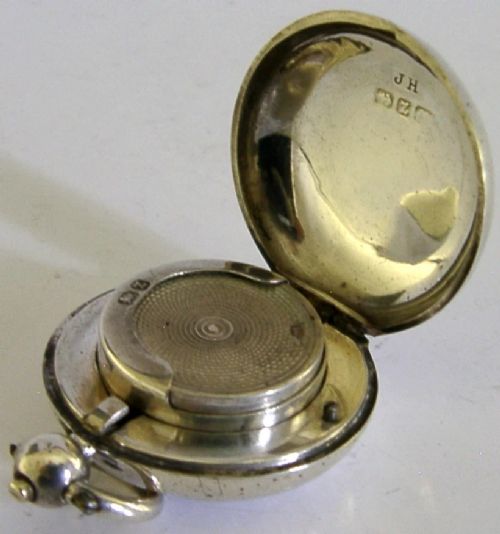
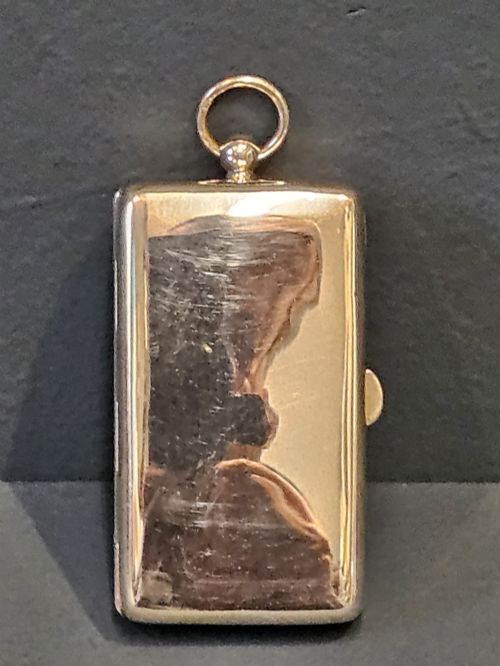

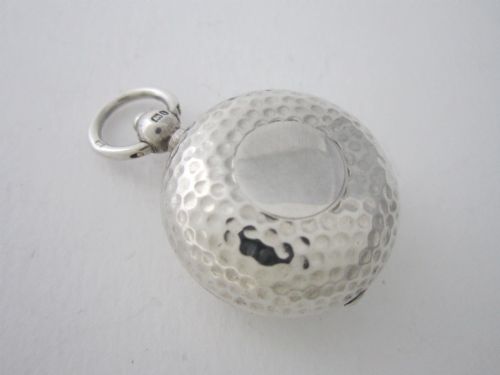
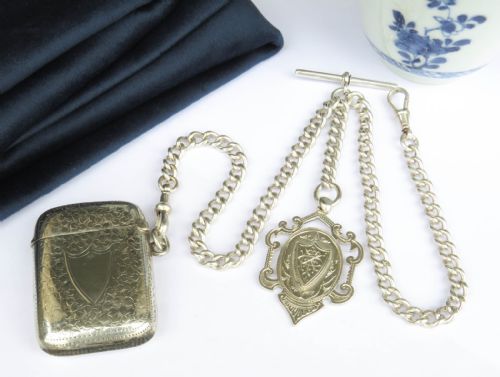



Silver Fob Watch Case
These silver fob watch case pieces are small protective enclosures or housings designed to hold portable timepieces securely.
Silver Fob Watch Case
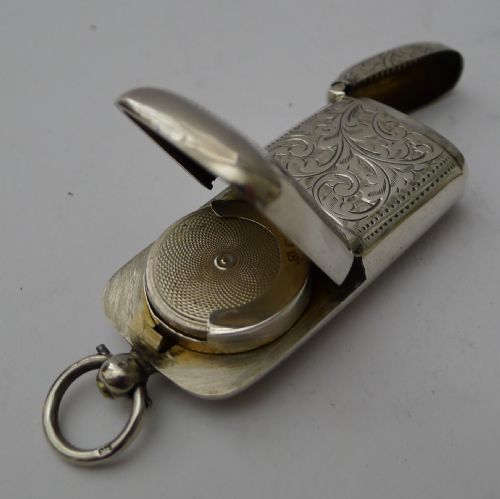
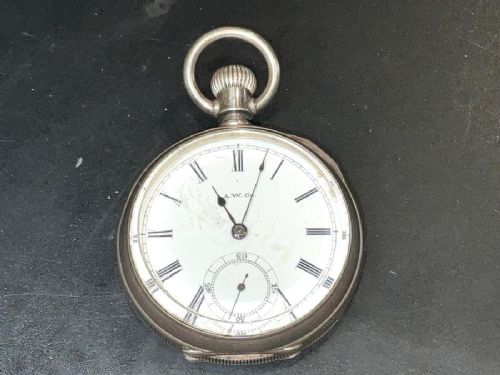
A silver fob watch case protects a portable timepiece while allowing it to be carried on a chain or attached to clothing. The pieces found here span the Victorian, Edwardian, George V, and Art Deco periods, originating from around 1880 through the 1930s.
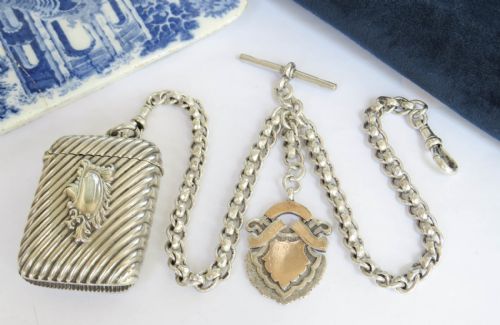
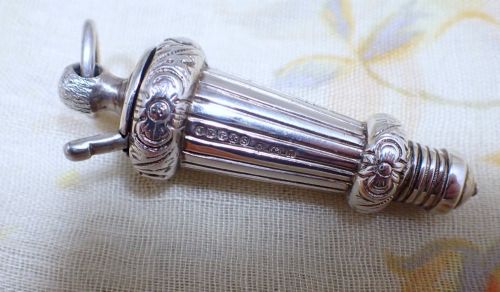
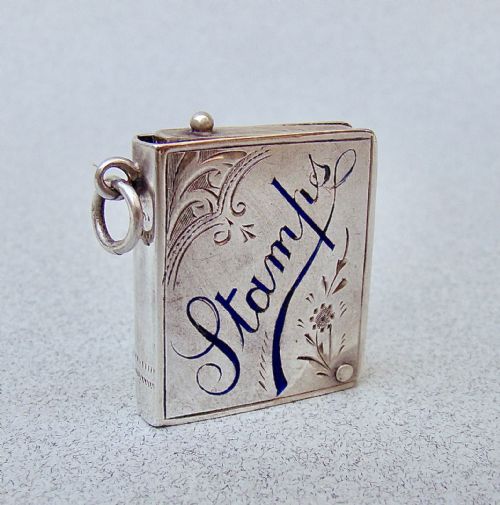
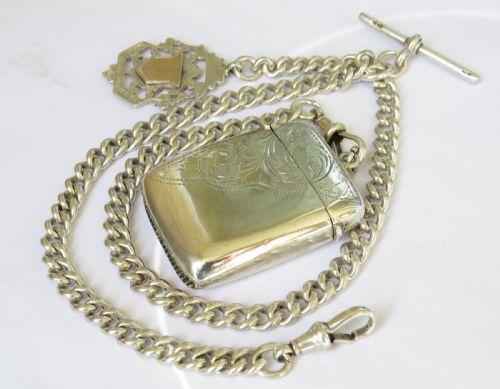
While the search specifically names a case, the broader evidence includes associated pocket watches, sovereign cases, vesta cases, stamp cases, and chains. These items reflect the personal accessories commonly worn during the late nineteenth and early twentieth centuries.
How they were made
The materials recorded across these items are primarily sterling silver and standard silver, frequently accompanied by glass, rose gold, brass, gold accents, steel, and enamel. Metals were worked into hinged cases, chains, and small functional containers.
Construction techniques involve metal smithing, stamping, and engraving, alongside specialised housing for movements in pocket watches. Enamel work and applied gold accents add decorative contrast to the silver body.
Some timepieces even doubled as tinder boxes, ready to strike a light while keeping time in your waistcoat.
What varies in quality
Quality appears in the crispness of hallmarks, the precision of hinges, and the clarity of decorative engraving or enamel work. Finer examples maintain structural integrity in their closures and retain intact glass or detailed surface ornamentation.
The integration of multiple functions, such as combined sovereign and vesta cases or integrated watch chains, shows greater complexity in manufacture. Simpler utilitarian items contrast with elaborately detailed pieces bearing maker marks from firms like Aaron Lufkin Dennison or Crisford & Norris.
Aaron Lufkin Dennison·Crisford & Norris·JW Benson
The Silver Fob Watch Case Glossary
- Sterling silver
- A silver alloy containing 92.5 percent pure silver and 7.5 percent other metals, usually copper, ensuring durability for pocket items.
- Vesta case
- A small matchbox, often fitted to a watch chain, designed to keep matches dry and safe during daily use.
- Sovereign case
- A small, pocket-sized container made to hold gold sovereign coins securely before they fell from everyday circulation.
- Albert
- A type of watch chain attached to a pocket watch, named after Prince Albert and frequently paired with vestas or fob pendants.
- Hallmark
- An official stamp applied to precious metals indicating the standard of purity, the assay office, and the year of manufacture.
Silver Fob Watch Case: Frequently Asked Questions
What is a silver fob watch case?
A silver fob watch case is a protective container designed to house a pocket watch while it is suspended from a chain or carried in a pocket.
These items range from simple protective housings to decorative silver and enamel pieces produced during the Victorian and Edwardian eras.
How were these cases used?
Owners used these cases to guard delicate pocket watches against dust, scratches, and daily wear while keeping the timepiece accessible on a watch chain.
Many designs incorporated additional compartments or were worn alongside matching vesta cases and sovereign holders on an albert chain.
How do I date a piece?
Dating relies heavily on official hallmarks stamped into the silver, which indicate the assay office and the specific year of testing.
Stylistic markers such as Art Deco geometric lines or Victorian ornamentation also help assign pieces to periods like the Edwardian era or the 1920s and 1930s.
What materials are common?
Sterling silver and standard silver form the primary body of these items, often supplemented by glass for watch faces and enamel for colour.
Some examples include rose gold, brass, gold accents, and steel components, reflecting the varied manufacturing standards of the nineteenth and twentieth centuries.