



Silver Flatware Knife
A silver flatware knife brings tactile weight and historic craftsmanship to the dining table, offering everything from butter knives to fish servers.
Silver Flatware Knife
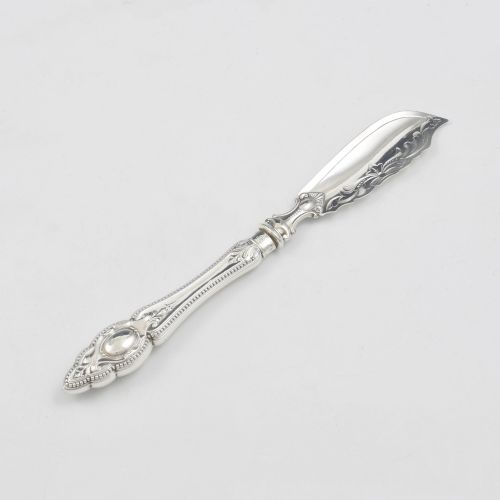
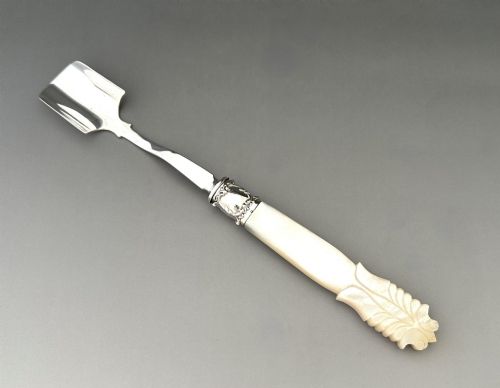
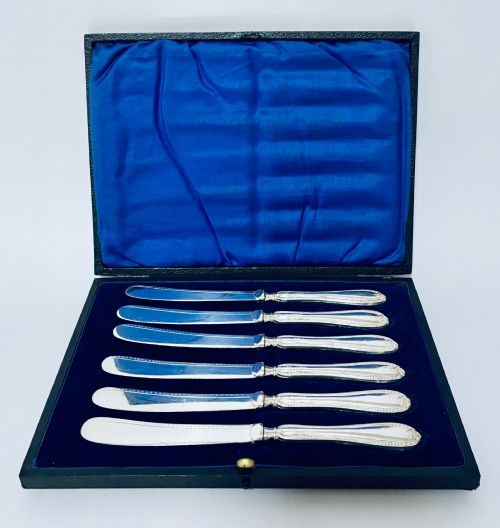
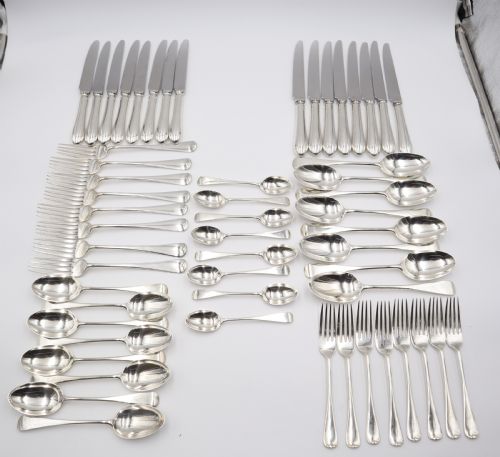
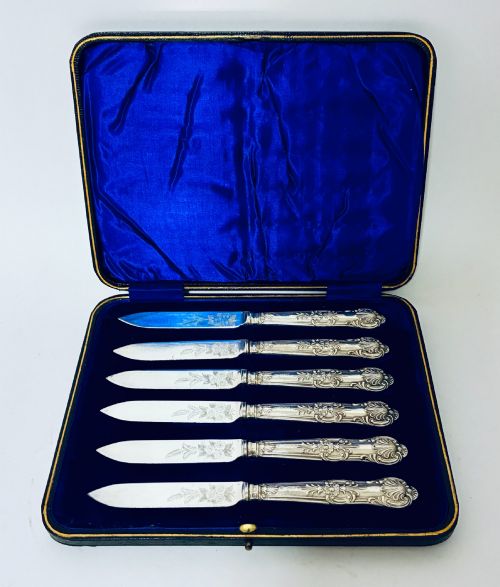
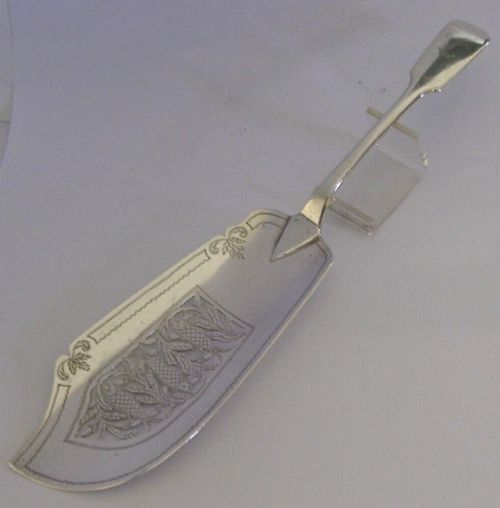
A silver flatware knife encompasses functional table implements ranging from individual butter knives and fruit knives to large serving sets, fish servers, and cheese scoops. These utensils appear across periods spanning the Georgian, Victorian, Edwardian, and Art Deco eras, reflecting shifting dining customs through distinct forms.
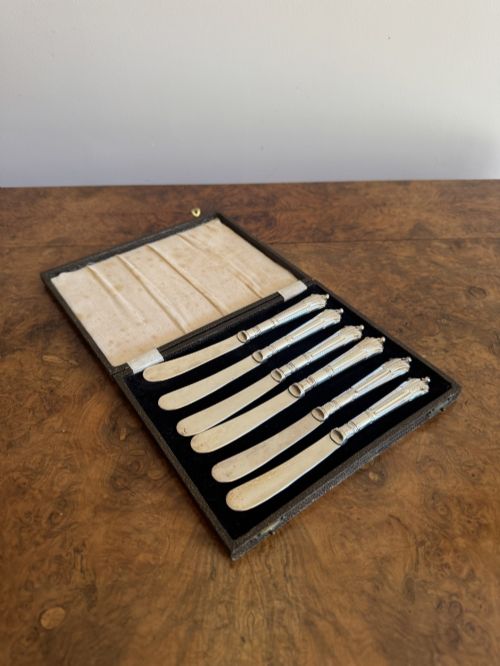
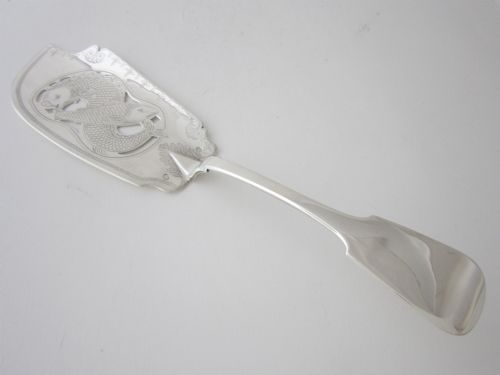
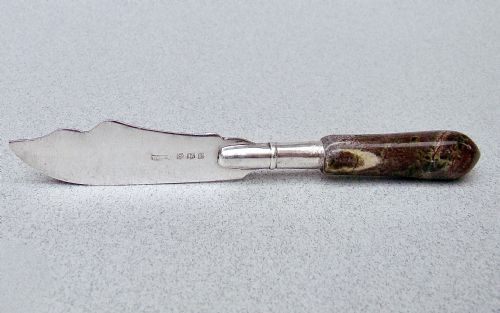
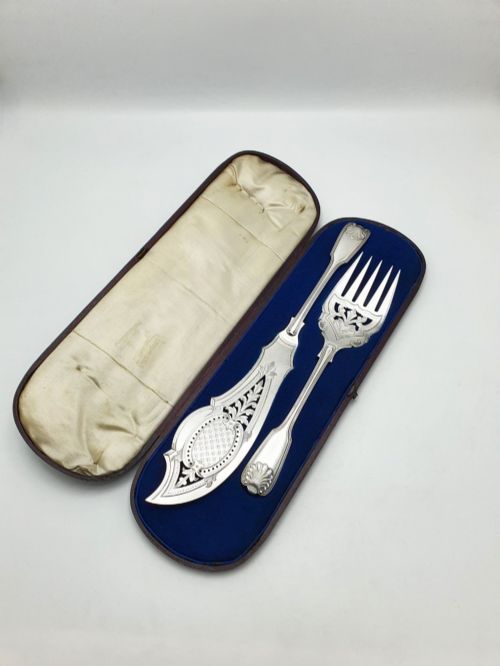
The pieces on this page lean heavily towards Victorian and early twentieth-century examples, including cased butter knife sets, fruit knives with mother of pearl handles, and heavy sterling silver fish servers. Specialised items such as miniature butter knives with agate handles and campaign cutlery sets also emerge frequently in the listings.
Makers and silversmiths utilised traditional patterns such as Fiddle, Queens, Scroll and Bead, and Coburg to ornament handles. Whether part of a larger cutlery set or presented individually in fitted boxes, these objects demonstrate the domestic utility of past centuries.
How they were made
Makers combined sterling silver, silver plate, and solid silver blades with organic materials like mother of pearl, bone, antler, silk, and velvet lining within fitted oak canteens or cases. Steel served routinely for cutting edges on fruit knives and cased dessert sets, while agate provided decorative miniature handles.
Smiths employed casting, piercing, and engraving techniques to ornament fish slices and serving blades with detailed scrollwork and crests. Handles were riveted or pinned securely to tangs, and velvet or silk interiors protected the polished metal within fitted presentation boxes.
Silver Flatware Knife Retail Price Guide 2026
Typical asking prices for silver flatware knife among the pieces listed under this phrase on Sellingantiques today, from the lower quarter to the upper quarter. They describe what is for sale here now, not the wider market.
Listings include butter knives, fish servers, fruit knives, and christening sets across Victorian, Edwardian, and Georgian periods in sterling silver and silver plate.
What varies in quality
The calibre of a silver flatware knife rests upon the crispness of chased and engraved details on the blade and handle, alongside the structural integrity of the joint between blade and grip. Cast silver blades and heavier gauge sterling silver demonstrate superior durability compared to thinner plated alternatives.
The choice of handle material significantly influences overall execution, with unblemished mother of pearl, carved antler, and polished agate representing finer manufacturing standards than basic bone or plain wood. Complete fitted cases with original silk and velvet linings add considerable integrity to sets.
Vale and St John·International Silver Co·George Adams·Charles Boyton
The Silver Flatware Knife Glossary
- Sterling Silver
- An alloy consisting of 92.5 percent silver and 7.5 percent other metals, usually copper, ensuring structural strength for daily use. This standard has been legally enforced by assay offices for centuries.
- Mother of Pearl
- The iridescent internal layer of pearl oyster shells, shaped into smooth scales to form decorative handle panels on fruit and butter knives. It provides a tactile, lustrous grip.
- Fish Slice
- A wide, often pierced and engraved flatware implement designed for serving fish portions at formal dining tables. These pieces frequently feature ornate scrollwork and crests.
- Silver Plate
- A base metal, such as copper or nickel brass, coated with a thin layer of pure silver through electroplating or older Sheffield plating methods. This technique offered a brilliant finish at a reduced cost.
- Fiddle Pattern
- A traditional nineteenth-century cutlery handle design characterised by a narrow stem widening towards a squared, shoulders-and-notch terminal resembling a fiddle. It remains a staple of antique dining silver.
Silver Flatware Knife: Frequently Asked Questions
Can I use antique silver knives daily?
Sterling silver and silver plated knives function adequately for regular meals, though older blades require mindful hand washing rather than machine cleaning. Using them frequently prevents tarnish accumulation and connects modern dining with historical craftsmanship.
Special care applies to pieces with hollow handles or delicate mother of pearl grips, which withstand light use better than heavy cutting. Reserve fragile fruit knives and pierced fish servers for softer foods to protect their antique blades.
What is a butter knife used for?
A butter knife is a small table implement designed specifically for cutting and spreading butter from a communal dish onto individual bread plates. They often feature rounded, slightly curved blades that spread soft spreads smoothly without tearing bread.
Victorian and Edwardian examples frequently appear in matched sets of six or twelve, sometimes accompanied by matching jam spoons and pickle forks within fitted presentation boxes.
How do I tell sterling from silver plate?
Examine the handle or blade for official hallmarking stamps, which on sterling silver typically include a walking lion passant, a city mark, and a date letter indicating the assay office and year. Silver plated items display marks such as EPNS, denoting electroplated nickel silver, or manufacturer stamps without the traditional assay office symbols.
Weight and wear patterns also offer clues, as sterling silver maintains its composition throughout, while worn plate may reveal a yellowish or copper-coloured base metal underneath high-friction areas.