




Sterling Silver Serving Knife
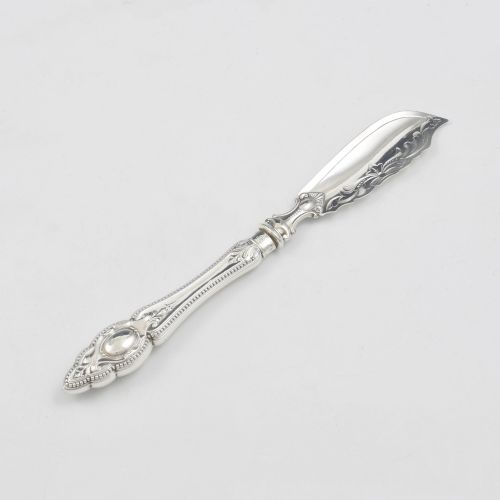
These sterling silver serving knife examples bring distinct Victorian and Edwardian craftsmanship to the table.
Sterling Silver Serving Knife
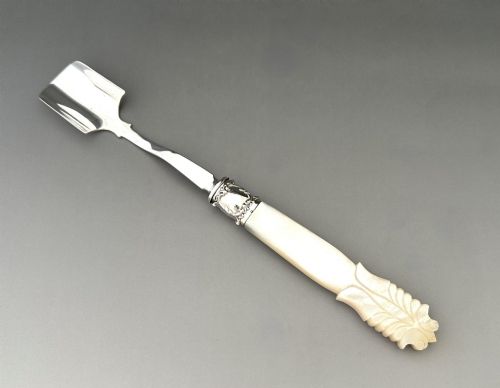
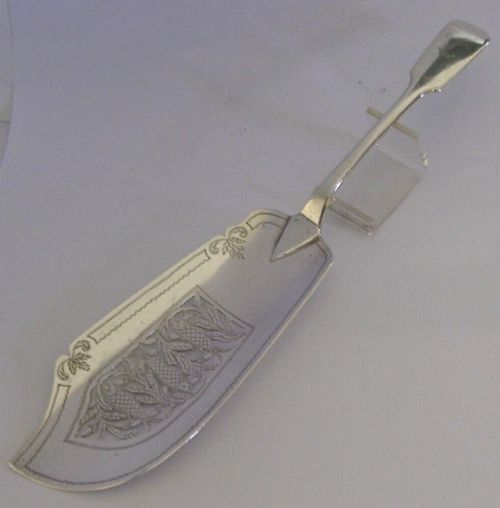
A sterling silver serving knife is a specialised utensil designed for the dining table, encompassing forms such as butter knives, fish servers, fruit knives, and cheese scoops. When searching for a sterling silver serving knife, buyers encounter pieces primarily originating from the Victorian and Edwardian eras, spanning the mid-nineteenth century into the early twentieth century.
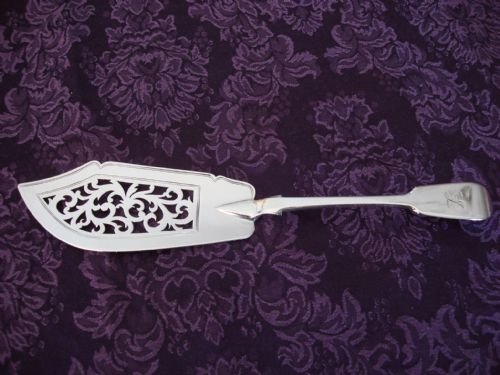
The selections available here showcase a variety of specialised cutlery sets and individual serving pieces, including boxed sets and cased pairs. Most items adhere to traditional British domestic forms, featuring pierced blades, cast silver work, and decorated handles.
Victorian examples dominate the listings, frequently pairing sterling silver blades with organic handles or ornate patterns like scroll and bead work. Alongside these dedicated serving knives, related items such as pickle forks, jam spoons, and fish slices appear within the broader flatware and cutlery category.
What varies in quality
Quality in a sterling silver serving knife rests on the crispness of the cast decoration and the precision of any pierced work on the blade. Simpler stamped or plain forms sit apart from heavily chased or engraved items.
The choice of handle material and its integration with the silver blade distinguishes standard production from finer workshop output. Original fitted boxes lined in silk and velvet add a distinct layer of preservation to cased sets and pairs.
Sterling Silver Serving Knife Retail Price Guide 2026
Typical asking prices for sterling silver serving knife among the pieces listed under this phrase on Sellingantiques today, from the lower quarter to the upper quarter. They describe what is for sale here now, not the wider market.
Some Victorian butter knives arrived at the table bearing intricately engraved scrollwork just to spread dairy.
GEORGE ADAMS·Charles Boyton
The Sterling Silver Serving Knife Glossary
- Sterling silver
- A silver alloy containing 92.5 percent pure silver and 7.5 percent other metals, usually copper. This standard composition provides the durability required for functional cutlery.
- Fish server
- A large utensil designed for portioning fish at the table, often featuring a broad, pierced blade. These pieces frequently appear as matched pairs with accompanying forks.
- Mother-of-pearl
- The iridescent internal layer of pearl oyster shells, used traditionally for knife handles. It offers a smooth, tactile grip that contrasts with the metal blade.
- Stilton scoop
- A cylindrical or half-cylindrical utensil specifically shaped for sampling hard cheeses like Stilton. These often feature turned bone or mother-of-pearl handles.
- Pierced blade
- A metal blade cut through with decorative openwork designs. This technique lightens the utensil while adding ornamental detail.
Sterling Silver Serving Knife: Frequently Asked Questions
What is a sterling silver serving knife used for?
A sterling silver serving knife is utilised at the dining table for portioning specific foods such as fish, butter, fruit, or cheese. Different blade shapes and widths accommodate the particular texture of each dish.
Many of these pieces were originally created as part of larger cased flatware services for formal dining occasions. Today, they continue to function during dinner parties or serve as decorative display pieces.
How do I identify a Victorian serving knife?
Victorian pieces often feature characteristic decorative motifs such as scroll and bead patterns, alongside hallmarks indicating the assay office and year of manufacture. The presence of organic handle materials like mother-of-pearl or bone is also typical of mid to late nineteenth-century production.
Examining the construction of the blade and handle junction can provide further clues regarding the manufacturing period. Maker marks stamped directly into the silver help pin down the exact decade.
How should I care for sterling silver cutlery?
Sterling silver requires gentle cleaning with a dedicated silver polish to maintain its lustre without abrading the surface. Hand washing in warm, soapy water immediately after use prevents tarnishing from food acids.
Storing pieces in lined boxes or anti-tarnish rolls protects them from scratches and air exposure. Avoid placing antique silver items in modern dishwashers, as harsh detergents and high heat damage organic handles.
Are cased sets common for serving knives?
Cased sets appear frequently among nineteenth and early twentieth-century silver, often housing pairs of fish servers or complete cutlery groupings. These presentation boxes typically feature fitted interiors lined with velvet and silk.
The original case indicates that the set was intended as a gift or for special domestic occasions. Surviving boxes help protect the enclosed silver from environmental wear over the decades.