
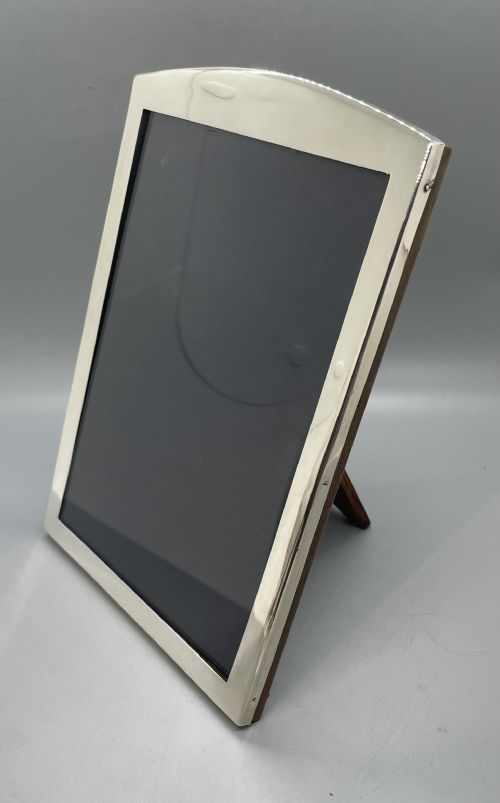
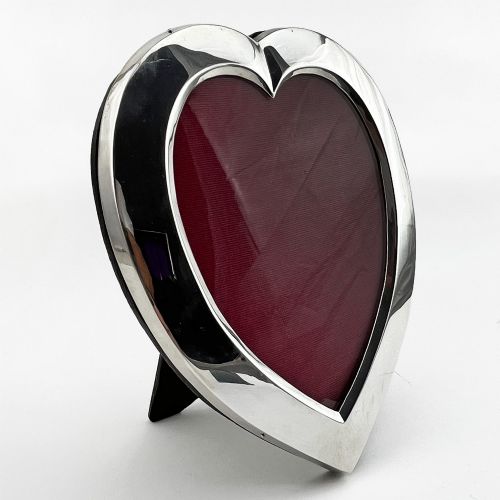
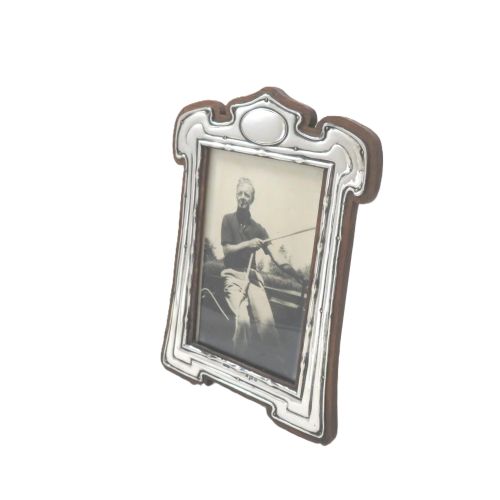
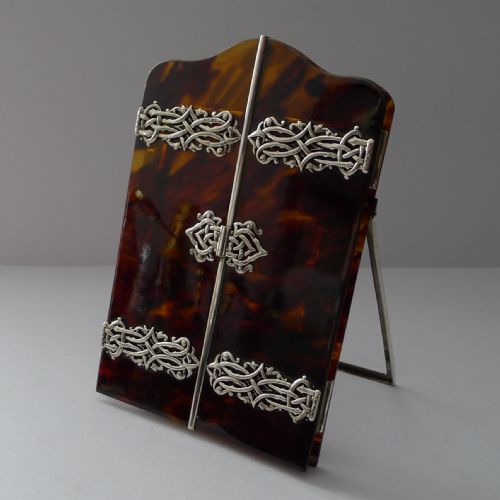

Silver Easel Photo Frame
A silver easel photo frame brings desk or mantelpiece portraits to life with precious metal and hinged support.
Silver Easel Photo Frame
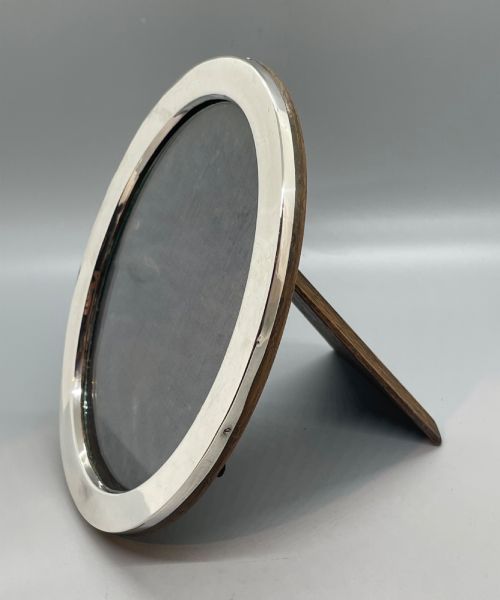
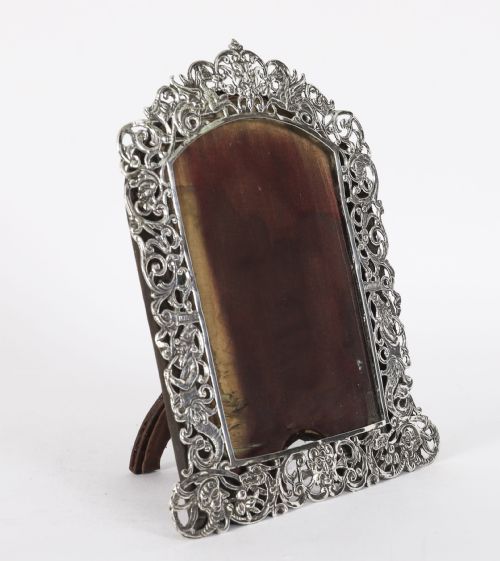
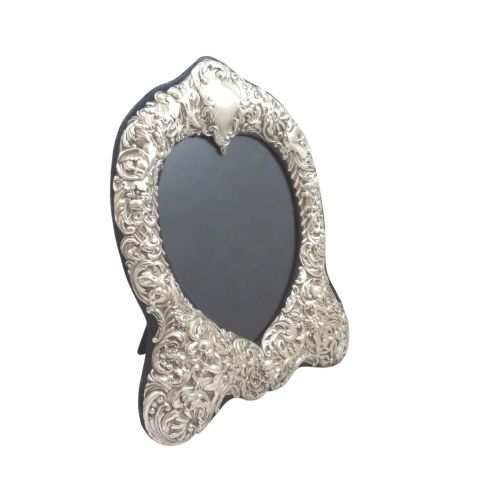
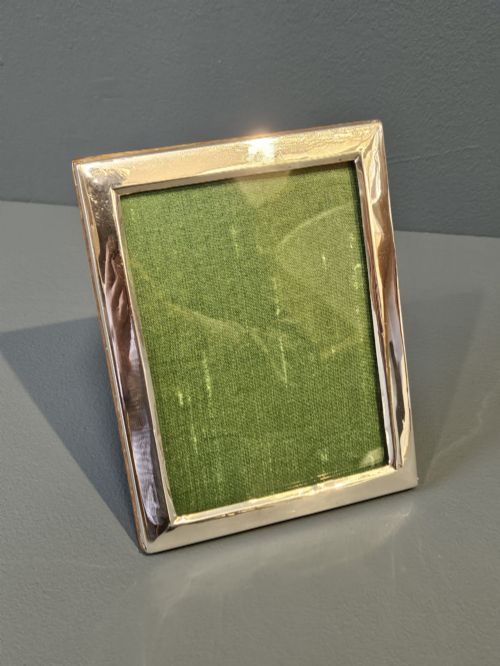
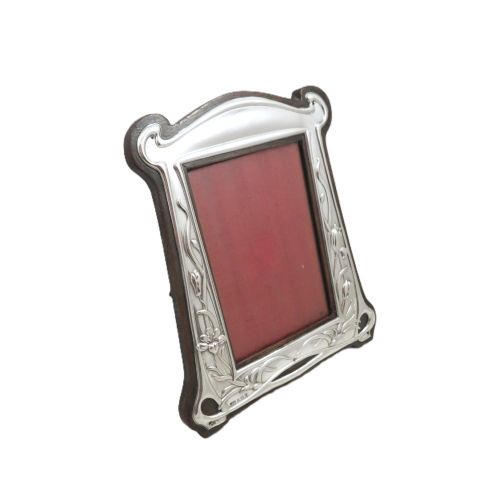
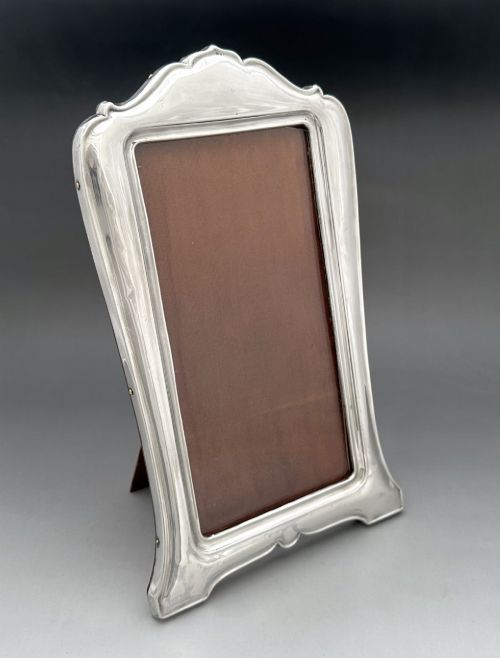
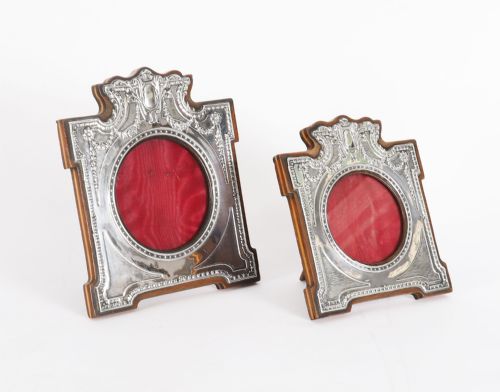
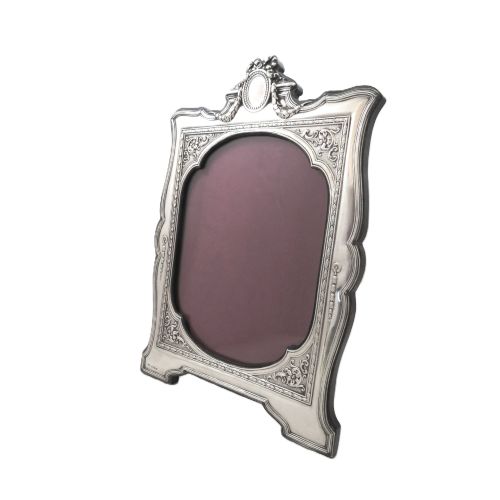
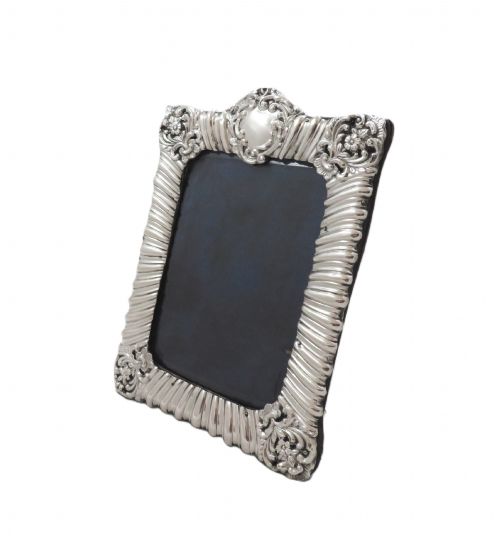
A silver easel photo frame holds a photograph upright with a rear folding strut while presenting a decorative front made of sterling silver or silver plate. These items appear across Victorian, Edwardian, and George V periods, alongside later twentieth-century Italian pieces.
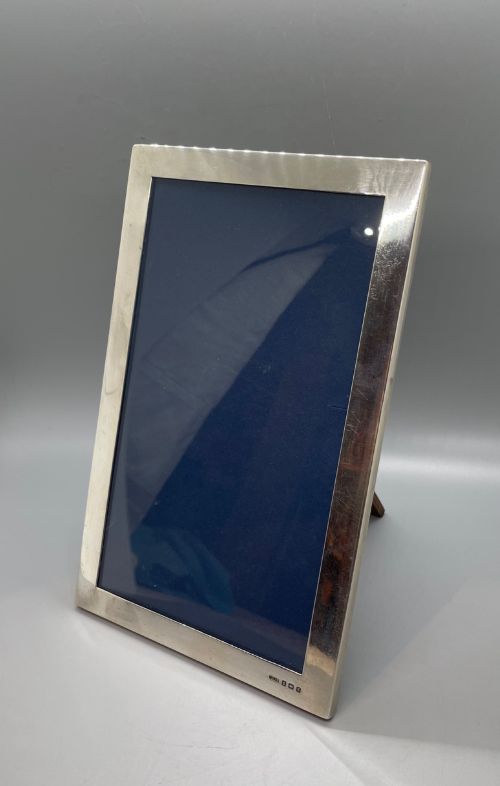
The format ranges from small circular and heart-shaped designs to large rectangular landscape and portrait formats. Most examples rely on a sturdy wooden or metal backing covered in velvet, leather, or fabric to support the hinged easel mechanism.
How they were made
Silversmiths constructed the outer decorative mounts by stamping, embossing, or casting sterling silver sheets before mounting them over wooden foundations. Artisans incorporated glass viewing windows and fitted hinged backing boards lined with velvet, leather, or oak to maintain structural balance.
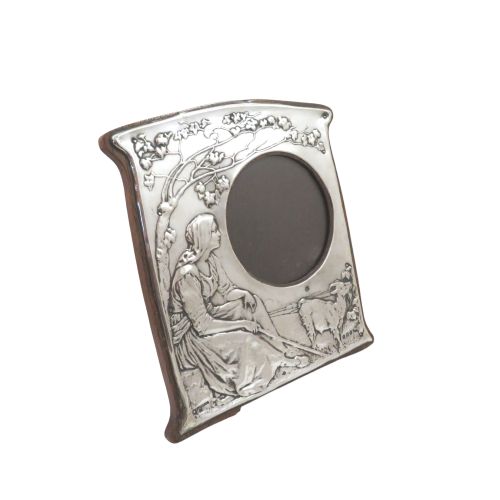
Details such as Art Nouveau whip lines, embossed cherubs, or plain polished borders required specialised hand chasing and soldering techniques. Makers often integrated hallmarks directly into the silver border to designate assay offices, purity, and date years.
Silver Easel Photo Frame Retail Price Guide 2026
Typical asking prices for silver easel photo frame among the pieces listed under this phrase on Sellingantiques today, from the lower quarter to the upper quarter. They describe what is for sale here now, not the wider market.
Listings feature sterling silver, 800 silver, wood, glass, leather, velvet, and enamel across Victorian, Edwardian, and mid-century Italian periods.
What varies in quality
Quality rests in the weight of the metal and the crispness of the embossed or chased ornamentation. Finer examples display deep, sharp detailing on motifs like Reynolds angels or organic floral tendrils rather than flat, shallow pressing.
The integrity of the structural support also distinguishes the tier of a piece. Original wooden or leather backing stands that remain firm and securely hinged elevate the construction standard above frames with compromised or replaced supports.
Rosenthal Jacob And Co·William Comyns·Mappin Bros·Henry Matthews·Walker And Hall·Syner And Beddoes·Pinci Roma
The Silver Easel Photo Frame Glossary
- Sterling silver
- A silver alloy consisting of 92.5 percent pure silver and 7.5 percent other metals, usually copper, chosen for durability. This standard metal appears across the majority of British frames on this page.
- Easel back
- A hinged rear strut that props a frame upright on a flat surface. This structural component allows portrait and landscape objects to stand independently.
- Hallmark
- A series of official marks stamped onto precious metal items to show the assay office, metal purity, and date letter. British pieces commonly display these stamps directly on the border.
- Chasing
- A metalsmithing technique used to decorate the front of a frame by indenting silver with hammers and punches from the exterior. This process creates low-relief surface designs without removing metal.
- Tortoiseshell
- A mottled brown and amber material sourced from marine turtle shells, utilised as a contrasting border inset on select Victorian mounts. It provides a dark, polished frame background for the silver mount.
Silver Easel Photo Frame: Frequently Asked Questions
How do I date a silver photo frame?
Dating relies primarily on the assay office hallmarks stamped into the silver border, which indicate the exact year the piece was tested and marked.
Stylistic indicators such as Art Nouveau whiplash curves or George V geometric borders also help narrow down the decade of production.
What materials back these silver frames?
The reverse of these frames generally consists of a wooden core covered in materials such as black leather, blue velvet, fabric, or plain oak.
These backing boards secure the internal glass and photograph while providing a sturdy anchor for the folding easel stand.
Are these frames meant for standard photo sizes?
Antique and vintage frames were produced in various dimensions, ranging from compact circular and heart shapes to large twelve-inch portrait formats.
Photographs often required custom trimming to fit the specific window shape and aperture of the individual metal mount.