



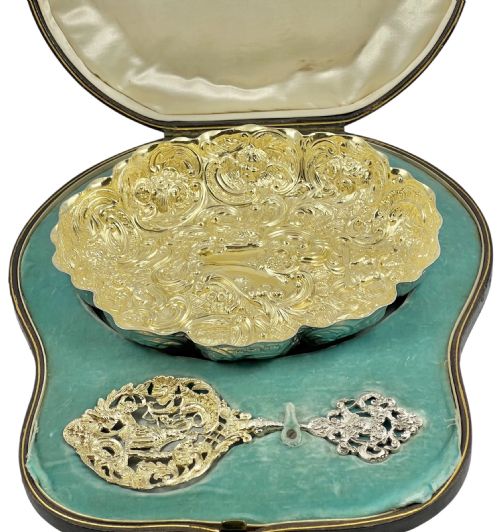

Silver Dish Set
These silver dish sets span multiple periods and forms, offering functional elegance for the dining table.
Silver Dish Set
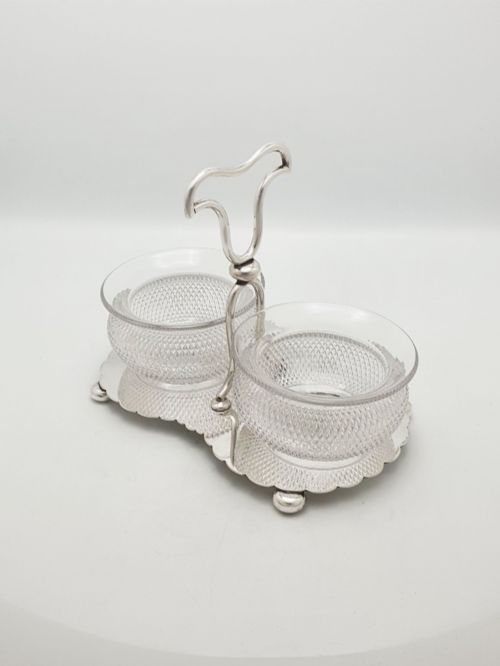
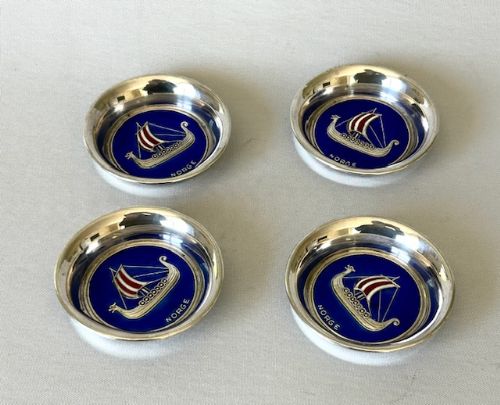
A silver dish set comprises matched groupings of table vessels designed for salts, preserves, butter, condiments, and strawberries. These pieces frequently appear in Victorian and Edwardian iterations alongside later Art Deco and Scandinavian designs.
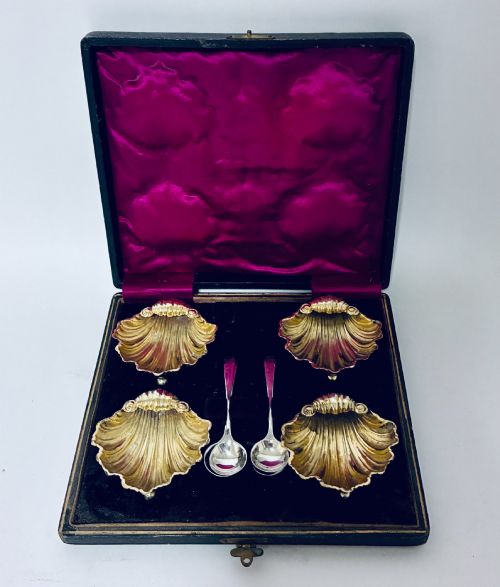
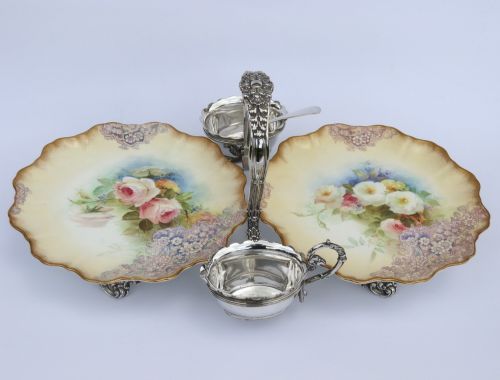
The assortment on this page ranges from cased sets of sterling butter dishes and salt cellars to larger plated condiment stands and strawberry services with glass liners or ceramic plates. Many survive in fitted presentation cases intended for gifting.
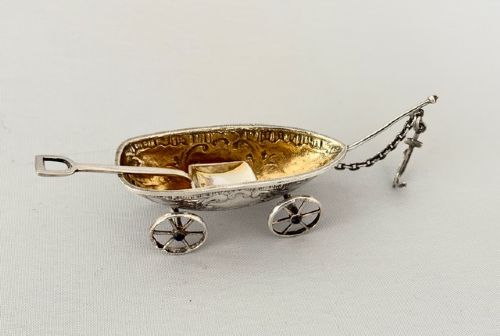
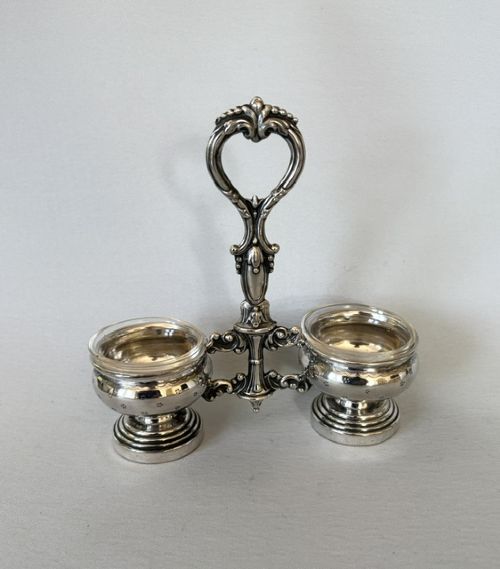
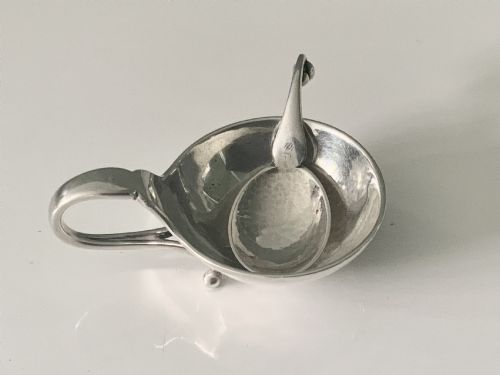
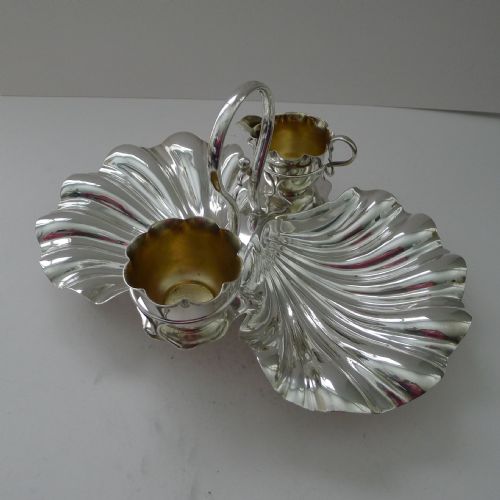
Vessels take forms such as shell salts, boat-shaped salt cellars, sugar baskets, and twin preserve bowls. Matching spoons and knives often accompany the primary vessels within these groupings.
Materials and construction methods
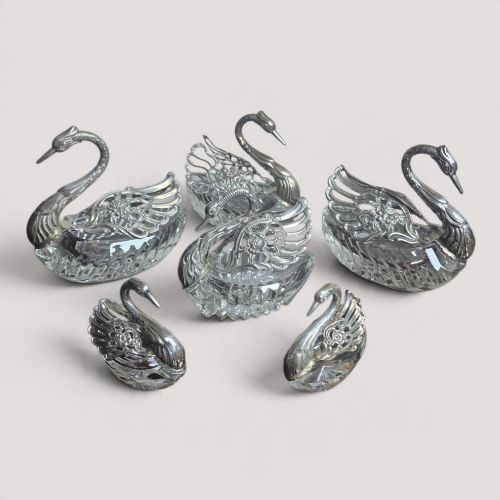
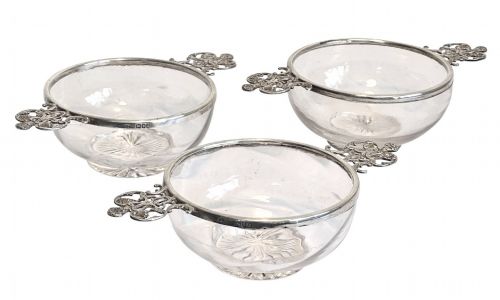
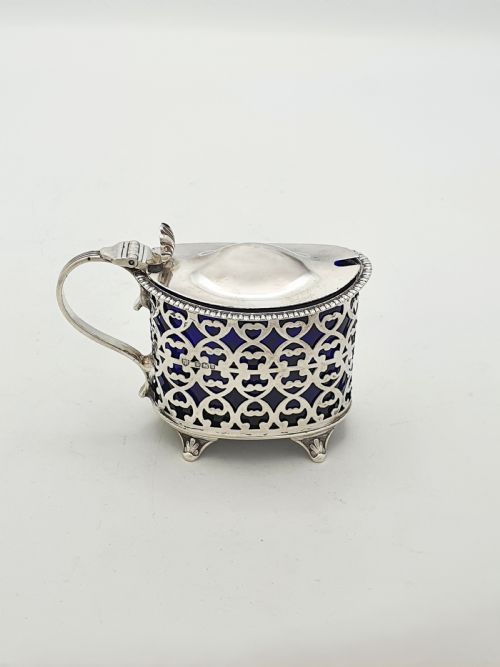
Makers utilised solid sterling silver, Old Sheffield Plate, and silver plating over base metals, frequently combining metal frames with cut glass, cranberry glass, cobalt glass liners, carved horn, or stoneware. Piercing, casting, and repoussé techniques shape the metal components.
Silver Dish Set Retail Price Guide 2026
Typical asking prices for silver dish set among the pieces listed under this phrase on Sellingantiques today, from the lower quarter to the upper quarter. They describe what is for sale here now, not the wider market.
Several sets include tiny matching spoons meant exclusively for butter or salt, proving that Victorians applied formality to every morsel.
Factors determining quality
Quality rests upon the crispness of chased or pierced decoration, the structural integrity of the metal frames, and the presence of original glass liners or matching utensils. Maker attribution to notable workshops elevates a set's standing.
The survival of original fitted presentation cases and the matching of all component parts within a set distinguish superior examples from assembled groupings.
Georg Jensen·William Comyns·The Goldsmiths & Silversmiths·Walker and Hall·Paul Storr·Thomas Smily·Adie Brothers·Roberts and Belk
The Silver Dish Set Glossary
- Salt cellars
- Small open vessels used for holding loose salt at the dining table before the invention of the spring-loaded salt shaker. They often require cobalt blue or cranberry glass liners.
- Old Sheffield Plate
- A fused composite material made by melting a sheet of sterling silver to a thicker base of copper. This technique predates modern electroplating.
- Silver gilt
- Sterling silver that has been coated with a thin layer of gold on its interior or exterior surface. This treatment protects the silver from tarnishing when exposed to acidic foods.
- Condiment stand
- A fitted metal frame holding multiple glass vessels for sauces, mustard, or relish. These stands usually feature a central carrying handle.
- Pierced
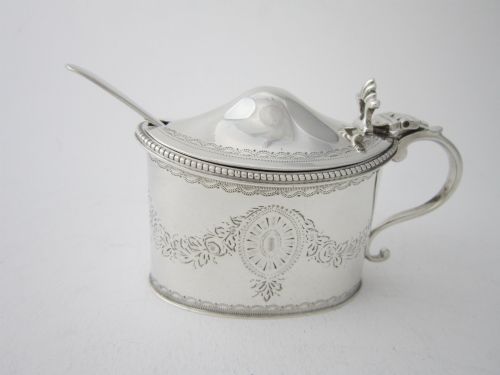
- Metalwork that has been cut through in decorative patterns to lighten the appearance of heavy items such as baskets and mustard pots.
Silver Dish Set: Frequently Asked Questions
What were silver salt cellars used for?
Salts held granulated table salt before individual shakers became common in households.
Diners used small spoons or pinches from the open vessels to season their food at the table.
How do I clean silver plated dish sets?
Silver plate requires gentle cleaning with a specialised silver cloth or mild polish.
Avoid submerging antique fitted cases or exposing glued glass components to hot water.
Are glass liners original to the set?
Original glass liners fit snugly into the silver framework without excessive movement.
Matching colours, such as cobalt blue or cranberry glass across every piece, indicate a unified set.
How can I date an Edwardian silver set?
Hallmarks stamped on sterling silver pieces provide precise assay office and date letter markers.
Edwardian items typically display dates between nineteen hundred and nineteen ten alongside royal cyphers.