
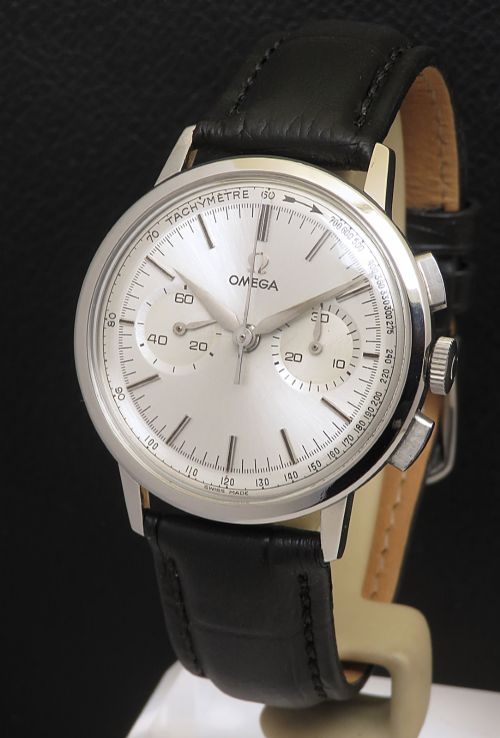
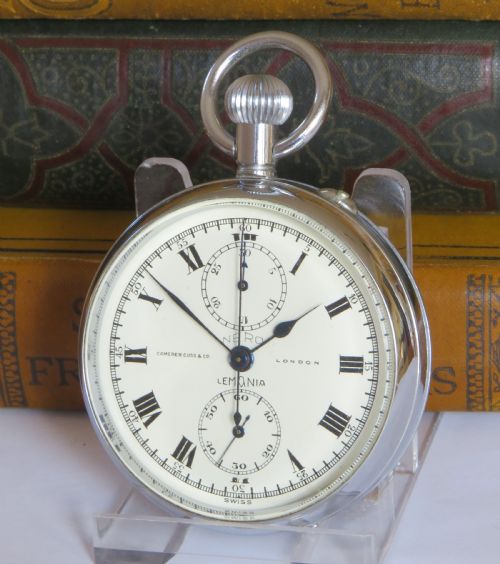
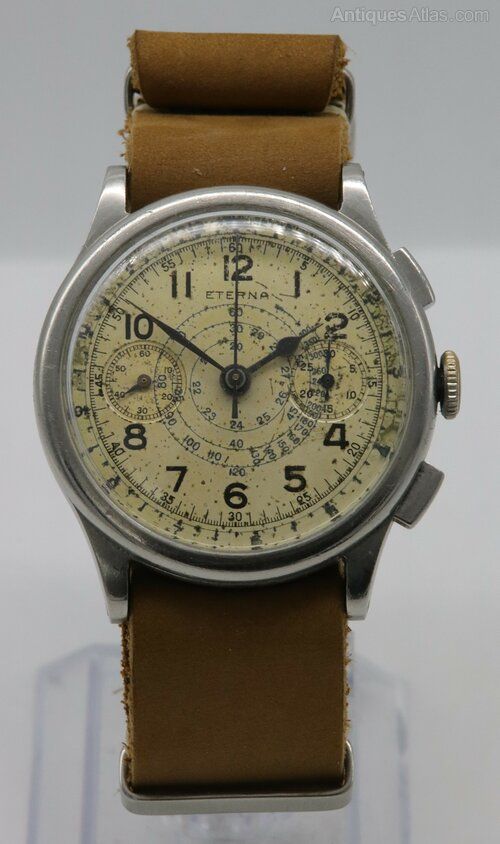
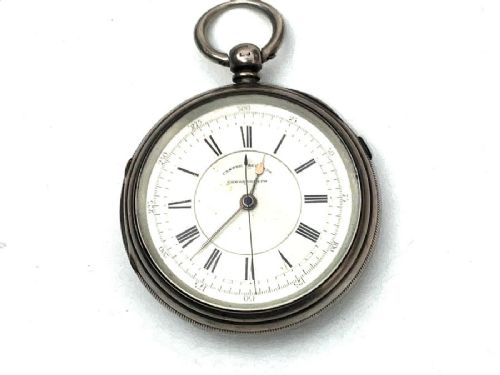
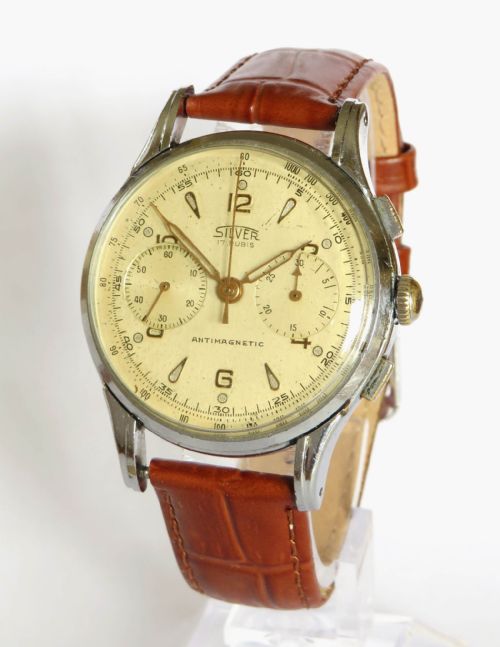
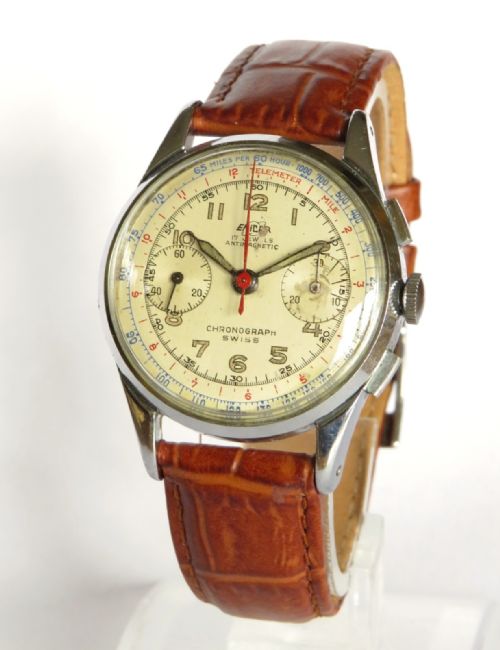


Silver Dial Chronograph
A silver dial chronograph offers precise timing wrapped in classic metal, giving collectors a versatile instrument that spans decades of horological design.
Silver Dial Chronograph
A silver dial chronograph brings together stopwatch functionality and timekeeping, housed across wrist and pocket watch formats. When exploring a silver dial chronograph, buyers encounter examples originating from the late Victorian period through the mid-twentieth century.
The selection ranges from early pocket watches to mid-century wristwatches reflecting military, aviation and dress styles. Most pieces you meet on this page date from the 1930s to the 1960s, capturing the mechanical evolution of Swiss and international watchmaking.
Forms vary from robust military issues to refined mid-century dress pieces, including specific layouts like panda dials and square cases. Each silver dial chronograph reflects the aesthetic priorities of its decade, whether utilitarian or sophisticated.
Materials and Construction
Watchmakers utilised stainless steel, chrome plated metal, gold plate and silver for cases, pairing them with glass or acrylic crystals. Dials often feature enamel work or metallic finishes, designed to maintain legibility under demanding conditions.
Movements rely on manual wind mechanical engineering, housed within cases that frequently attach to leather straps. The integration of these materials defines the durability and appearance of each timepiece.
Some military watches carry naval artillery issue numbers, suggesting they once kept time for sailors watching the horizon.
Assessing Quality and Execution
The calibre of a movement and the preservation of the dial separate standard utility pieces from exceptional examples. Original components and untouched dial finishes command greater attention from discerning collectors.
Case finishing and the complexity of the chronograph mechanism also indicate the tier of the piece. Fine maker execution ensures smoother operation of the stopwatch functions and longevity of the internal gear trains.
Omega·Lemania·Eterna·Breitling·Invicta·Benrus·Antoremi·Enicar
The Silver Dial Chronograph Glossary
- Calibre
- The specific internal movement design and manufacture of a watch. Watchmakers use this term to identify the mechanical heart within the case.
- Panda Dial
- A watch dial featuring a light background with contrasting dark sub-dials. This layout improves legibility and defines a distinct visual style.
- Manual Wind
- A mechanical watch movement powered by manually turning the crown. It requires no battery and relies entirely on a mainspring.
- Acrylic
- A lightweight, shatter-resistant plastic material commonly used for watch crystals during the mid-twentieth century. It can be polished to remove surface scratches.
Silver Dial Chronograph: Frequently Asked Questions
How do I operate a manual wind chronograph?
You wind the watch by turning the crown clockwise until you feel resistance. Avoid overwinding, as this can damage the mainspring.
To use the timing function, press the top pusher to start and stop, and the bottom pusher to reset the hands to zero.
What is the difference between a wristwatch and a pocket watch chronograph?
Wristwatches are designed to be worn on the arm with a strap, offering immediate access to time and timing functions during daily activities. Pocket watches are larger portable timepieces meant to be carried in a pocket, often secured with a chain.
Pocket watch chronographs typically date from earlier periods, such as the Victorian era or the 1930s, and feature larger dials for enhanced clarity.
How should I care for a vintage acrylic crystal?
Acrylic crystals are softer than mineral glass and can accumulate fine scratches with regular wear. You can easily polish out minor marks using a specialised paste and a soft cloth.
Keep the watch away from extreme heat, which can warp the material, and avoid harsh chemical solvents.
Can I wear my vintage chronograph every day?
Many vintage pieces handle regular wear well, provided they receive proper mechanical servicing. However, older watches generally lack modern water resistance.
It is best to keep them away from water, heavy impacts and magnetic fields to preserve the vintage internal components.