


Vintage Sports Watch
These vintage sports watch pieces bring together mechanical reliability and distinctive mid-century design, offering a tangible link to historical athletic pursuits.
Vintage Sports Watch
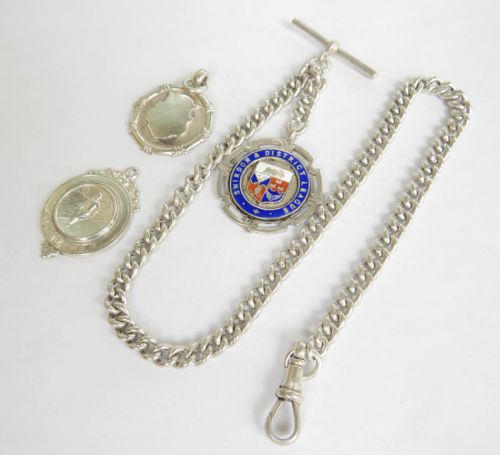
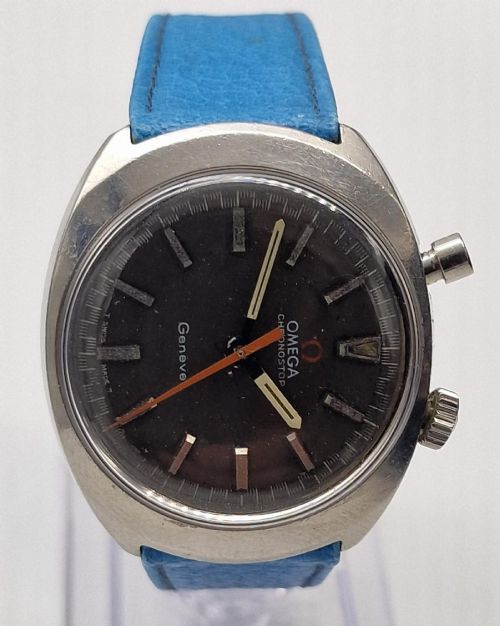
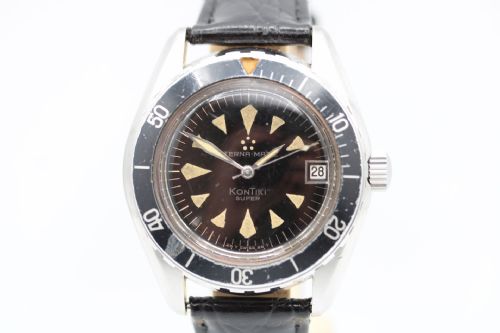
When you search for a vintage sports watch, you encounter a selection spanning chronograph wristwatches, pocket watch chains, and athletic medals from the early to mid-twentieth century. The predominant items on this page are mechanical wristwatches from the 1950s and 1960s, alongside Edwardian and Art Deco silver fobs, pendants, and charms.
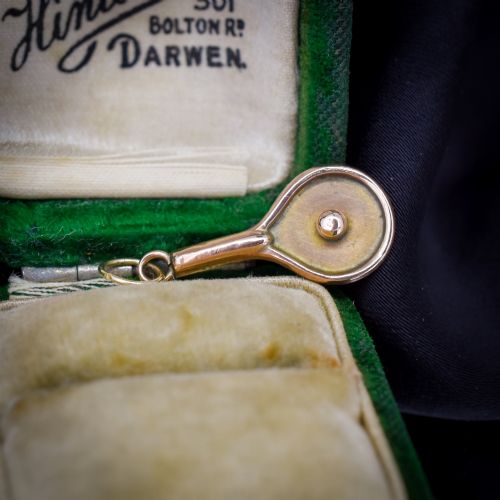
The horological offerings focus on robust timepieces designed for motoring, aviation, and general sporting use by makers such as Breitling, Omega, and Heuer. Alongside these, smaller pendant items commemorate tennis, golf, and football achievements in gold and silver.
The range demonstrates how timepiece manufacture and athletic commemoration intersected during the periods seen, shifting from pocket chains and medals towards specialised wrist-worn chronographs by the middle decades.
How they were made
The cases and chains utilise stainless steel, sterling silver, and 9ct rose gold, providing durability for active wear. Glass and acrylic protect the dials, while leather straps secure the wristwatches.
Medals and fobs incorporate vitreous enamel alongside precious metals, adding colour and detail to sports iconography. Manual wind and chronograph movements provide the internal mechanics for the watches.
Materials span stainless steel and leather alongside 9ct rose gold and enamel.
What varies in quality
The sophistication of the internal movement separates standard timepieces from specialised chronographs like the split-second or aviation models. Complicated calibres and specialised functions reflect higher production standards.
The preservation of original dials, case finishes, and enamel work dictates the overall standard of each piece. Intricacy in the hand-engraving on medals and fobs also marks out finer execution.
Omega·Breitling·Lanco·Invicta·Benrus·Eterna·Heuer
The Vintage Sports Watch Glossary
- Chronograph
- A watch with a display function for measuring elapsed time alongside its normal timekeeping. This complication often includes subsidiary dials.
- Fob
- A short strap, chain, or medallion attached to a pocket watch. These items frequently display sports team or club insignia.
- Manual wind
- A mechanical watch movement that requires the mainspring to be wound by hand rather than through wrist motion. This was the standard mechanism before automatic calibres dominated.
- Enamel
- A glassy substance fused to metal through firing, used to add decorative colour to medals and watch fobs. This technique requires skilled application to prevent cracking.
- Acrylic
- A lightweight transparent plastic material utilised for watch crystals during the mid-century period. It offers flexibility and can be polished if scratched.
Vintage Sports Watch: Frequently Asked Questions
What is a chronograph watch?
A chronograph is a timepiece equipped with independent sweep seconds hands that can be started, stopped, and returned to zero. This function allows the wearer to measure specific durations.
Such mechanisms were particularly useful for drivers, pilots, and athletes who needed precise timing capabilities during events.
How do I wear a watch chain?
Watch chains and fobs are traditionally secured through a buttonhole on a waistcoat or jacket, with the pocket watch resting in the corresponding pocket. Medals and charms hang from the central drop.
Today, collectors also repurpose shorter chains and fobs as standalone bracelets or display them within dedicated cabinets.
What materials were used for dials?
Dials commonly feature metallic finishes, often paired with luminous markers and contrasting sub-dials. Some specialised pieces incorporate painted scales for tachymeter or GMT readings.
Enamel was also applied to specific dials and fobs to provide distinct, long-lasting colour contrasts.
How do I identify the decade?
Dates can often be established through hallmarks on precious metals, engraving dates on medals, and stylistic shifts in watch case design. The transition from pocket watch chains to wristwatches marks the broader chronological shift.
Design markers such as Art Deco geometric lines or 1960s bold chronograph layouts also indicate specific eras.