
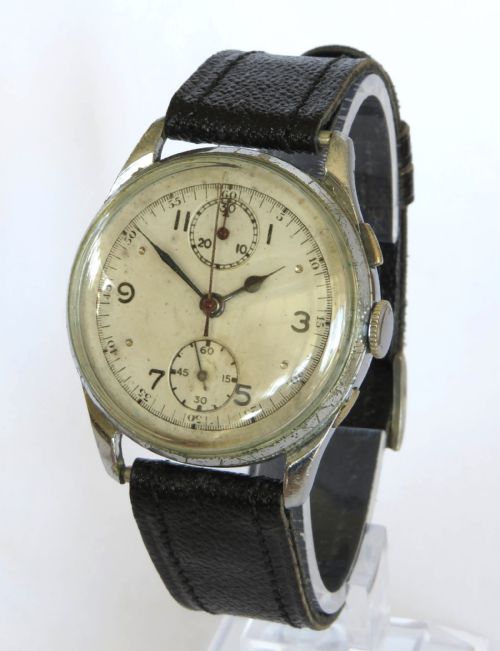
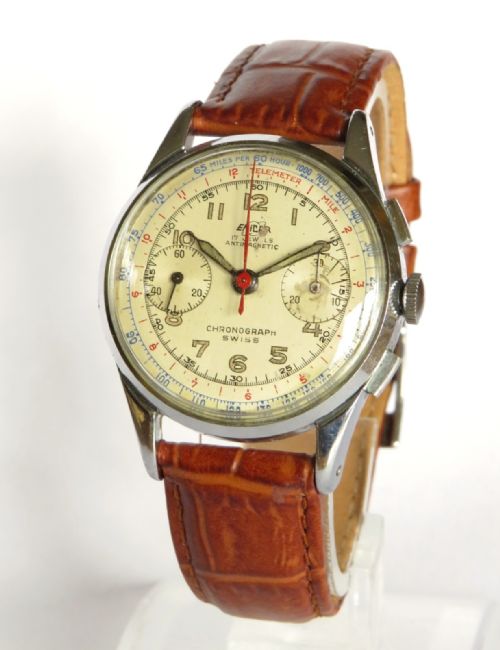


Manual Wind Chronograph
A manual wind chronograph brings mechanical precision and heritage styling to the wrist through traditional hand-wound movements.
Manual Wind Chronograph
A manual wind chronograph is a timekeeping instrument operated by hand without an automatic rotor, featuring stopwatch capabilities driven by internal column wheels or cams. These pieces span from the 1930s through the 1960s, reflecting decades of horological development.
The wristwatches and pocket watches on this page encompass styles such as Mid-Century Modern, Art Deco, and 1960s vintage aviation. Buyers encounter Swiss manufactures alongside specialised horological firms spanning several decades.
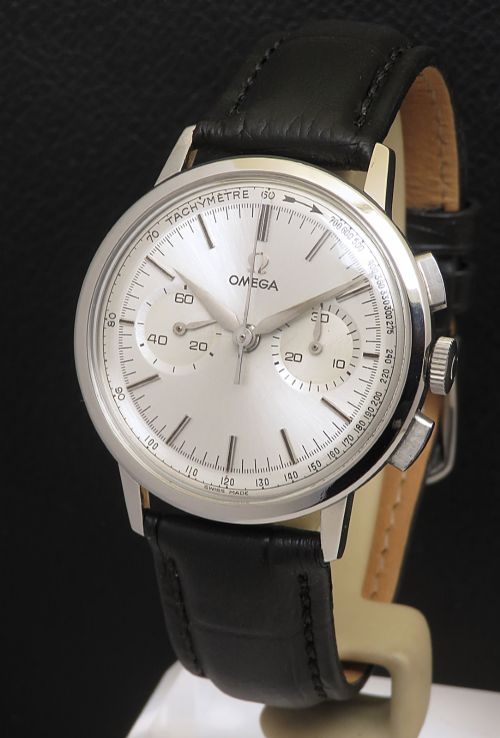
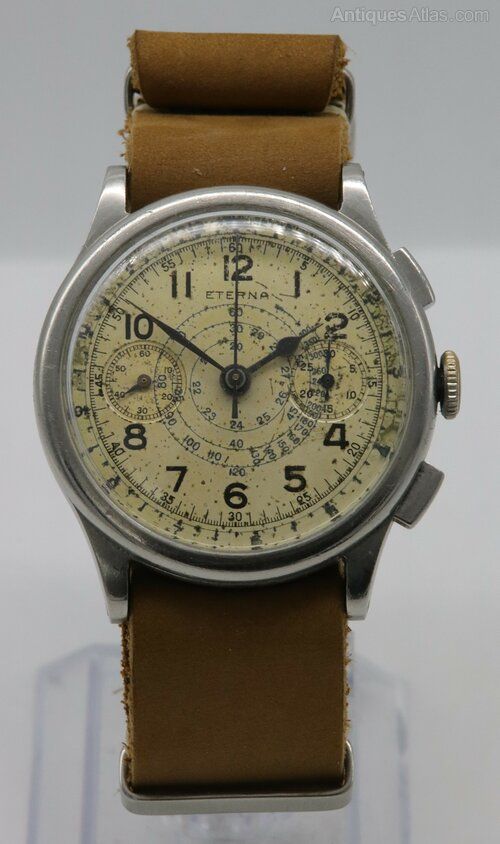
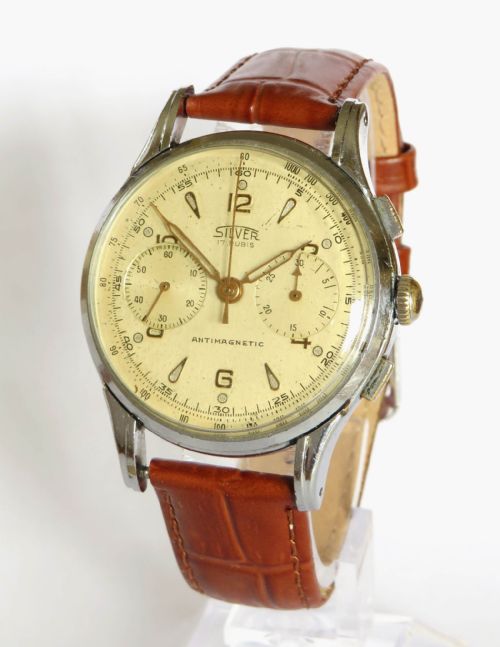
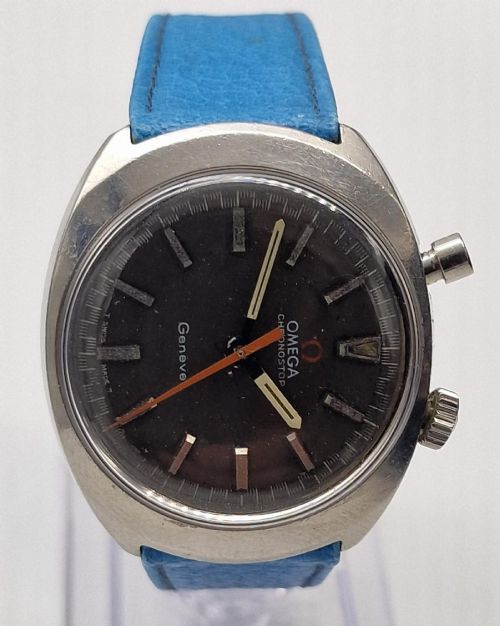
Most examples date from the 1950s and 1960s, showcasing distinctive dial layouts including panda configurations, tachymeter scales, and multi-register displays. These mechanical pieces rely entirely on regular manual winding to maintain their reserve.
Materials and Construction
Cases are formed from stainless steel, chrome, gold plate, and solid 18ct gold, paired with crystal or acrylic glass protecting the dial. Straps utilise traditional leather to secure the watch to the wrist.
Movements rely on intricate mechanical gear trains assembled by horologists, housing complex chronograph complications that measure elapsed time alongside standard hours and minutes.
Drivers editions and split-second pocket watches prove that past owners loved timing everything from racing laps to railway arrivals.
Horological Quality
The distinction between tiers rests in the sophistication of the movement calibre, the integrity of the dial printing, and the preservation of the case geometry. Original dial condition and signed movements elevate a piece significantly.
Makers ranged from specialist movement houses to established luxury brands, meaning that the prestige of the signature and the finish of the internal components dictate the standing of the watch.
Omega·Eterna·Antoremi·Enicar·Breitling·Invicta·Mappin·Miramar·Chronographe Suisse·Mundus
The Manual Wind Chronograph Glossary
- Calibre
- The specific internal movement model designation created by the manufacturer. This identifier helps experts determine the exact mechanical pedigree of the watch.
- Chronograph
- A watch equipped with a stopwatch function independent of the time-of-day mechanism. Pushers start, stop, and reset the central sweep seconds hand.
- Panda Dial
- A high-contrast dial layout featuring dark sub-registers set against a lighter main dial surface. The visual resemblance to a panda bear face became popular during the mid-twentieth century.
- Rattrapante
- A complex split-seconds chronograph mechanism allowing the measurement of intermediate times. Two superimposed stopwatch hands operate independently via an extra pusher.
- Tachymeter
- A graduated scale inscribed on the bezel or dial rim used to compute speed over a measured distance. By timing a mile or kilometre, the average speed reads directly from the scale.
Manual Wind Chronograph: Frequently Asked Questions
How do I wind a manual wind chronograph?
Rotate the crown clockwise between your thumb and forefinger until you feel gentle resistance. Stop winding immediately once tension increases to avoid damaging the mainspring.
Wind the watch at approximately the same time each day to maintain consistent tension and timekeeping accuracy across the movement.
Can I run the chronograph constantly?
Running the stopwatch mechanism continuously places additional friction and wear on the internal gear train and mainspring. It is best to engage the chronograph only when timing an event.
Leaving the chronograph running for extended periods may also reduce the power reserve and affect the overall amplitude of the watch.
How do I tell a 1940s watch from a 1960s watch?
Examine the dial typography, case geometry, and overall design language. Forties models often feature stepped bezels and delicate numerals, whereas sixties pieces lean towards bolder, sportier aesthetics like square cases or panda dials.
Movement serial numbers and internal caseback stamps also provide definitive clues for dating the piece accurately.
Are these watches waterproof?
Vintage manual wind chronographs from the 1930s to 1960s were not manufactured to modern water resistance standards. Gaskets degrade over decades, leaving movements vulnerable to moisture.
Keep these timepieces away from water, rain, and high humidity unless a professional watchmaker has explicitly tested and sealed the case.