





Silver Dessert Knife
These silver dessert knife pieces combine utility and ornament, offering buyers a refined addition to formal dining settings.
Silver Dessert Knife
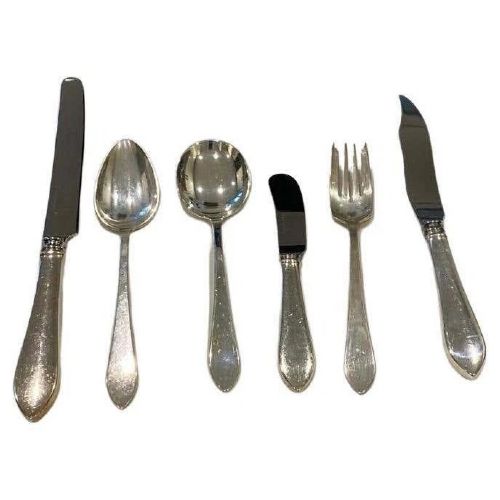
A silver dessert knife serves the final course of a meal, appearing in forms ranging from individual pieces to cased sets. Buyers searching for a silver dessert knife encounter examples spanning the Georgian, Victorian, Edwardian, and Art Deco periods.
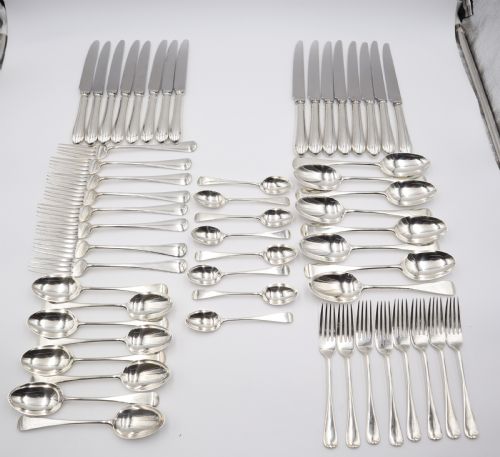
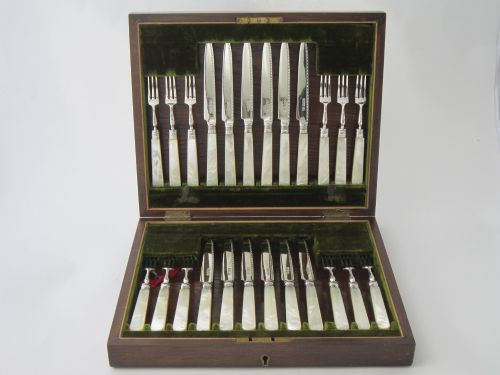
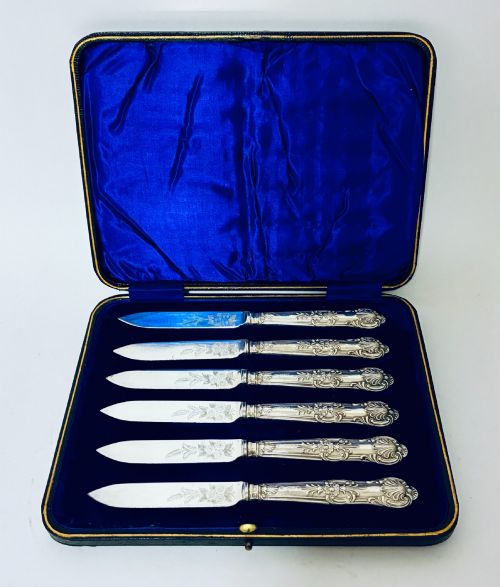
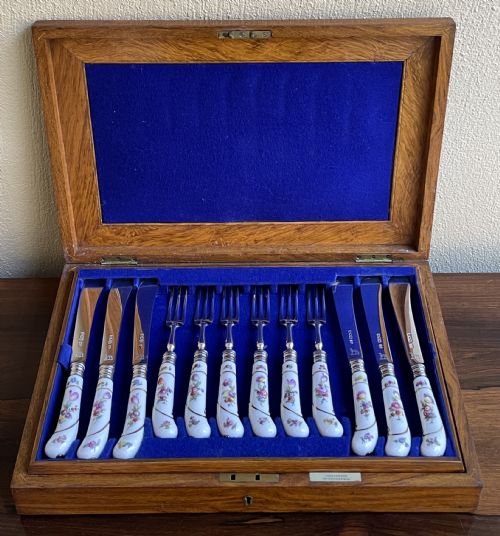
The selections on this page include sterling silver, silver plate, and steel blades paired with decorative handles. Many items arrive in fitted wooden boxes lined with velvet for storage.
Sets vary from single serving implements to larger cased arrangements for twelve persons. Traditional and 19th Century European designs dominate the available selection.
Materials and construction
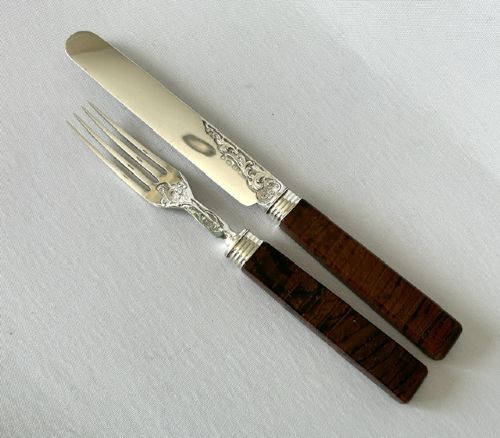
Craftsmen paired silver and sterling silver blades with handles formed from mother of pearl, porcelain, and agate. Some examples utilise steel blades alongside silver elements or silver plate.
Specialist techniques include cast silver blades and gilt finishes applied to solid silver surfaces. Fitted oak cases lined with velvet provide secure housing for multi-piece sets.
The inventory spans multiple design eras, including Georgian, Victorian, Edwardian, and Art Deco periods.
Evaluating quality and craftsmanship
Quality rests in the harmony between the metal blade and the handle material, whether mother of pearl, agate, or porcelain. Finer examples display crisp casting on the silver and secure, seamless joins at the bolster.
The presence of original fitted cases, such as oak boxes lined with velvet, elevates the standing of a set. Maker marks and clear period hallmarks further distinguish superior pieces from standard production.
Tiffany·Carrington
The Silver Dessert Knife Glossary
- Mother of pearl
- An iridescent inner shell layer used for knife handles. It provides a smooth, tactile grip with natural tonal variation.
- Silver gilt
- Silver coated with a thin layer of gold. This technique adds warmth and protects the underlying silver from tarnishing.
- Hallmark
- An official stamp indicating the purity of the metal and the assay office. It helps date the piece accurately.
- Canteen
- A fitted box or case designed to hold a complete set of cutlery. These are frequently lined with velvet for protection.
Silver Dessert Knife: Frequently Asked Questions
What is a silver dessert knife used for?
A silver dessert knife is designed specifically for eating fruit, cheese, or sweets at the conclusion of a meal. They are sized smaller than standard dinner knives to suit lighter courses.
Historically, specific metals were chosen because certain fruits react poorly to steel blades. These knives bridge the gap between practical tableware and decorative display items.
Are these knives dishwasher safe?
Antique and vintage cutlery must be washed by hand. The heat and harsh detergents in modern dishwashers will ruin organic handle materials and weaken adhesive bonds.
Hand washing preserves both the metal surfaces and the delicate joins between the blade and the handle. Proper manual care ensures the longevity of these items.
How do I tell Victorian from Georgian pieces?
Georgian pieces generally exhibit simpler, robust forms or specific regional patterns like Coburg. Victorian examples often incorporate elaborate engraving and diverse handle materials such as agate.
Examining the assay marks and style cues helps clarify the exact period of production. Comparing handle shapes and blade engraving offers further chronological clues.