




Silver Desk Accessory Tray
A silver desk accessory tray organises a writing table with substance, pairing solid metal or plated mounts with cut glass vessels or fitted compartments.
Silver Desk Accessory Tray
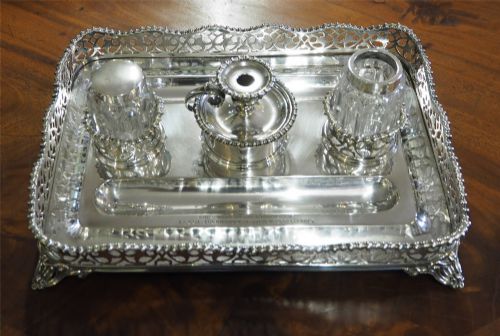
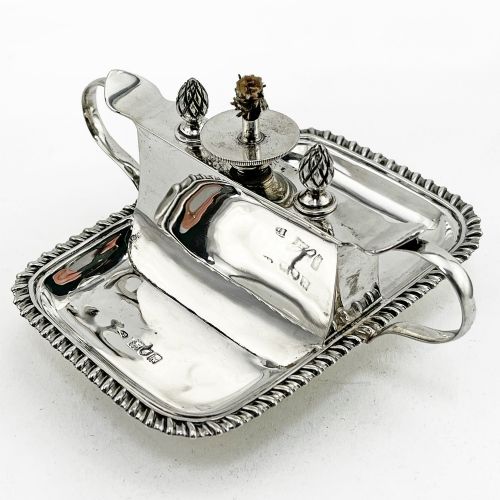
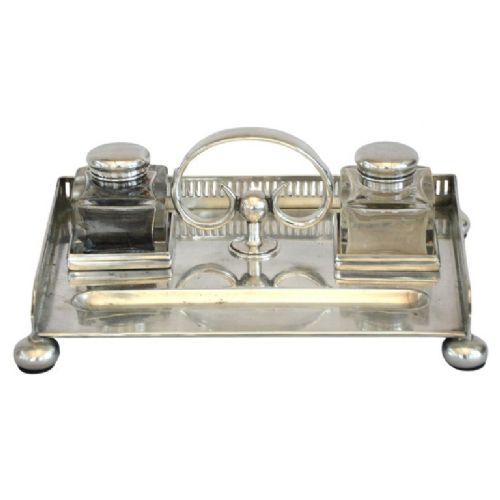
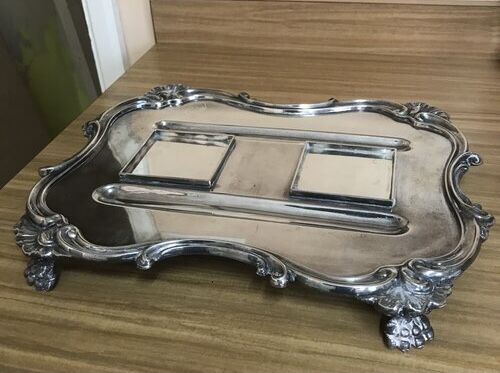
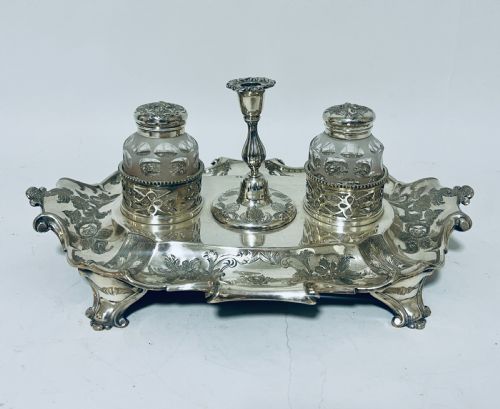
A silver desk accessory tray serves as the foundational base for writing equipment, holding inkwells, pen rests, and stamp boxes in an orderly arrangement. When searching for a silver desk accessory tray, buyers encounter varied forms spanning simple dishes to elaborate stands with integrated chambersticks and match holders.
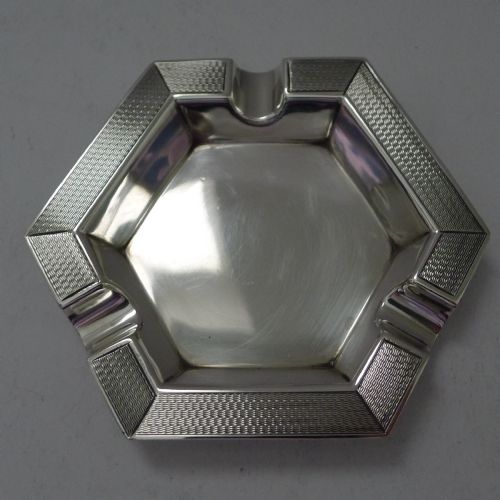
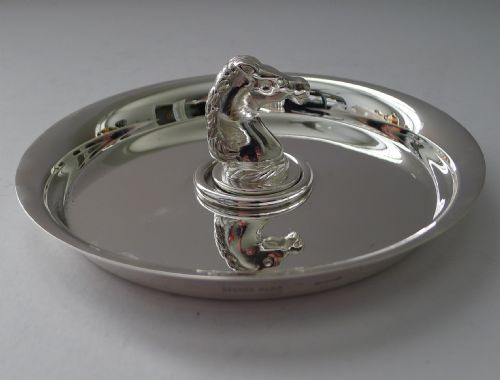
The selections on this page draw from the Victorian and Edwardian periods alongside Regency and mid-century examples. Common formats include heavy double inkstands, compact ashtrays, novelty vide poche dishes, and fitted desk tidies.
Materials extend beyond solid sterling silver to include Old Sheffield plate, silver plate, brass, and copper, frequently combined with cut glass inserts, exotic woods like coromandel and satinwood, and stone inlay such as onyx and lapis.
How they were made
Maker workshops employed traditional silversmithing techniques, casting mounts and framing galleries in sterling silver or applying silver layers over copper bases through the Old Sheffield plating method. Heavier pieces utilise cast scrollwork and applied borders, while structural frames incorporate turned hardwood bases or heavy glass bodies.
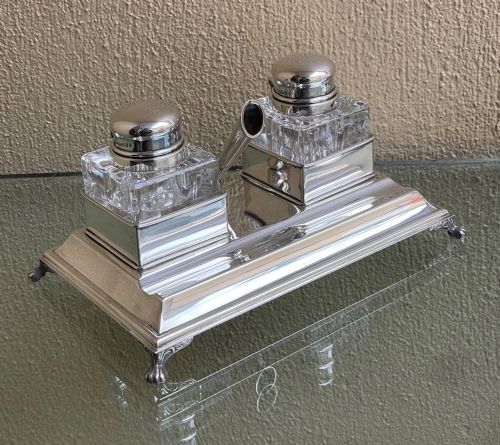
Fitted interiors often feature hand-cut glass ink bottles with matching silver collars, alongside integrated pen trays and lidded compartments. Artisans combined metals with natural materials, securing silver mounts to wood, onyx, and enamel components with pins and bezels.
Period styles span from Regency and Victorian designs through to Edwardian, Art Nouveau, and mid-century forms.
What varies in quality
Quality rests in the weight of the metal, the crispness of cast details on scrollwork and handles, and the integrity of the fitted components. Substantial gauge silver and heavy Old Sheffield plate distinguish superior items from lighter plated wares.
The retention of original matching glass inserts and the precision of fitted wood or stone bases elevate a piece. Maker attribution to notable silversmiths further separates standard utility items from distinguished collector pieces.
William Neale·Elkington·Walker And Hall·Creswick·Robert Garrard·Rupert Favell·Daniel Holy·Maurice Dufrene
The Silver Desk Accessory Tray Glossary
- Inkstand
- A comprehensive desk tray holding one or more inkwells, pen rests, and sometimes a sander or chamberstick. These centrepieces anchored the nineteenth-century writing table.
- Old Sheffield Plate
- A composite material formed by fusing a sheet of silver to a copper ingot before rolling them together into plates. This technique predates modern electroplating.
- Vide Poche
- A small tray or dish designed for emptying pockets of small items upon arrival at a desk or table. French for 'empty pocket'.
- Chamberstick
- A small portable candlestick with a saucer base, frequently incorporated into larger Victorian desk stands for wax sealing and illumination.
Silver Desk Accessory Tray: Frequently Asked Questions
What is an inkstand?
An inkstand is a desk tray designed to hold inkwells, pens, and related writing equipment in a fixed arrangement. These pieces formed the central apparatus of a Victorian or Edwardian writing desk.
Larger examples often include integrated stamp boxes, sanders, and taper sticks for melting sealing wax. They combine utility with decorative metalwork and fitted glass.
How do I care for silver desk trays?
Care involves gentle dusting with a soft cloth and occasional cleaning with a specialist silver polish to maintain the finish. Avoid abrasive materials that can wear down thin plating on electroplated items.
Glass inserts and stone sections benefit from separate washing with mild soapy water and thorough drying before being returned to their silver mounts.
What is Old Sheffield plate?
Old Sheffield plate is an early composite material created by fusing sterling silver to a copper base before hammering or rolling it into sheets. This method produces durable items with a rich surface texture.
Pieces made this way often reveal subtle traces of copper along edges or wear points where the upper silver layer has thinned over generations of polishing.
Are glass inserts usually original?
Original glass inserts match the exact collar dimensions, cut patterns, and tint of the period desk stand. Replacement bottles occur frequently due to breakage over long periods of use.
Inspect the fit within the silver collar and check for matching period glass characteristics when evaluating completeness.