






Silver Desk Tidy
A silver desk tidy organises correspondence and writing implements with period grace, bringing order and craftsmanship to a working surface.
Silver Desk Tidy
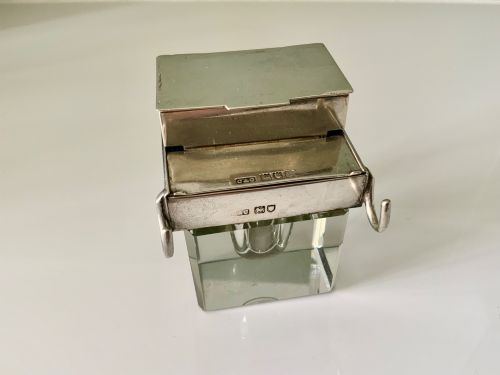
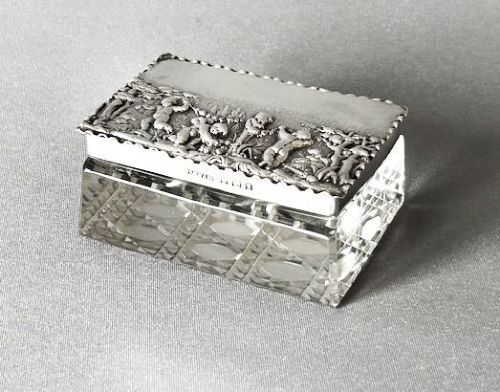
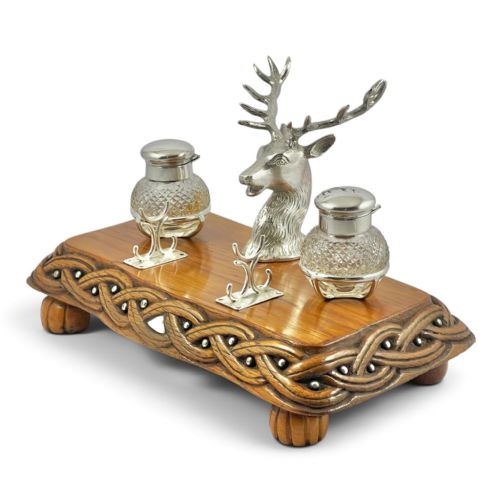
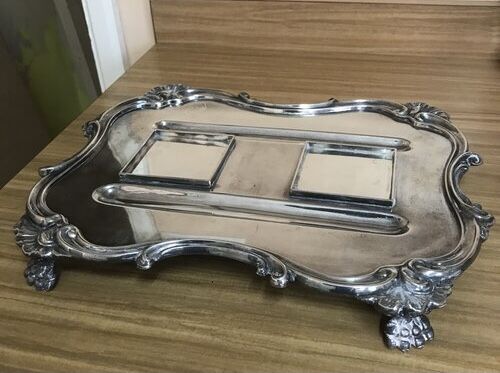
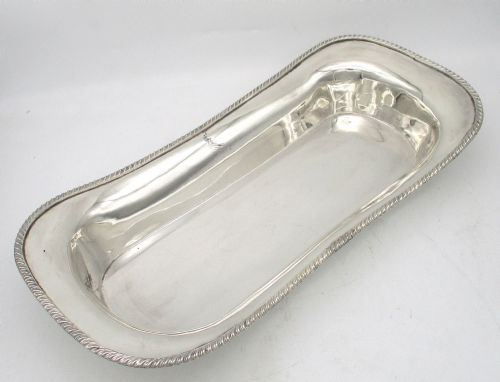
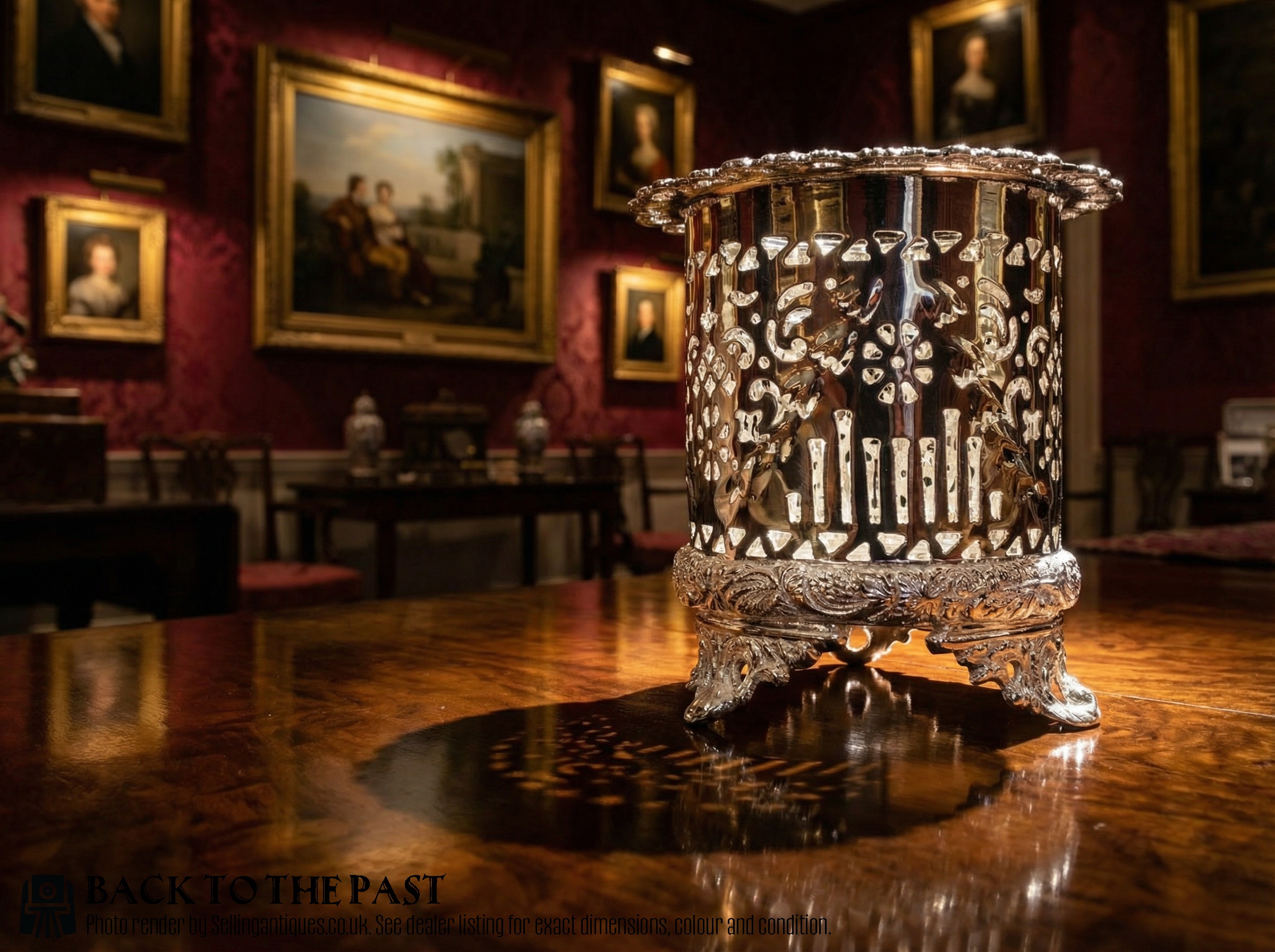
A silver desk tidy encompasses inkstands, inkwells, card trays, stamp boxes, and desk sets spanning the Georgian, Victorian, and Edwardian periods. These pieces range from simple silver-mounted oak trays to elaborate multi-piece inkstands complete with cut glass bottles and chambersticks.
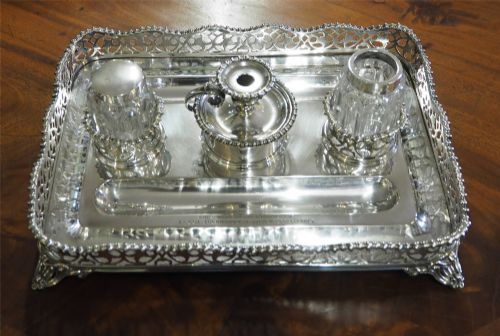
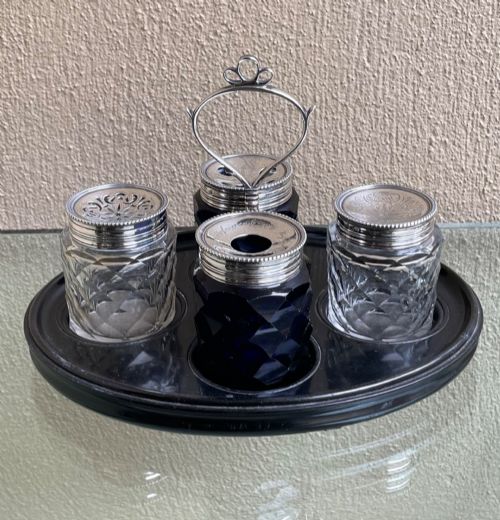
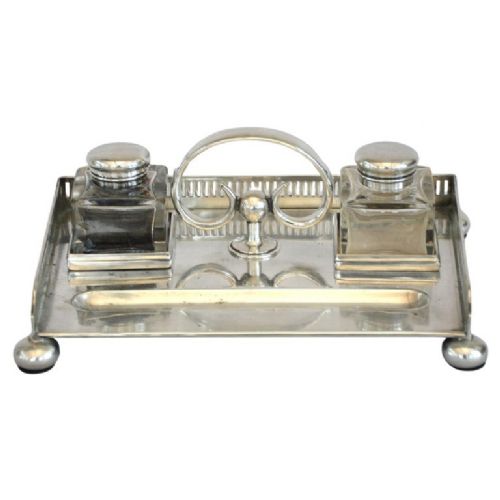
The version most commonly encountered on this page is the Edwardian or late Victorian silver-plated ink stand, frequently paired with cut glass inkwells and pen rests. Alongside traditional stationery boxes and card trays, these accessories reflect the formal correspondence habits of past centuries.
Makers and manufacturers varied from provincial silversmiths to major plated-ware firms, incorporating materials such as ebony, horn, onyx, and lapis lazuli into the desk accessories.
Materials and Technique
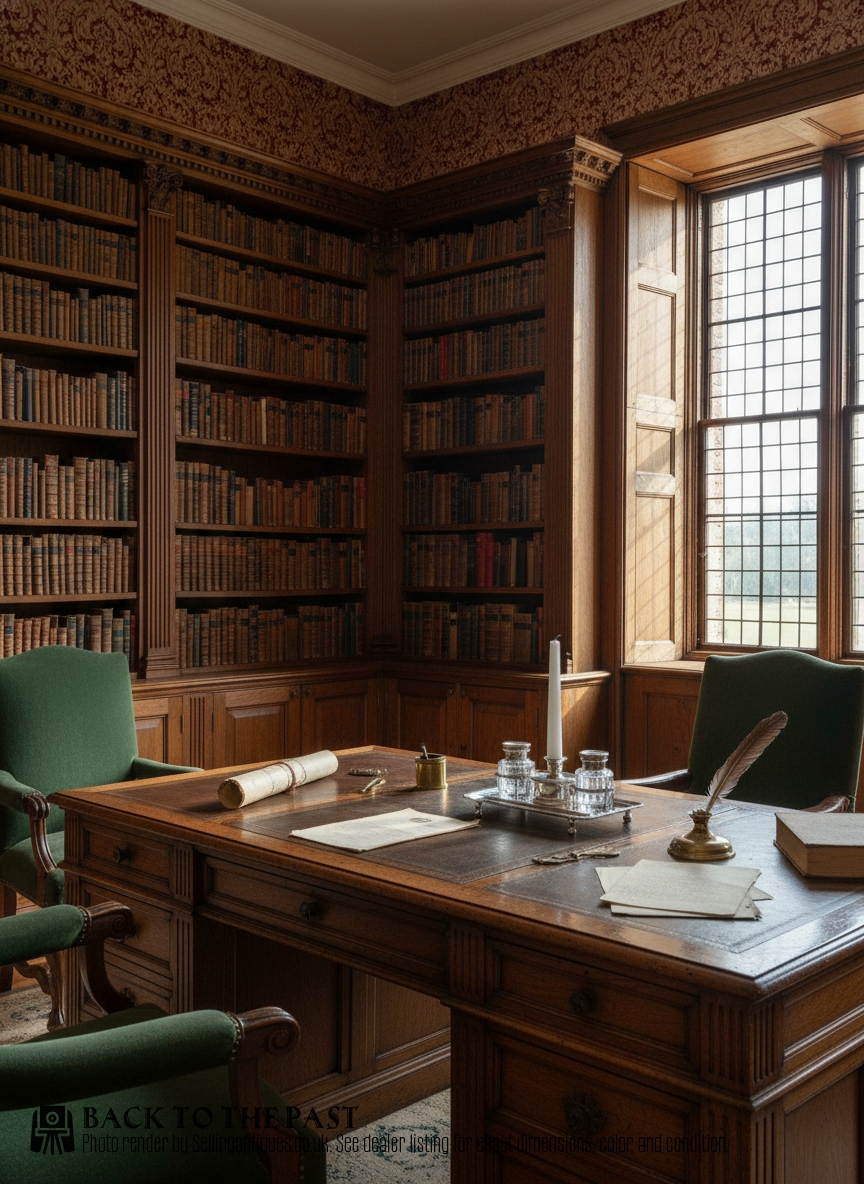
Construction relies upon a combination of sterling silver, silver plate, or Old Sheffield Plate shaped into trays, stands, and mounts. Metals are frequently worked alongside dense hardwoods like oak and ebony, or natural materials such as horn and taxidermy elements.
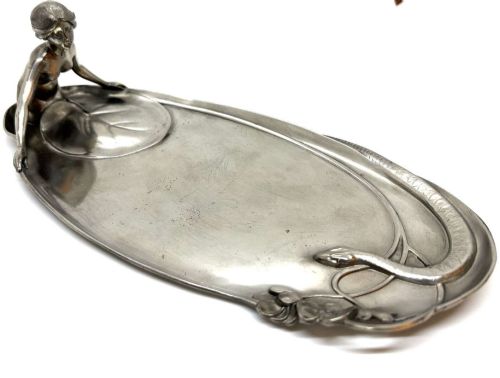
Glass components, particularly cut glass and hobnail glass inkwells, are fitted securely into metal collars or silver mounts. Decorative techniques encompass Art Nouveau pewter casting, guilloche enamel, and Celtic Revival ornamentation.
Silver Desk Tidy Retail Price Guide 2026
Typical asking prices for silver desk tidy among the pieces listed under this phrase on Sellingantiques today, from the lower quarter to the upper quarter. They describe what is for sale here now, not the wider market.
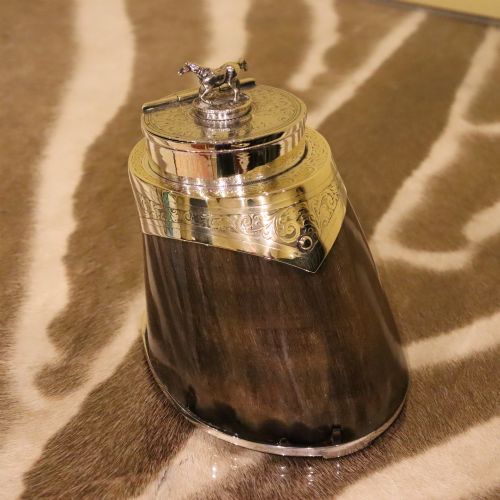
Victorian desk accessories occasionally incorporated taxidermy, featuring horse hooves repurposed as novelty inkwells and stationery holders.
Assessing Quality
The calibre of a silver desk tidy depends upon the crispness of the chasing, the weight and substance of the metal foundation, and the integrity of any fitted glass components. Pieces featuring integrated stationery boxes, multiple matching inkwells, and substantive hardwood bases demonstrate higher workshop ambition.
Subtlety of design and the harmony between disparate materials, such as silver mounts upon onyx or lapis lazuli, separate standard production items from more distinguished commissions.
Elkington·Walker And Hall·Robert Garrard·Walker Knowles·Daniel Holy·Martin Hall·Maurice Dufrene
The Silver Desk Tidy Glossary
- Standish
- A portable tray or stand holding inkwells, sanders, and penholders for a writing desk. It often forms the centrepiece of a larger desk tidy arrangement.
- Vide Poche
- A small tray designed for emptying pockets or holding loose desk items. This French term translates literally to empty pocket.
- Guilloche Enamel
- A decorative technique where a precise geometric pattern is engine-turned into metal beneath a translucent enamel layer. It appears frequently on Edwardian and Art Deco pieces.
- Old Sheffield Plate
- A composite material formed by fusing a sheet of silver to a thicker copper base before rolling. This predates modern electroplating and displays a characteristic warm lustre.
- Hobnail Glass
- A heavy moulded glass pattern featuring rows of raised pyramidal studs. It provides texture and weight to period inkwell bodies.
Silver Desk Tidy: Frequently Asked Questions
What is a silver desk tidy?
A silver desk tidy is an antique desk accessory designed to hold writing instruments, inkwells, stamps, or letters. These items combine silver mounts or frames with materials like glass, wood, and leather.
Originating primarily from the nineteenth and early twentieth centuries, they served a practical purpose in household and office administration before the widespread use of ballpoint pens and digital communication.
How were inkstands used?
Inkstands held inkwells, quill pens, and sometimes sanders used to blot wet ink on handwritten letters. They anchored the writing desk and kept necessary supplies close at hand.
In larger Victorian households, they remained stationary on library desks, while smaller portable versions could be moved between rooms depending on where correspondence took place.
How do I date a desk tidy?
Dating relies upon hallmarks on silver components, registry marks, and the prevailing stylistic traits of the period. Georgian pieces lean toward restraint, whereas Victorian and Edwardian examples often feature heavier ornamentation or mixed materials.
Associated items like cut glass inkwells and stationery boxes also reflect the manufacturing techniques and design preferences of their specific decade of origin.
How do I clean antique silver?
Cleaning requires a soft microfibre cloth and gentle silver polish applied sparingly to avoid removing thin plating or damaging adjacent materials like wood and glass. Harsh dips should be avoided, especially on antique plated items.
When components include porous substances such as horn, ebony, or onyx, moisture must be kept away from the joins to preserve the structural integrity of the piece.