

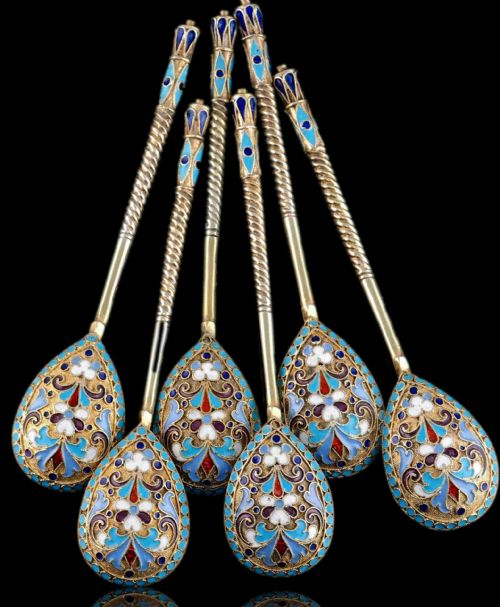


Silver Demitasse Coffee Set
A silver demitasse coffee set brings elegance to after-dinner service through compact scale and fine craftsmanship.
Silver Demitasse Coffee Set
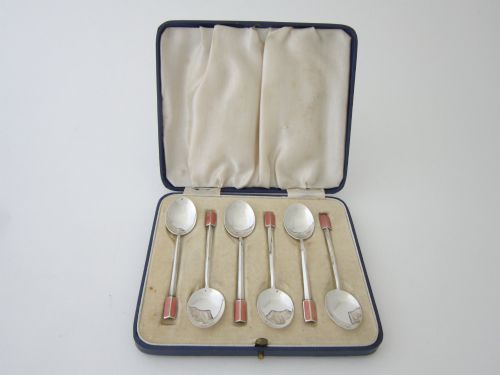
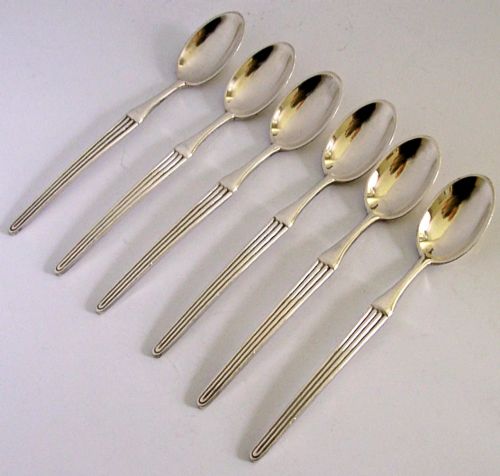
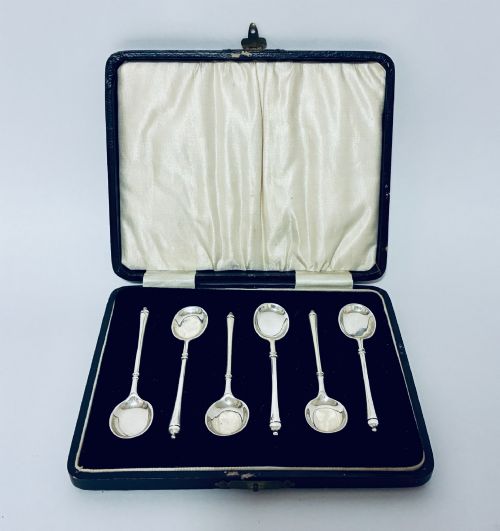
A silver demitasse coffee set comprises small-scale spoons, complete coffee and liqueur services, or fitted cased collections designed for small portions of strong coffee after meals. When exploring a silver demitasse coffee set, buyers most frequently encounter cased sets of six small spoons, often accompanied by matching sugar tongs or ceramic coffee cans.
The pieces span various design movements including Victorian, Edwardian, Art Deco, Art Nouveau, and Mid-Century Modern. Origins range from British makers in London, Birmingham, and Sheffield to continental European and Ottoman workshops.
Many configurations arrive in original fitted presentation cases lined with materials such as velvet, satin, or silk. These fitted boxes preserve the items and indicate that the sets were intended as presentation pieces or gifts from the outset.
Materials and methods of construction
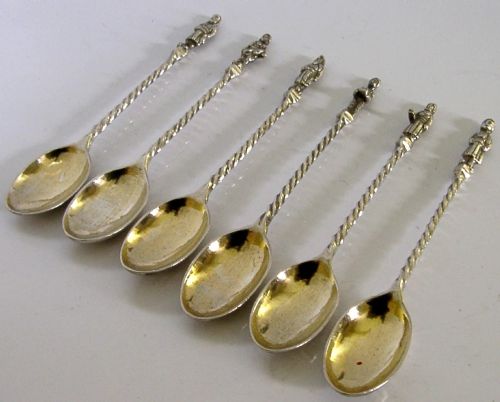
Makers utilised sterling silver, solid silver, and silver plate as the foundational metal for spoons and service components, frequently applying silver gilt to the bowl interiors for a contrasting finish. Hallmarks stamped into the metal indicate the assay office, standard of purity, and year of manufacture.
Decorative elements often incorporate vitreous enamel, cloisonné work, and figural ornamentation applied to the handles or stem. Fitted presentation cases paired polished wood or leather exteriors with soft velvet, satin, or silk linings tailored to hold each individual spoon securely.
Some Edwardian travellers carried their own miniature silver coffee spoons in velvet-lined pockets, refusing to face continental mornings without proper Birmingham steel between their fingers.
Factors that distinguish quality
Quality rests upon the crispness of the hallmarks, the weight and balance of the individual spoons, and the complexity of decorative techniques such as hand-applied enamel or detailed figural casting. Sets that retain their original fitted case with intact velvet or silk linings command greater interest.
The distinction between standard commercial production and finer work lies in the precision of the metalwork, the artistry of coloured enamel panels, and the reputation of the silversmithing firm or retailer involved in the commission.
Dmitrii Nikolaevich Nikolaev·Elkington·David Andersen·Liberty and Co·Walker and Hall·Cooper Brothers and Sons
The Silver Demitasse Coffee Set Glossary
- Silver Gilt
- Silver that has been coated with a thin layer of gold on its surface. This technique protects the underlying silver and provides a rich two-tone appearance inside spoon bowls.
- Cloisonné
- An ancient technique for decorating metal object surfaces using vitreous enamel. Thin wire partitions hold the enamel pastes in place before firing.
- Hallmark
- An official stamp or series of marks applied to precious metals in various assay offices. These marks certify the purity of the metal, the maker, and the year of testing.
- Assay Office
- A statutory body charged with testing the purity of precious metal items. British offices include London, Birmingham, and Sheffield.
Silver Demitasse Coffee Set: Frequently Asked Questions
What is included in a typical set?
A standard set usually comprises six matching small spoons designed specifically for demitasse cups. Some examples include twelve spoons or incorporate sugar tongs and fitted ceramic coffee cans with saucers.
Most items arrive complete with their original presentation cases lined in velvet or satin to keep the pieces secure.
How do I identify the date of manufacture?
Dating relies primarily on the hallmarks stamped directly onto the silver by official assay offices. These marks typically include a letter code that corresponds to a specific year.
Stylistic indicators such as Art Deco geometric lines or Victorian ornamentation also help narrow down the period of production.
How should I care for enamelled silver?
Enamelled pieces require gentle handling to prevent chipping the glass paste decorations. Cleaning should involve soft cloths without abrasive metal polishes that might scratch the vitreous surface.
Storage in original fitted cases protects both the delicate enamel work and the underlying silver from tarnishing too rapidly.
Were these sets meant for everyday use?
Many sets were originally purchased as wedding gifts or presentation pieces and remained stored in fitted boxes for special dining occasions. The presence of delicate enamel and velvet-lined cases suggests they were treated as luxury tableware.
Contemporary owners often use them for serving after-dinner coffee or display them within cabinets.