


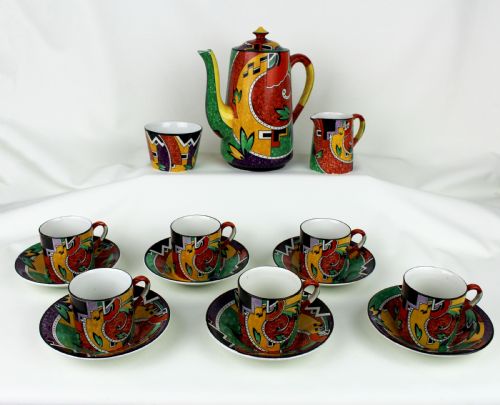


Vintage Espresso Cup Set
These vintage espresso cup set pieces are small porcelain and silver services designed for after-dinner coffee.
Vintage Espresso Cup Set
A vintage espresso cup set brings together small vessels designed specifically for serving strong coffee after a meal. You will most frequently encounter demitasse cups and saucers alongside cased six-person services dating from the early twentieth century.
The selections range from individual coffee cans with silver mounts to complete coffee and liqueur services. Forms span the Edwardian era through the Art Deco period, often accompanied by matching spoons or fitted presentation cases.
Makers represented on this page include established porcelain manufacturers and silversmiths operating around nineteen twenty. These sets capture the refined dining customs of the early nineteen hundreds and the geometric styling of the interwar years.
Materials and construction
Porcelain forms the foundation of these vessels, frequently shaped into delicate coffee cans and paired with matching saucers. Artisans applied hand-painted details and gold leaf highlights to enhance the glazed ceramic surfaces.
Silver plate and sterling silver provide mounts, frames, and spoons that complement the porcelain bodies. Enamel finishes and leatherette presentation cases appear alongside satin linings to protect the individual components during storage.
Listings feature porcelain and sterling silver pieces spanning the Edwardian era, the nineteen twenties, and the nineteen thirties.
Judging quality in early coffee sets
The distinction between standard production and superior examples lies in the precision of the hand-painted decoration and the weight of the silver mounts. Finer sets display crisp enamel work and well-balanced handles that rest comfortably in the hand.
Completeness within fitted presentation cases elevates the status of a service, particularly when leatherette and satin linings remain intact. The reputation of the manufacturing firm and the harmony between ceramic and metal elements further define the grade of the piece.
Royal Worcester·Elkington·Hutschenreuther·Spode Copeland·KPM
The Vintage Espresso Cup Set Glossary
- Demitasse
- A small cup used for serving espresso or Turkish coffee. These vessels hold roughly half the capacity of a standard tea cup.
- Coffee can
- A cylindrical ceramic cup lacking the flared bowl shape typical of traditional teacups. This form helps retain the temperature of concentrated coffee.
- Silver plate
- A base metal coated with a layer of silver. This technique offered an affordable alternative to solid sterling silver while maintaining a bright finish.
- Cased set
- A collection arranged within a fitted box designed for storage and transport. These presentation boxes often feature velvet or satin interiors.
- Gold leaf
- Extremely thin sheets of beaten gold applied to ceramic surfaces for decoration. This finish is often sealed with a secondary firing.
Vintage Espresso Cup Set: Frequently Asked Questions
What is a demitasse?
A demitasse is a small cup designed specifically for serving strong coffee or espresso after a meal. The term translates from French as half-cup.
These vessels hold a smaller volume than standard tea cups, concentrating the beverage to maintain warmth and flavour. They form the core component of most vintage coffee services.
How were these sets used?
These services were brought out at the conclusion of formal dinner parties to serve strong coffee to guests. The small cups kept the dark roast hot while fitting easily into the hand.
Many sets included matching spoons and liqueur glasses for an extended after-dinner ritual. Cased versions were often kept specifically for entertaining visitors.
Can I use them daily?
While these pieces remain functional, the presence of hand-painted details, gold leaf, and delicate porcelain requires careful handling. Hand washing is essential to preserve the vintage glazes and metallic finishes.
Many collectors prefer to display them in cabinets or reserve them for occasional special gatherings rather than everyday breakfast use.
How do I date these sets?
Dating relies on maker marks stamped or painted on the underside of the porcelain. Stylistic indicators such as Art Deco geometric motifs or Edwardian floral patterns also point to specific decades.
The materials used, including the style of the silver mounts and the construction of the presentation case, provide further clues to the manufacturing period.