

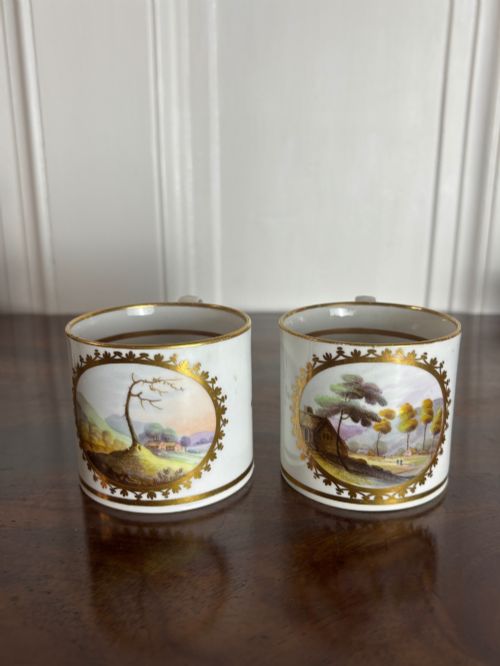


Gilded Porcelain Espresso Cups
Gilded porcelain espresso cups are small vessels designed for strong coffee, prized for their gleaming metallic embellishments and delicate forms.
Gilded Porcelain Espresso Cups
When you search for gilded porcelain espresso cups, you encounter small vessels designed for strong coffee, spanning forms such as coffee cans, demitasse cups and saucers, and full coffee services. These items appear across multiple periods, including the Georgian era, the nineteenth century, and twentieth-century decades up to nineteen-thirty.
How they were made
These items utilise hard-paste porcelain and standard porcelain bodies, shaped into slender coffee cans and diminutive cups accompanied by matching saucers. Artisans applied liquid gold leaf and hand-painted details, sometimes incorporating enamels to highlight landscapes and motifs.
Production methods rely on traditional ceramic firing followed by meticulous gilding applications. Certain twentieth-century examples arrive complete with fitted satin and leatherette presentation cases.
Several sets include fitted satin and leatherette travel boxes, suggesting someone once packed their precious morning espresso cups for a very civilised journey.
What varies in quality
The standard of painting and gilding separates ordinary factory production from exceptional artistic output, particularly where hand-painted landscapes appear on the porcelain surface. Finely executed brushwork and intricate gold leaf tooling elevate the visual weight of small demitasse cups.
The pedigree of the manufactory also determines the standing of a piece, with established houses commanding greater attention from collectors. Preservation of the fragile gold leaf and enamel decoration remains central to the overall integrity of each surviving cup and saucer.
Flight And Barr Worcester·Royal Worcester·Meissen·Hutschenreuther·Spode Copeland·KPM
The Gilded Porcelain Espresso Cups Glossary
- Coffee can
- A straight-sided cylindrical porcelain cup designed for serving small quantities of strong coffee. This form was especially popular during the Georgian period.
- Demitasse
- A small cup used to serve espresso or Turkish coffee, typically holding half the volume of a standard teacup. These vessels are frequently paired with matching saucers.
- Hard-paste porcelain
- A dense, durable ceramic composed of kaolin and petuntse fired at very high temperatures. European factories adopted this formulation to create thin, translucent wares.
- Gilding
- The application of gold leaf or powdered gold to the surface of porcelain. This decorative technique defines the metallic brilliance seen across these cups and saucers.
Gilded Porcelain Espresso Cups: Frequently Asked Questions
How do I date these cups?
Dating relies heavily on factory backstamps, ceramic body composition, and stylistic markers such as Empire, Regency, or Art Deco shapes. Georgian and nineteenth-century pieces often display hand-painted scenes and distinctive cylindrical coffee can profiles.
Twentieth-century examples from the nineteen-twenties and thirties tend toward streamlined modern forms or come housed in fitted presentation cases.
Were these cups meant for daily use?
Most surviving gilded porcelain cups were produced for polite company, drawing rooms, and formal dining rather than rugged everyday service. The presence of delicate gold leaf and hand-painted enamel suggests they served as displays of status and refinement.
Historical dining habits positioned these small cups at the conclusion of formal meals alongside roasted coffee beans.
Why are some cups shaped like cylinders?
Cylindrical coffee cans became the dominant shape for serving hot coffee in European porcelain factories during the late eighteenth and early nineteenth centuries. This vertical geometry helped retain heat while showcasing botanical or landscape paintings on the flat exterior.
As tastes shifted toward later Victorian and twentieth-century styles, curved demitasse bowls largely replaced the earlier straight-sided can.