


Blue Ceramic Coffee Cups
Blue ceramic coffee cups bring cabinet-worthy porcelain and earthenware to the table, spanning Worcester, New Hall, and Spode.
Blue Ceramic Coffee Cups
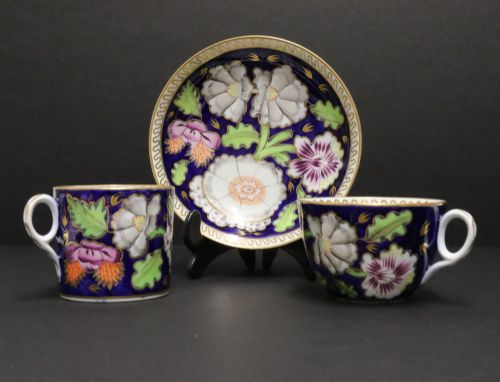
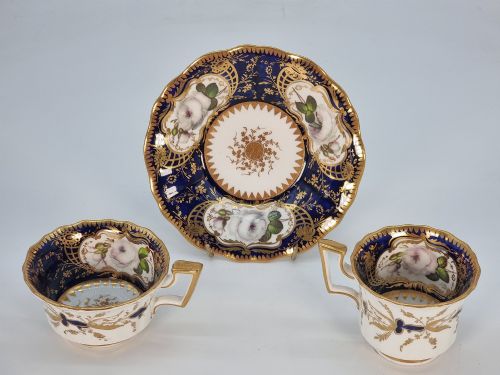
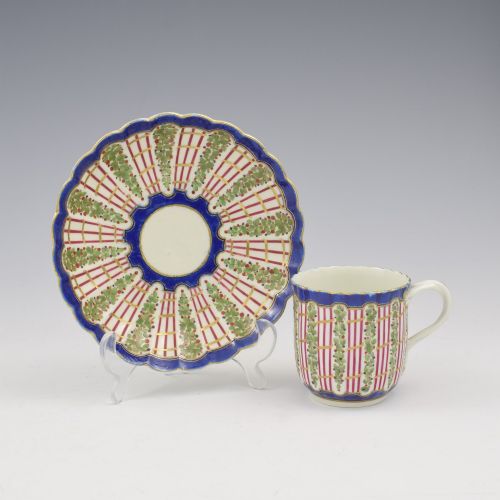
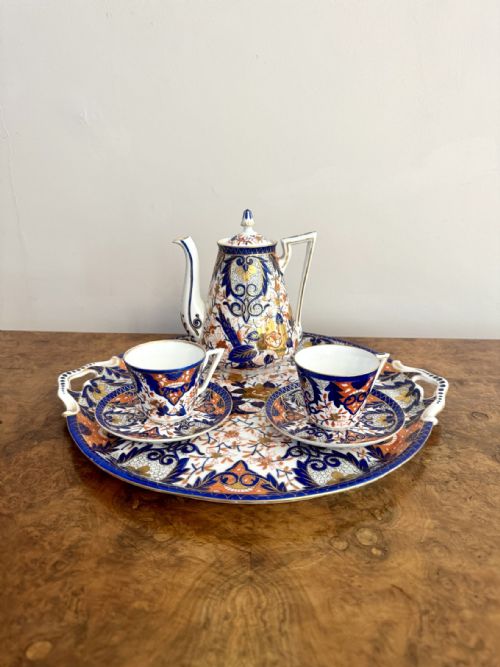
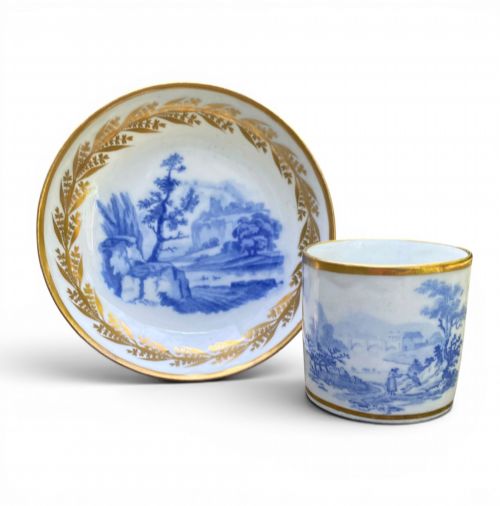
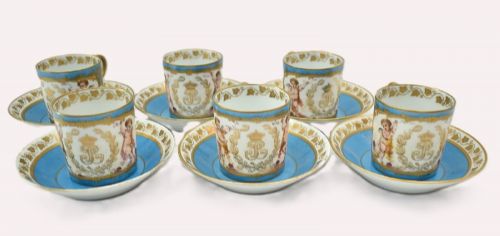
Blue ceramic coffee cups encompass cabinet trios, coffee cans, and matched services found across the eighteenth, nineteenth, and early twentieth centuries. These vessels appear in forms such as straight-sided coffee cans and delicate handled cups paired with matching saucers.
The selection ranges from First Period Worcester pieces decorated with Chinese figures and wet blue grounds to Regency cabinet trios by New Hall and Coalport. Collectors encounter Georgian porcelain, Victorian sets, and Edwardian or Art Deco additions.
Makers represented in these blue ceramic coffee cups include New Hall, Coalport, Worcester, Spode, Minton, and Sevres. Each period brings distinct ceramic bodies, from soft-paste porcelain to bone china and enamel-decorated earthenware.
How they were made
Potters shaped these vessels using soft-paste porcelain, bone china, and standard porcelain bodies, often forming cylindrical coffee cans or footed teacups by hand or on a wheel. Cobalt enamel provided the deep blue underglaze pigmentation seen in traditional Chinese-inspired motifs and wet blue grounds.
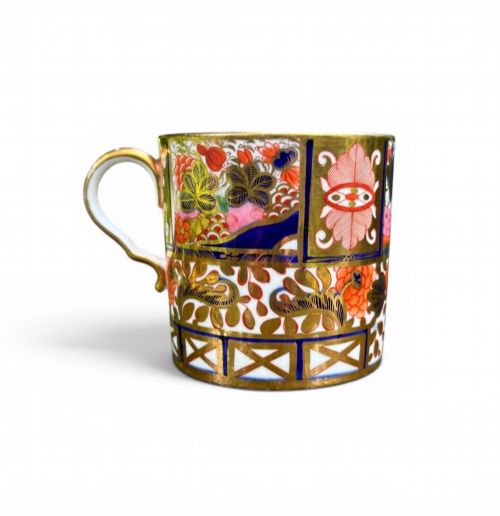
Decoration involved hand-painted cobalt scenes, polychrome enamel detailing, and applied gilding or gold leaf. Skilled painters rendered intricate chinoiserie figures, mandarin patterns, and botanical studies before secondary kiln firings fixed the pigments.
Listings feature porcelain bodies from soft-paste compositions to bone china, spanning eighteenth-century Worcester to twentieth-century Art Deco sets.
What varies in quality
Quality depends on the crispness of the cobalt enamel application and the precision of the hand-painted details, such as Mandarin figures or floral motifs. Superior examples exhibit fine, unblemished porcelain bodies and masterwork brush control.
The presence of documented factory attribution, such as early Worcester, Thomas Steel painting on Minton, or John Rose era Coalport, elevates the standing of a piece. Preservation of original gold leaf and gilding also distinguishes finer cabinet examples from standard utilitarian wares.
New Hall·Coalport John Rose·Spode·Sevres·Minton·Thomas Steel
The Blue Ceramic Coffee Cups Glossary
- Coffee can
- A straight-sided cylindrical porcelain cup designed specifically for drinking coffee in the eighteenth and nineteenth centuries. These vessels often lack handles and sit alongside matching saucers.
- Cabinet trio
- A matched set consisting of a coffee cup, a teacup, and a saucer intended for display in a porcelain cabinet rather than daily service.
- Wet blue
- A rich, saturated cobalt blue ground colour applied to porcelain surfaces, often associated with eighteenth-century Worcester factories.
- Soft-paste porcelain
- A ceramic material composed of clay and glass frit, fired at lower temperatures than hard-paste porcelain, common in eighteenth-century English works.
Blue Ceramic Coffee Cups: Frequently Asked Questions
What is a coffee can?
A coffee can is a straight-sided, handleless cylindrical cup made for serving strong coffee during the Georgian and Regency periods. They frequently accompany matching saucers in cabinet trios and breakfast services.
Potters favoured this shape for its heat retention and suitability for detailed cobalt enamel painting.
Were these cups used daily?
Many fine porcelain cups and cabinet trios were intended for display in parlours or reserved for special guests rather than everyday dining. Their survival in good condition reflects this careful handling.
Robust nineteenth-century services saw more regular household use while retaining decorative enamel work.
What does cabinet trio mean?
A cabinet trio consists of a coffee cup, a teacup, and a saucer manufactured as a unified set for display purposes. They showcase the finest factory painting and gilding of their period.
Collectors prize these sets for their complete condition and unified decorative schemes.